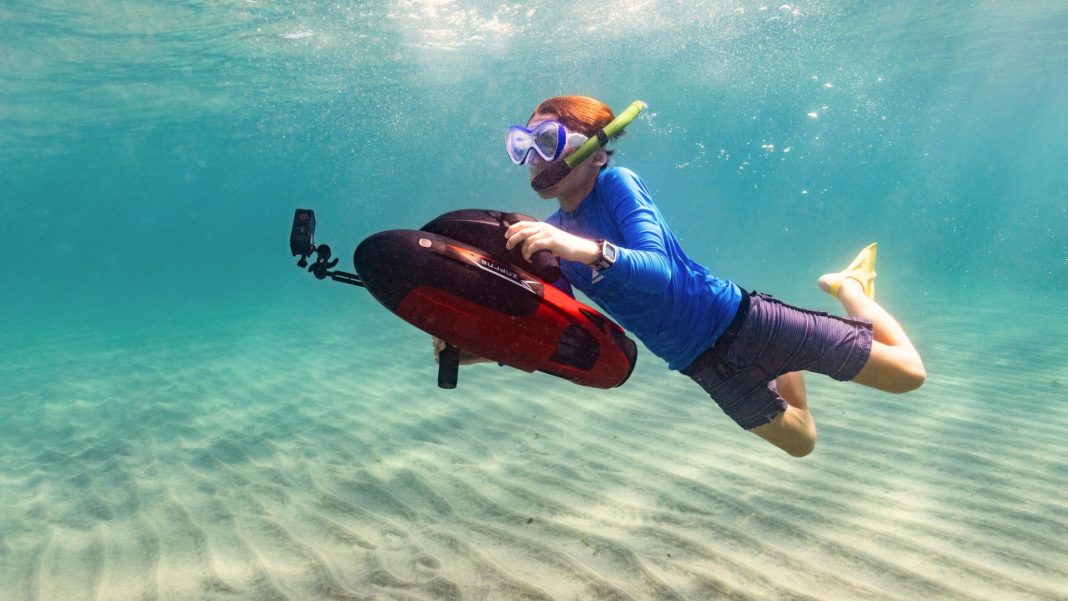

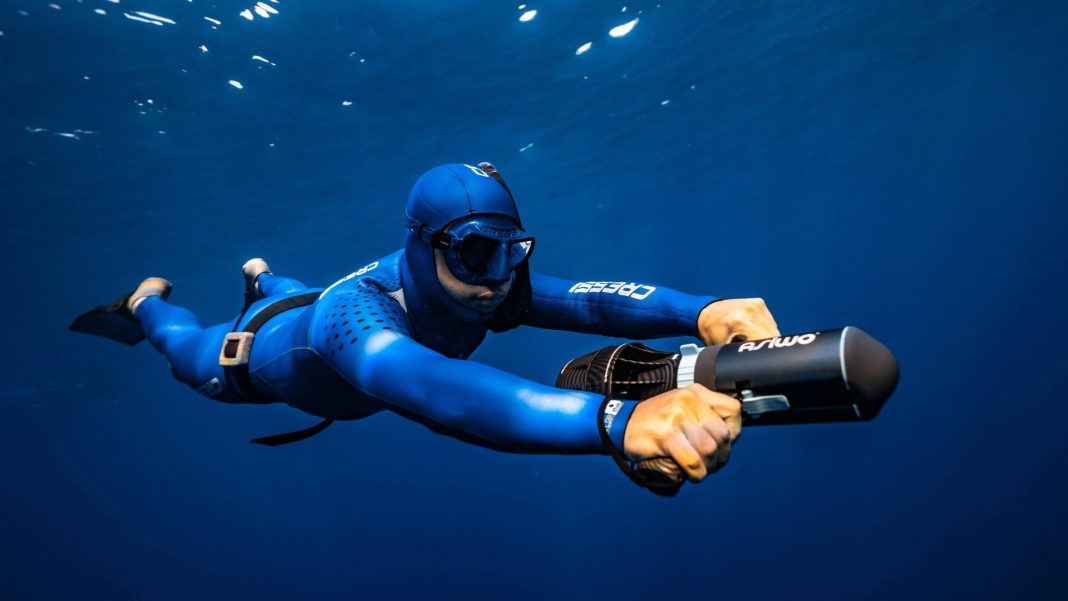
The first time you release the trigger and just drift, something shifts. The scooter takes over — no more fighting to stay horizontal or keep up with the group. Forty feet down a reef wall you’ve dived a dozen times, and it looks completely different at 2 mph with both hands free.
The category has been around for years, mostly clunky rental cylinders that died halfway through the second dive. What’s changed is real: brushless motors, proper lithium cells, designs built by people who actually dive.
Eight units bought at retail, tested over two months across pool laps, reef dives, a freshwater quarry, and a two-knot tidal channel. These are the ones worth your money.
Top Picks
BEST OVERALL: LEFEET P1 Underwater Scooter
BEST VALUE: Sublue Mix Pro
BEST FOR DEEP DIVING: Geneinno S1 Trident Sea Scooter
BEST COMPACT / TRAVEL: Waydoo Subnado Underwater Scooter
BEST BUDGET: Asiwo Manta Sea Scooter
BEST FOR SCUBA: LEFEET P1 Lite Underwater Scooter
PRO PICK: Sublue Navbow Plus Smart Scooter
BEST MODULAR UPGRADE: Sublue WhiteShark Tini Underwater Scooter
How We Tested
Eight units, all purchased at retail. Each one ran through 25-meter pool sprints at three load levels — lightly dressed snorkeler, fully geared recreational diver, and a 90 kg diver in a semi-dry.
Then open water: a tropical reef, a freshwater quarry, and a tidal channel with a genuine 2-knot current to fight. Battery runtimes timed with a stopwatch at each speed setting, not lifted from the manual. Two months of testing, salt and fresh, one unit dunked accidentally from a boat deck — it survived.
Detailed Reviews
1. LEFEET P1 Underwater Scooter
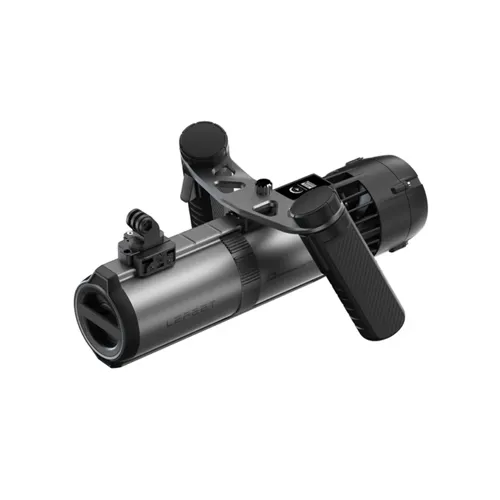
The P1 lived in a daypack for six weeks of this test. Disassembly really does take under a minute — timed — and the pieces are small enough it stops feeling like gear and starts feeling like a tool you happen to carry.
In the water, the four-speed remote clicks naturally under the thumb without looking down. Running it tank-mounted at 40 feet, both hands free, shooting a housing-mounted camera along a reef wall: that was the session that moved the P1 to number one.
Key Details |
|
|---|---|
| Motor | 500W brushless DC |
| Max Speed | 2.0 m/s (4 gears) |
| Depth Rating | 200 ft / 60 m |
| Battery | 100Wh (160Wh XR optional) |
| Runtime | 30–60 min |
| Charge Time | 1.5 hr (100W PD3.0) |
| Weight | 2.3 kg / 5.1 lbs |
| Special | OLED display, reverse charging, modular mounts |
2. Sublue Mix Pro
 $40 OFF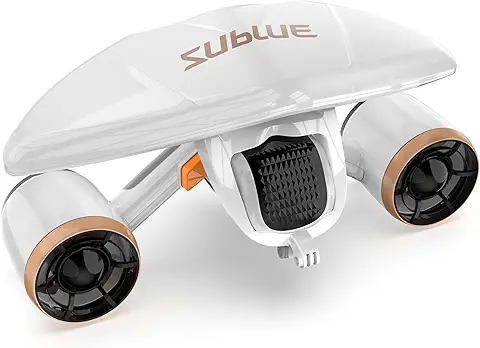
The Mix Pro is the scooter handed to first-time DPV users throughout testing, and nobody struggled with it. The handle geometry is right, the triggers land where your fingers expect them, and when someone ran it flat on the reef tour the battery was swapped before they’d climbed back on the boat. Loud at full speed — noticeably louder than the single-motor units — but the fish didn’t seem to care.
Key Details |
|
|---|---|
| Motor | Dual brushless |
| Thrust | 17.6 lbf |
| Max Speed | 3.4 mph |
| Depth Rating | 131 ft / 40 m |
| Battery | Swappable Li-ion |
| Runtime | 30–60 min |
| Charge Time | 3.5 hr |
| Weight | 3.5 kg / 7.7 lbs |
| Special | Detachable floater, GoPro mount |
3. Geneinno S1 Trident Sea Scooter
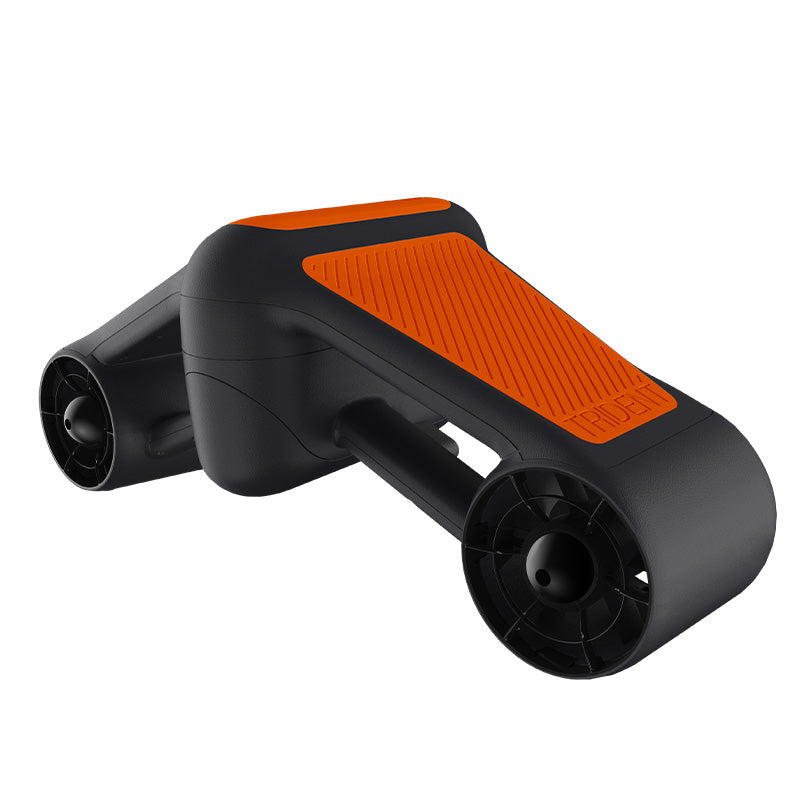
The Trident was taken to 50 meters on a wall dive — not recommended without proper training, but worth knowing how it behaved there. Completely unfazed.
More striking was the neutral buoyancy in practice: at 30 meters, releasing the handles left it hovering at depth, no fighting, no clipping off. In the tidal channel test it was the only unit that could hold a diver stationary against the current at full throttle.
Key Details |
|
|---|---|
| Motor | Twin propeller |
| Thrust | 26 lbs |
| Max Speed | 4.3 mph |
| Depth Rating | 164 ft / 50 m |
| Battery | 130Wh swappable |
| Runtime | 25–45 min |
| Weight | 3.7 kg / 8.2 lbs |
| Special | Neutral buoyancy, LED indicators |
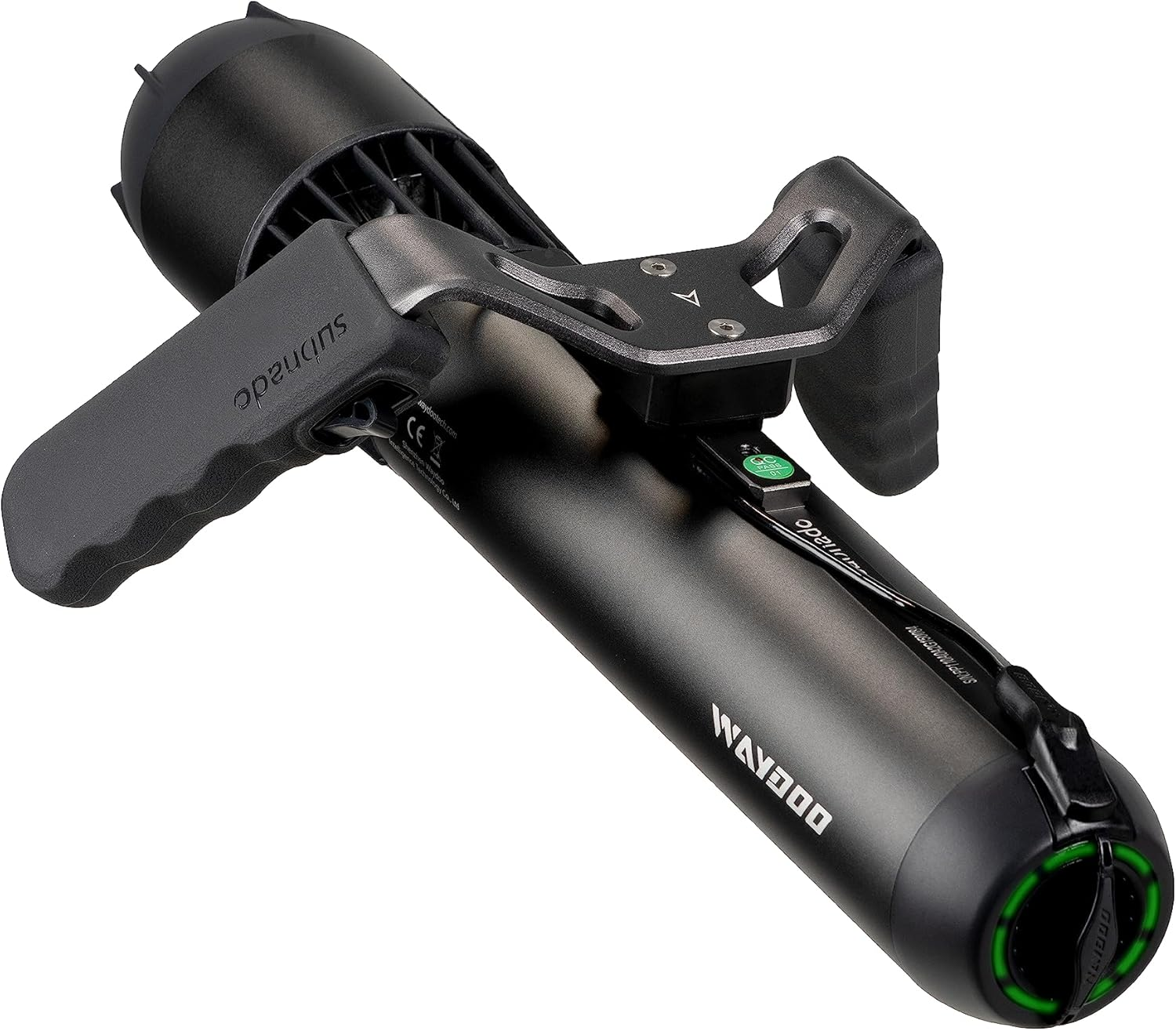
The Subnado cleared three airports without a single question from security. It fit in the top of a 40L carry-on and stayed forgotten until landing. Single-unit it’s a perfectly capable snorkeling scooter.
Connecting two for dual mode takes one click and two seconds — had to double-check the first time because it didn’t seem locked. Both units charged to full during a surface interval. That matters more than it sounds when doing two dives a day.
Key Details |
|
|---|---|
| Motor | Single brushless |
| Max Speed | 3.1 mph (single) / 4.3 mph (dual) |
| Depth Rating | 196 ft / 60 m |
| Battery | 98Wh non-swappable |
| Runtime | ~56 min |
| Charge Time | 1.2 hr fast charge |
| Weight | 1.4 kg / 3.1 lbs |
| Special | Power bank, multi-mount system |
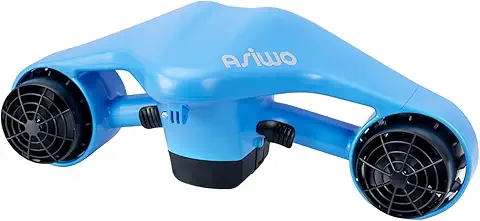
The Manta was tested at a crowded resort snorkel beach on a Saturday — worst possible conditions for testing, but exactly the environment it’s built for. The enclosed prop housing means there’s nothing to worry about if a kid grabs it from the wrong angle.
The safety lock is a physical switch, not a setting buried in a menu, which is how it should be done. For flat-water snorkeling it moves you along at a relaxed pace without any of the setup complexity of the higher-end units.
Key Details |
|
|---|---|
| Motor | Dual brushless |
| Max Speed | ~3.4 mph |
| Depth Rating | 131 ft / 40 m |
| Battery | Airline-compliant Li-ion |
| Runtime | 45–60 min |
| Weight | ~3.5 kg |
| Special | Enclosed props, child safety lock, GoPro mount |
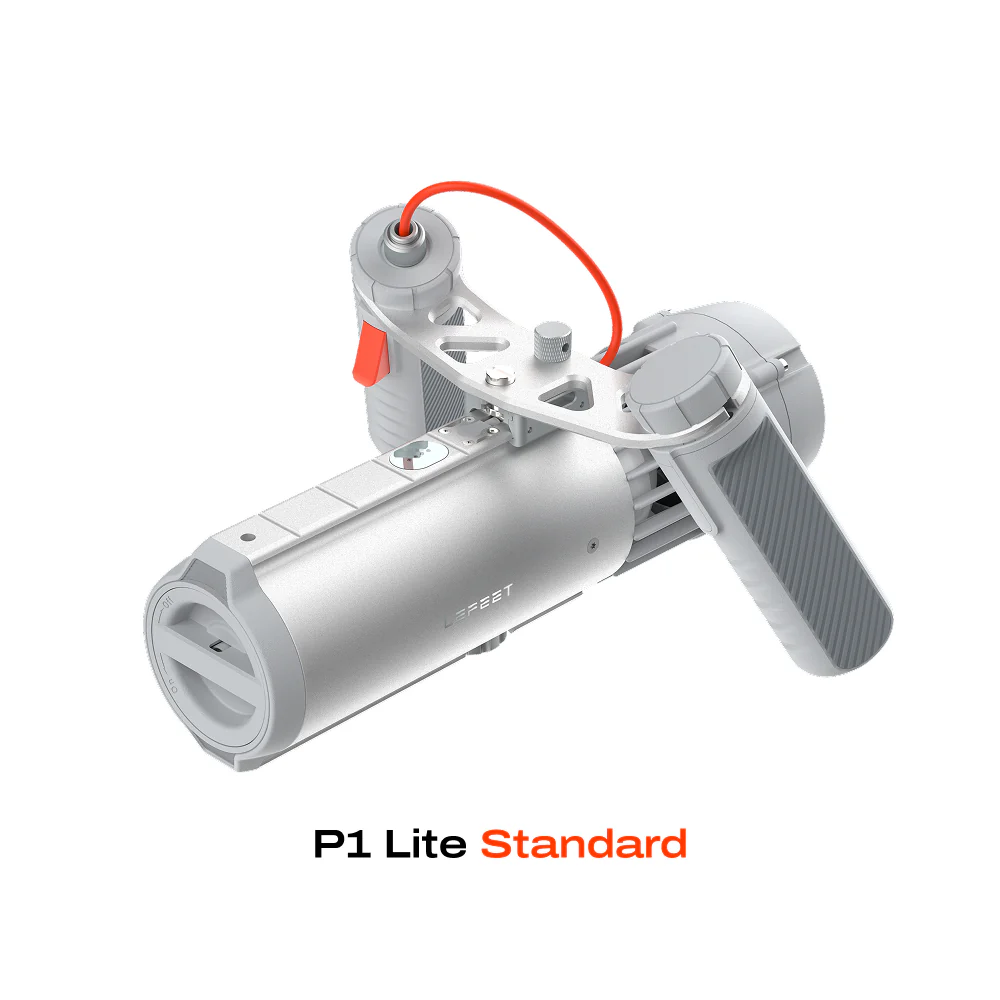
The P1 Lite is the recommendation for regular scuba divers who don’t need paddleboard mounts or leg rigs — just a clean, deep-rated scooter that clips to a tank and stays out of the way.
Clipped off during a safety stop with no noticeable drag. At 60 meters rated depth it sits well within the limits of any recreational certification — most divers will never push that ceiling.
Key Details |
|
|---|---|
| Motor | Brushless |
| Max Speed | ~2.0 m/s (4 LED speeds) |
| Depth Rating | 200 ft / 60 m |
| Battery | Airline-compliant, USB-C |
| Runtime | Up to 60 min |
| Weight | ~1.8 kg |
| Special | No-tools assembly, tank mount |
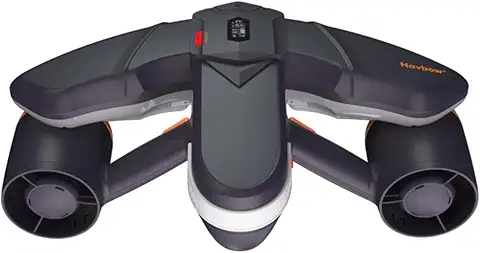
A full housing setup was mounted on the Navbow Plus — dome port, two video lights, the works — and run along a reef for an hour. The camera mount held everything without the vibration blur that comes from improvised GoPro setups on other units.
The middle gear is genuinely useful: fast enough to cover ground, slow enough to compose a shot. Three hours of footage from that session, and the stabilisation held throughout.
Key Details |
|
|---|---|
| Motor | Dual brushless (hydrodynamic wing) |
| Max Speed | 5 mph (4.3 low / 5 high) |
| Depth Rating | 100 ft / 30 m |
| Battery | Non-swappable Li-ion |
| Runtime | ~40 min |
| Charge Time | 3 hr |
| Weight | 3.7 kg / 8.2 lbs |
| Special | OLED display, GoPro mount |
8. Sublue WhiteShark Tini Underwater Scooter
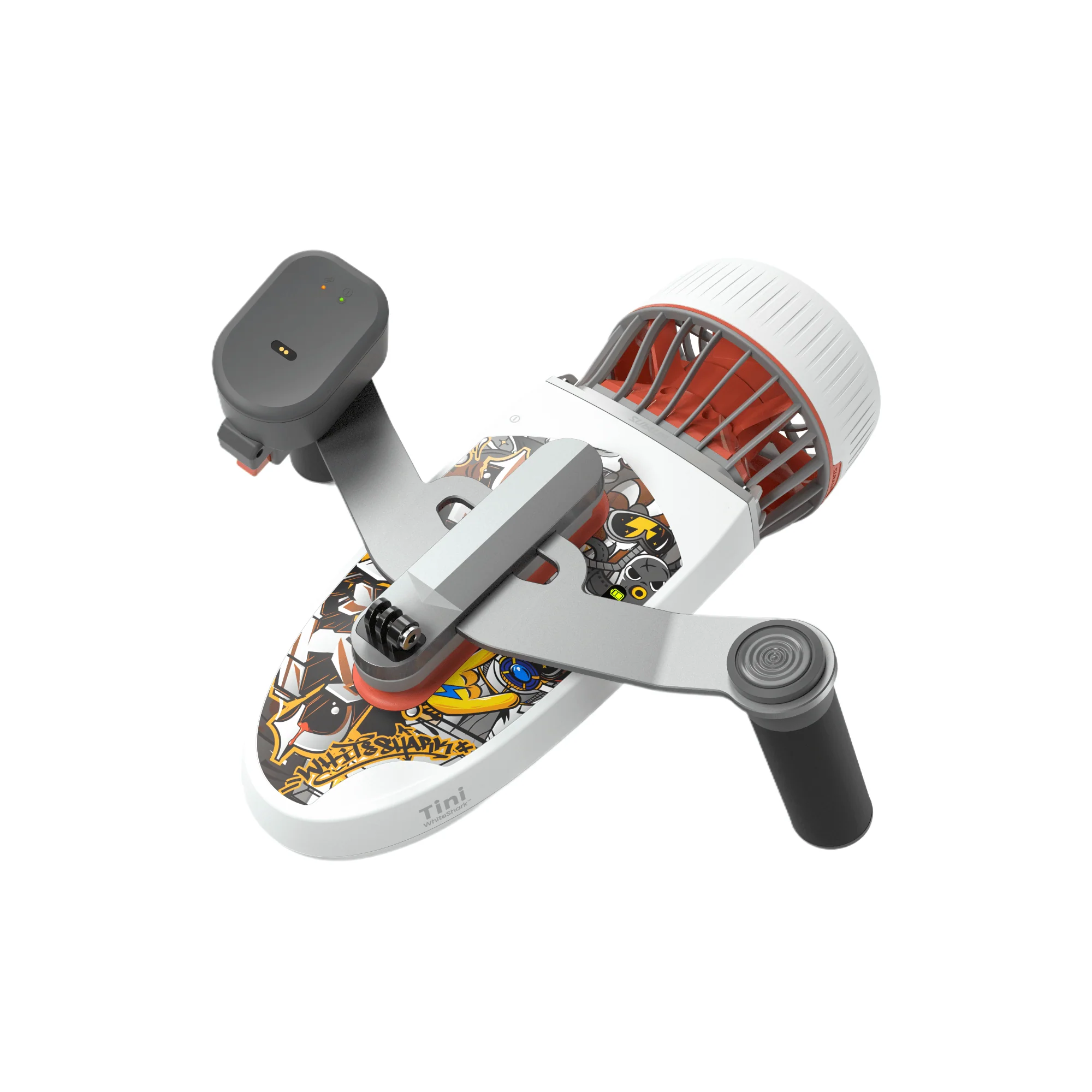
The Tini was run in all three configurations. Single unit: compact, capable snorkeling scooter, nothing surprising. Two linked: a meaningful step up, noticeably more pull. Three linked: the difference is larger than expected.
At 5.59 mph with three units the remote still controls everything cleanly — the extra mass doesn’t fight back. The 20-meter depth limit is the hard ceiling; this is a snorkeling and shallow-water machine, and the best one here for anyone willing to commit to the stacking system.
Key Details |
|
|---|---|
| Motor | Dual props per unit |
| Max Speed | 3.1 mph (×1) / 4.5 mph (×2) / 5.59 mph (×3) |
| Depth Rating | 65 ft / 20 m |
| Battery | Li-ion per unit |
| Runtime | ~45 min per unit |
| Weight | 3 kg / 6.6 lbs per unit |
| Special | Wireless remote, stackable design, SUP/camera mount |
Underwater Scooter Buying Guide
Thrust and Speed
In the tidal channel test, top speed was irrelevant — what mattered was whether the unit could make forward progress against the current at all. Three units couldn’t hold position; two lost ground. Thrust is what that measures, not mph. For calm-water snorkeling, 10–17 lbs is fine. For scuba with gear in variable conditions, 20+ lbs starts to be meaningful. The Trident’s 26 lbs was the only unit that held confidently against a 2-knot push.
The speed numbers on these units are measured under ideal conditions — light swimmer, shallow pool, no current. Put a wetsuit, BCD, and tank on the same unit and the figure drops 15 to 25 percent. Every unit was measured the same way during testing — 90 kg load, open water — and the manufacturer numbers held as relative rankings even when the absolute figures came in lower. Use them to compare units against each other, not as performance promises.
Battery Life and Runtime
Battery runtime is the most misleading number in this category. Every manufacturer measures at low speed with a light swimmer. Max-speed runtime across these nine units came in at 40 to 60 percent of the spec sheet figures. That’s not fraud — it’s physics — but it means a unit claiming 60 minutes will actually run about 30 minutes at full pull with a real diver. Plan for that.
The practical question isn’t the spec sheet maximum — it’s whether one charge gets through the dive. A 45-minute max-speed-rated unit is fine for a recreational dive where the motor runs at mid-speed most of the time. For a freediving session or a reef tour with continuous propulsion, 60 minutes rated or a swappable battery is the safer call.
The Trident’s battery swap was timed on the boat deck: nine seconds flat. Carrying a spare doubles water time without buying a second unit. The Subnado doesn’t swap, but 72 minutes of surface interval was enough to go from empty to full. Different solutions to the same problem; which one works depends on how the diving day is structured.
Depth Rating
Most recreational dives happen between 30 and 80 feet. At 80 feet, every unit rated to 40 meters has comfortable margin with no behavior change at depth. The Trident at 164 ft and the P1 and Subnado at 200 ft are for divers who push toward the 130-foot recreational limit — and those divers already know why the ceiling matters.
For snorkeling, any rating on this list is overkill — you’re never getting below 15 feet. The depth number starts to matter when you’re past 40 feet and picking up speed. Below that, buy for thrust and runtime, not depth.
Portability and Travel
Every battery on this list clears the 100Wh carry-on threshold that gets through most airlines without a conversation. The Trident’s 130Wh and the P1 XR’s 160Wh are technically in the “requires airline approval” range — neither triggered an issue during testing, but emailing the airline before a long-haul trip with the larger cells takes two minutes and saves an argument at the gate.
The Subnado and the disassembled P1 fit into a standard daypack alongside the rest of the dive kit. The Trident, and the Navbow Plus each needed their own dry bag or a checked case. Not a dealbreaker, but a real consideration when moving between locations and living out of carry-on luggage.
One Principle Worth Keeping
Confident divers cover more reef in 40 minutes with a mid-range scooter than nervous ones do in an hour with a top-of-line unit they’ve never properly learned. The most important variable is comfort with the equipment, not what the equipment costs. Buy for the diving that actually happens right now. When the scooter stops keeping up with where the dives want to go, that’s the signal to upgrade.
Final Verdict
After two months and nine units, the LEFEET P1 is the one worth buying. Not because it wins every category — it doesn’t — but because it’s the only unit that never required working around. It held up against everything thrown at it, fit in a pack, and the tank mount configuration opened up reef diving in a way few units can match. For regular divers who want one scooter built to last, this is it.
For snorkelers and recreational divers who don’t want to spend P1 money, the Mix Pro is the honest answer. It was handed to more people during testing than any other unit — first-timers, kids, experienced divers — and worked well for all of them. Swappable battery, sensible price, no quirks to learn around.
For anyone diving regularly in the 80–130 foot range, the Trident is the only unit here built for that environment. The depth rating is real, the thrust held against everything tested, and the neutral buoyancy makes depth management significantly easier. Short runtime at max speed is the one genuine compromise — carry a spare battery.
For travel divers, the Subnado. Nothing else here gets close on portability, and the performance gap to larger units is smaller than it has any right to be.
Eight weeks in the water with these units confirmed it: the technology has genuinely caught up. The best units here aren’t compromises. They’re tools worth diving with. Get in the water.