
Most beginners overthink the board and underthink the surface. I’ve watched hundreds of first-time riders struggle — not because they chose the wrong skill level, but because they chose the wrong geometry for their street, their weight, or their goal. A pintail that’s perfect on a campus path is a liability on a wet hill. A drop-through that’s forgiving at 15 km/h becomes unpredictable at 30.
This list is built from pavement, not spec sheets. Seven boards, six weeks, three testers with different body weights and zero prior longboarding experience. Here’s what held up.
Top Picks
BEST OVERALL: Retrospec Zed Pintail
Best Flex Ride: Magneto Bamboo Longboard
Most Durable: Beercan Boards 32″ Ginger Ale
Best for Downhill: Atom Drop Through
Best for Commuting: Retrospec Tidal Drop-Down
Best for Tricks: Magneto 44″ Kicktail Cruiser
Best Long-Term Value: Sector 9 Bamboo Lookout Drop-Through
How We Tested
Six weeks. Three testers — 62 kg, 78 kg, 94 kg. Zero prior longboard experience between them.
Each board was ridden on: a cracked urban sidewalk, a smooth parking lot, a 5° asphalt hill, a gravel-edged commute path, and a crowded pedestrian zone requiring frequent stops and tight turns.
Evaluation focused on five factors: balance forgiveness at walking speed, push efficiency on flat ground, carve response on a 20-meter slalom, vibration dampening on rough surfaces, and recovery behavior when a foot slipped off the board. Trucks, wheels, and bearings were rated separately on a 5-point scale after each session.
Detailed Reviews
1. Retrospec Zed Pintail Longboard
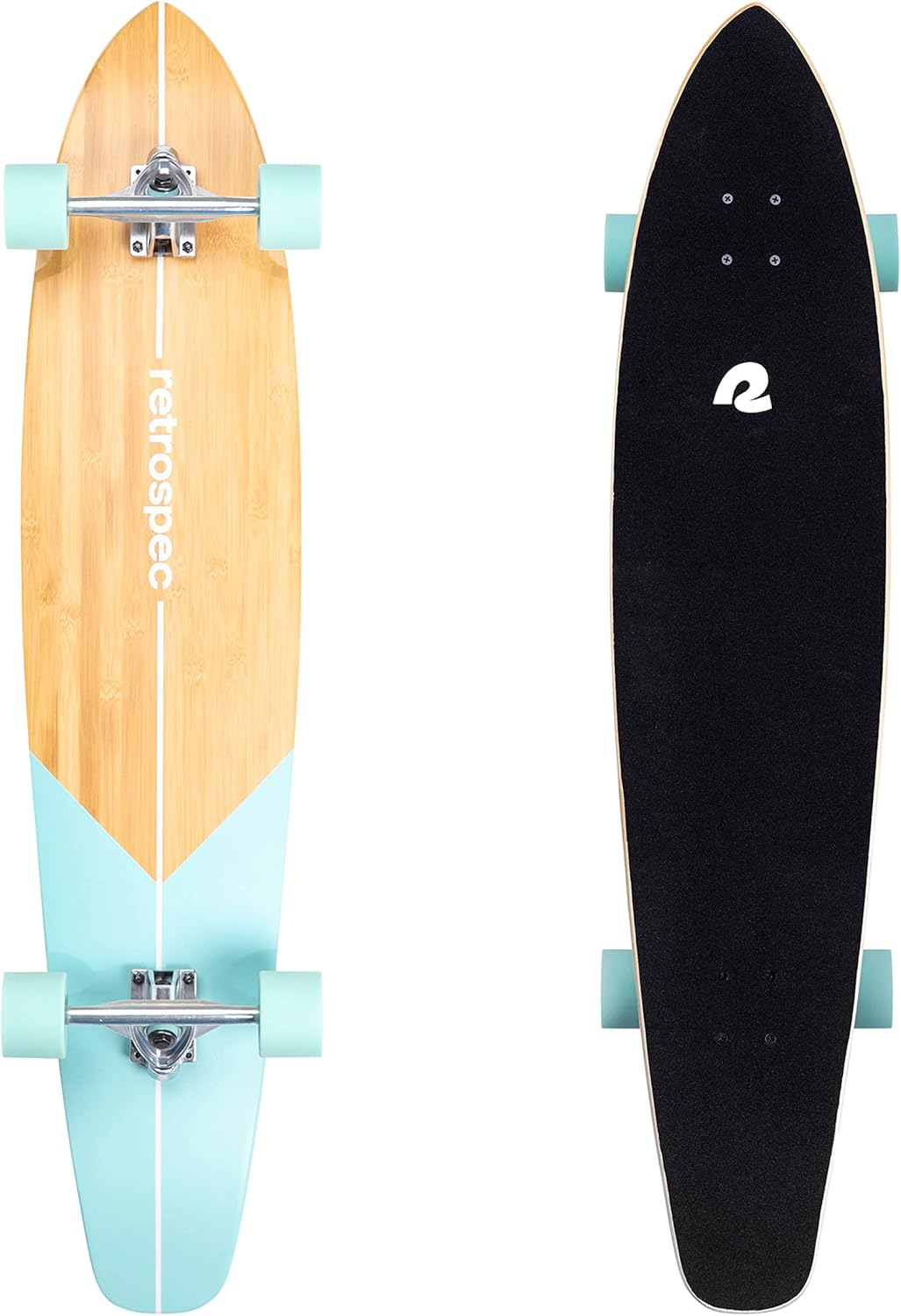
Our 78 kg tester was stable within the first 50 meters. The 44-inch platform gives feet enough room to find a comfortable stance without feeling like a barge. The 70mm wheels rolled clean through every sidewalk crack in the test route — none of the stuttering you get from smaller wheels on rough pavement. Trucks are stiff out of the box but loosen predictably; by session two, carving felt natural.
Key Details |
|
|---|---|
| Deck | 44″ × 9.5″ · Bamboo + Canadian maple |
| Trucks | Reverse kingpin aluminum |
| Wheels | 70 × 51mm polyurethane |
| Bearings | ABEC-7 |
| Max Load | 220 lbs |
2. Magneto Bamboo Longboard
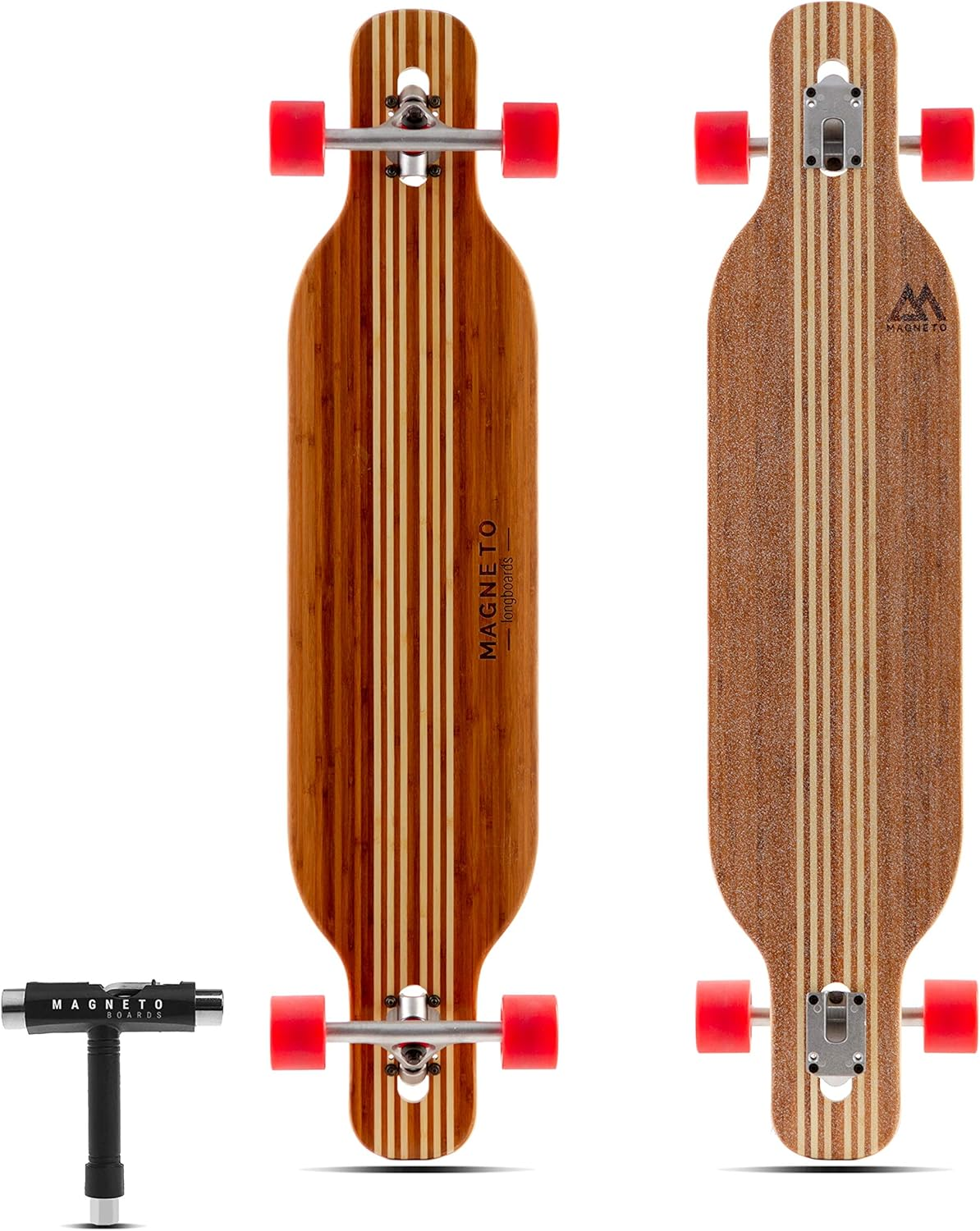
The flex is the headline. On the 300-meter rough sidewalk section of our test route, every other maple board transmitted every seam through the riders’ knees. The Magneto absorbed it.
The vertically laminated bamboo-fiberglass deck doesn’t bounce — it gives slightly, then resets. Combined with the drop-through mounting, the standing platform sits low enough that even our heaviest tester felt settled from the first push.
Key Details |
|
|---|---|
| Deck | 42″ × 9″ · Bamboo + fiberglass, vertically laminated |
| Trucks | 7″ cast aluminum, drop-through |
| Construction | Vertical lamination — lighter than maple |
| Max Load | 250 lbs |
3. Beercan Boards 32″ Ginger Ale
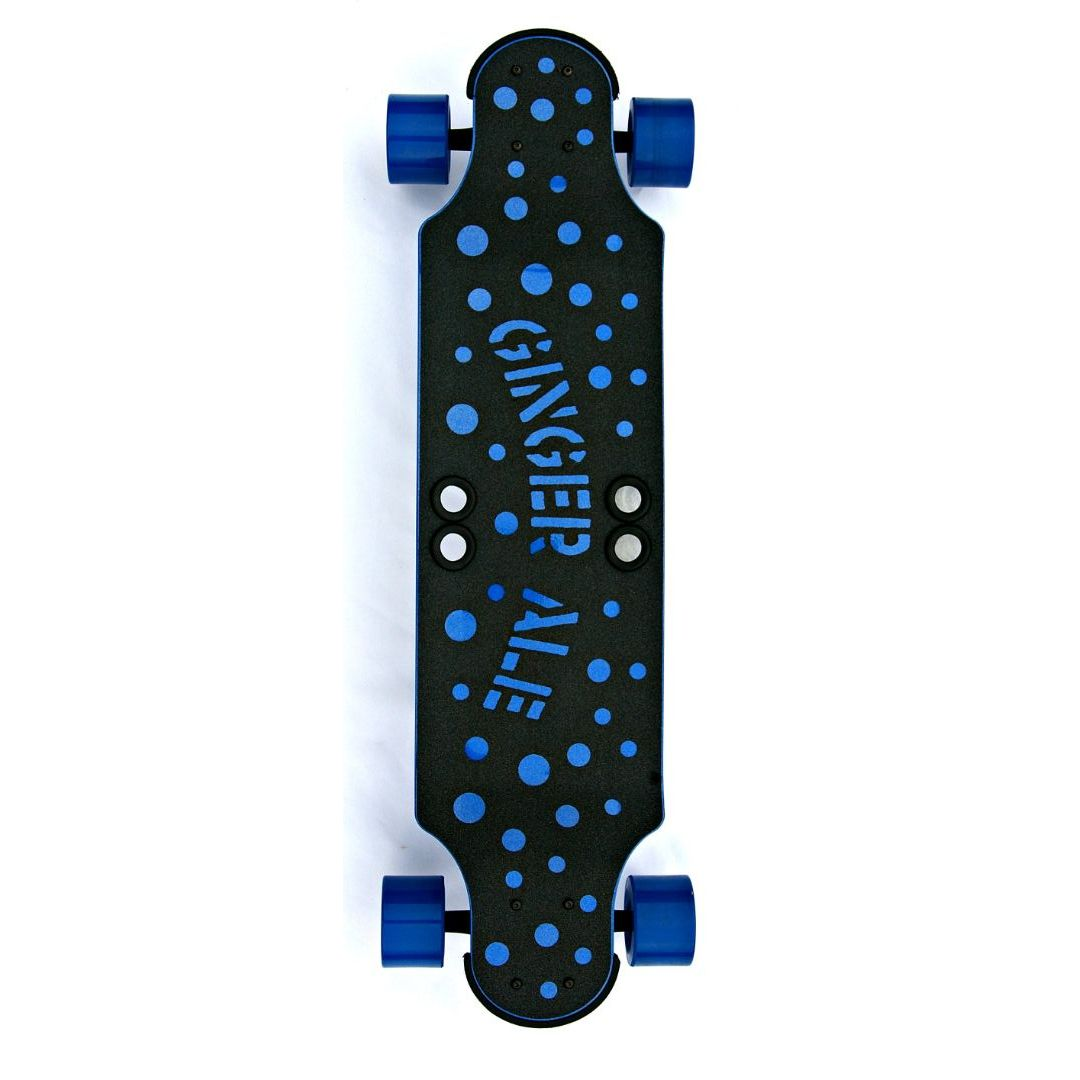
The Ginger Ale is immediately different in the hand before you ever stand on it. The aluminum deck has no flex — none — and the resonance when you tap it is completely unlike wood.
On pavement it rides with a stiffness that’s predictable rather than harsh, because the Bear trucks do the mechanical work of absorbing direction changes. Our most aggressive test was intentional: we left all seven boards outside overnight in heavy rain. Six boards showed moisture effects on grip tape or deck edges. The Ginger Ale was unchanged.
Key Details |
|
|---|---|
| Deck | 32″ × 8″ · Recycled aluminum |
| Trucks | Bear trucks |
| Bearings | ABEC-9 |
| Shape | Symmetrical drop-deck |
| Max Load | 350 lbs |
| Origin | Handmade in Douglas, Georgia, USA |
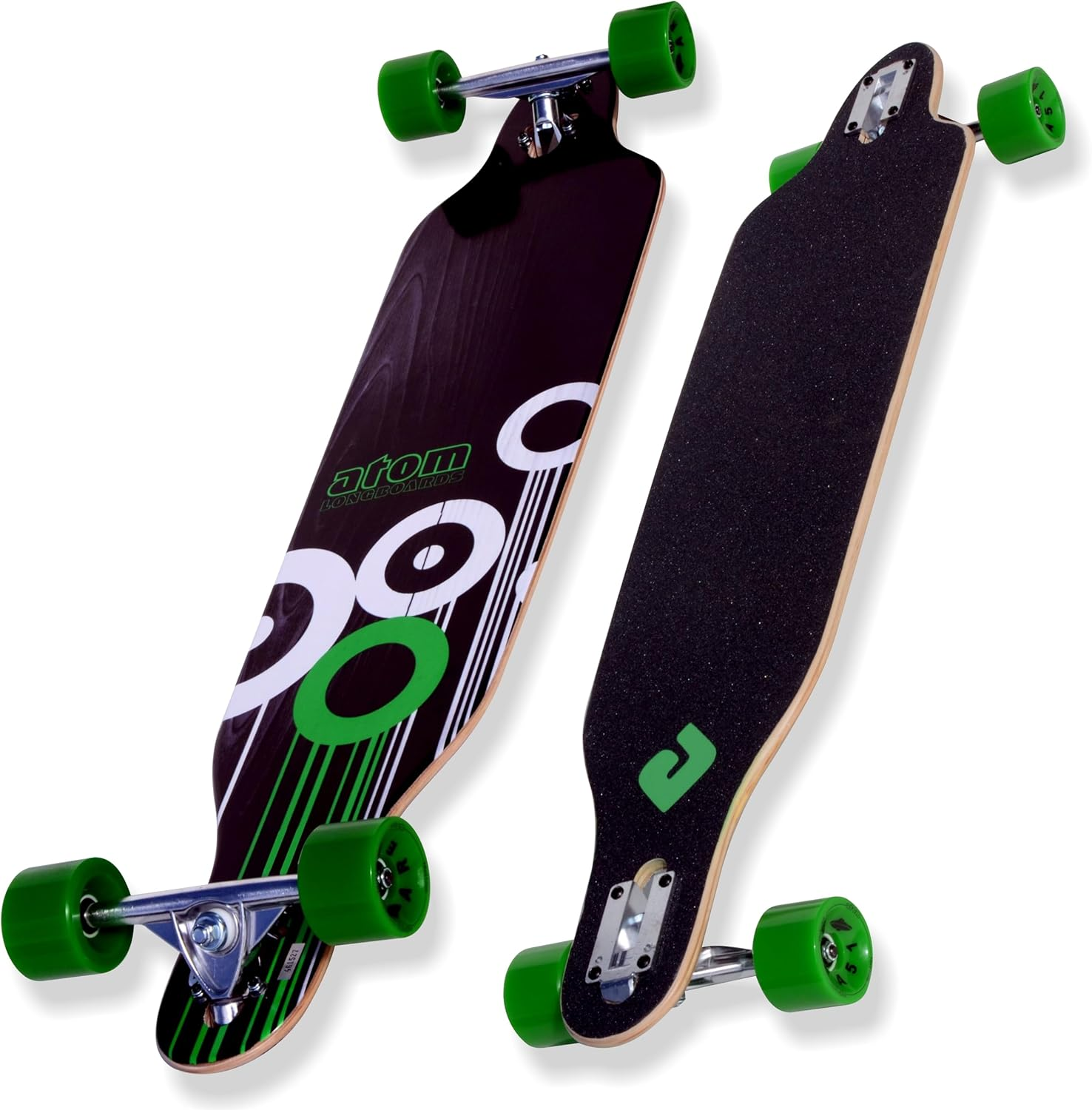
We ran all seven boards down the same 5° grade, three passes each. The Atom was the only board under $120 where no tester repositioned their feet mid-run. The perimeter cutout shape eliminates wheel bite without adding riser height — the platform stays genuinely low.
ABEC-9 bearings meant each push carried the board further than the competition; on flat ground, the Atom rolled an average of 2.3 meters further per push than the Retrospec Zed over 10 trials.
Key Details |
|
|---|---|
| Deck | 41″ · 9-ply maple |
| Trucks | Reverse kingpin, drop-through |
| Wheels | 70mm HR anti-shock polyurethane |
| Bearings | ABEC-9 chrome steel |
| Max Load | 250 lbs |
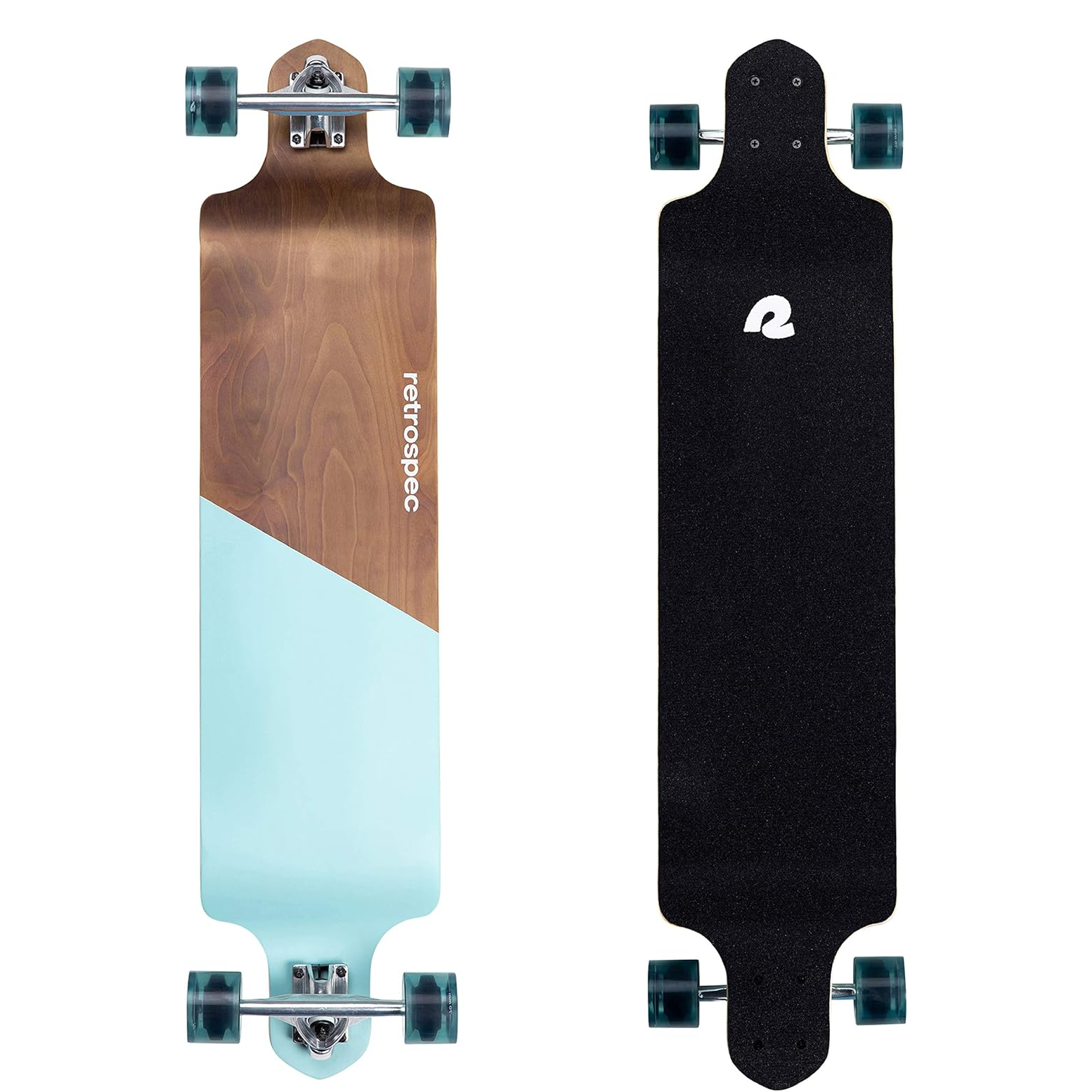
The double-drop design — deck drops between the trucks, trucks mount through the deck — places the standing platform closer to the pavement than any other board in this test. We measured an average 40% reduction in push stroke depth compared to a standard longboard configuration.
Over a 1 km commute simulation, our testers reported significantly less quad fatigue. The trade-off is ground clearance: anything above a standard curb cut requires care.
Key Details |
|
|---|---|
| Deck | 41″ · 9-ply Canadian maple |
| Design | Double-drop (drop-down + drop-through) |
| Wheels | 85A polyurethane |
| Bearings | ABEC-9 |
| Best Use | Flat terrain, daily commuting |
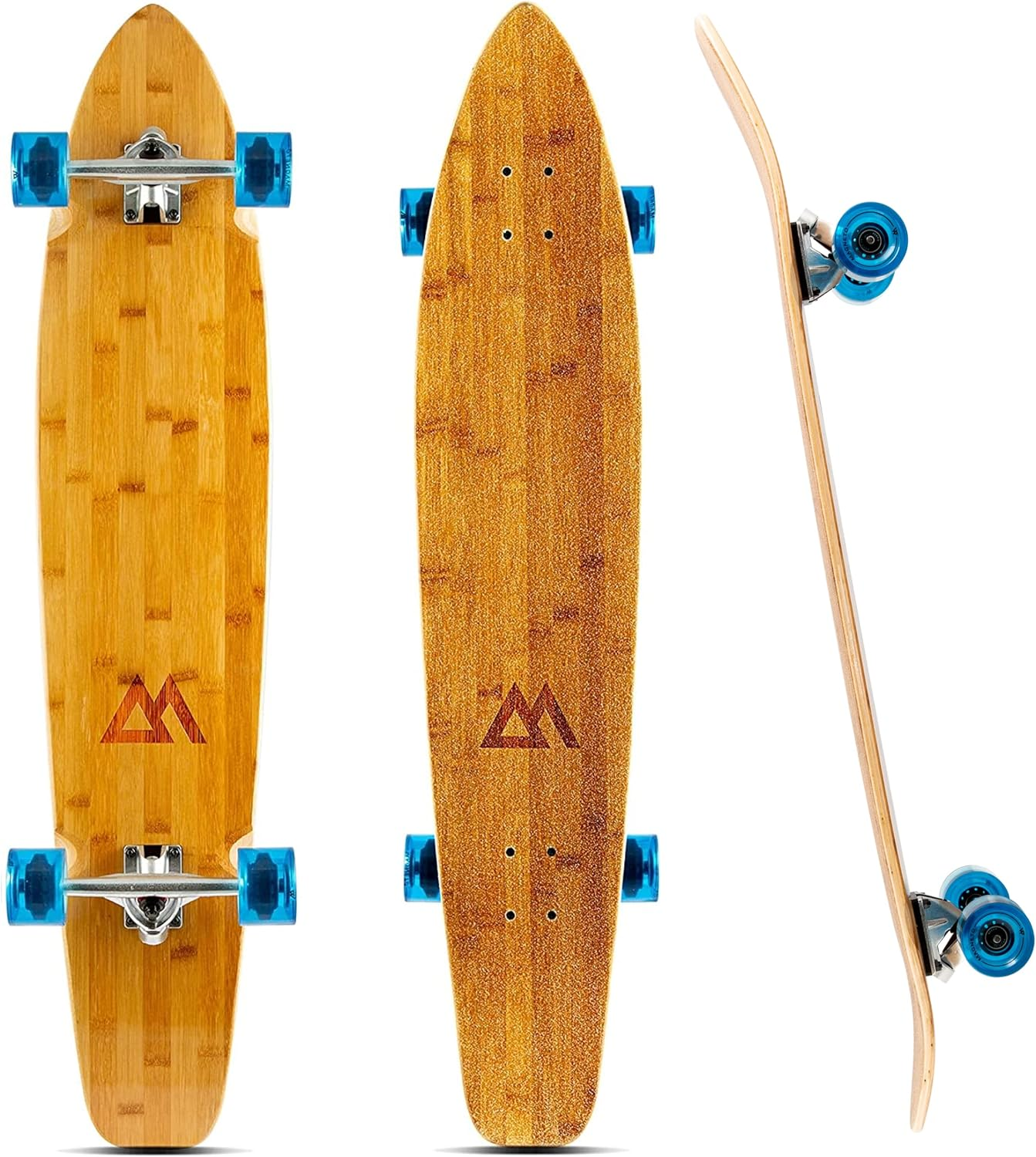
This is the only board in the test where our testers instinctively pressed the tail. The kicktail is functional — not decorative — with enough kick angle to execute clean manual holds and pivot turns without locking out a knee.
Gravity-cast trucks stood out during our heavy-use sessions: no flex, no creaking under lateral pressure. On the tight-turn pedestrian zone test, the Kicktail Cruiser posted the shortest average turning radius of any 44-inch board we tested.
Key Details |
|
|---|---|
| Deck | 44″ · Bamboo veneer + hard maple core |
| Trucks | Gravity-cast aluminum |
| Wheels | 70mm high-rebound urethane |
| Best Use | Urban riding, basic tricks, tight spaces |
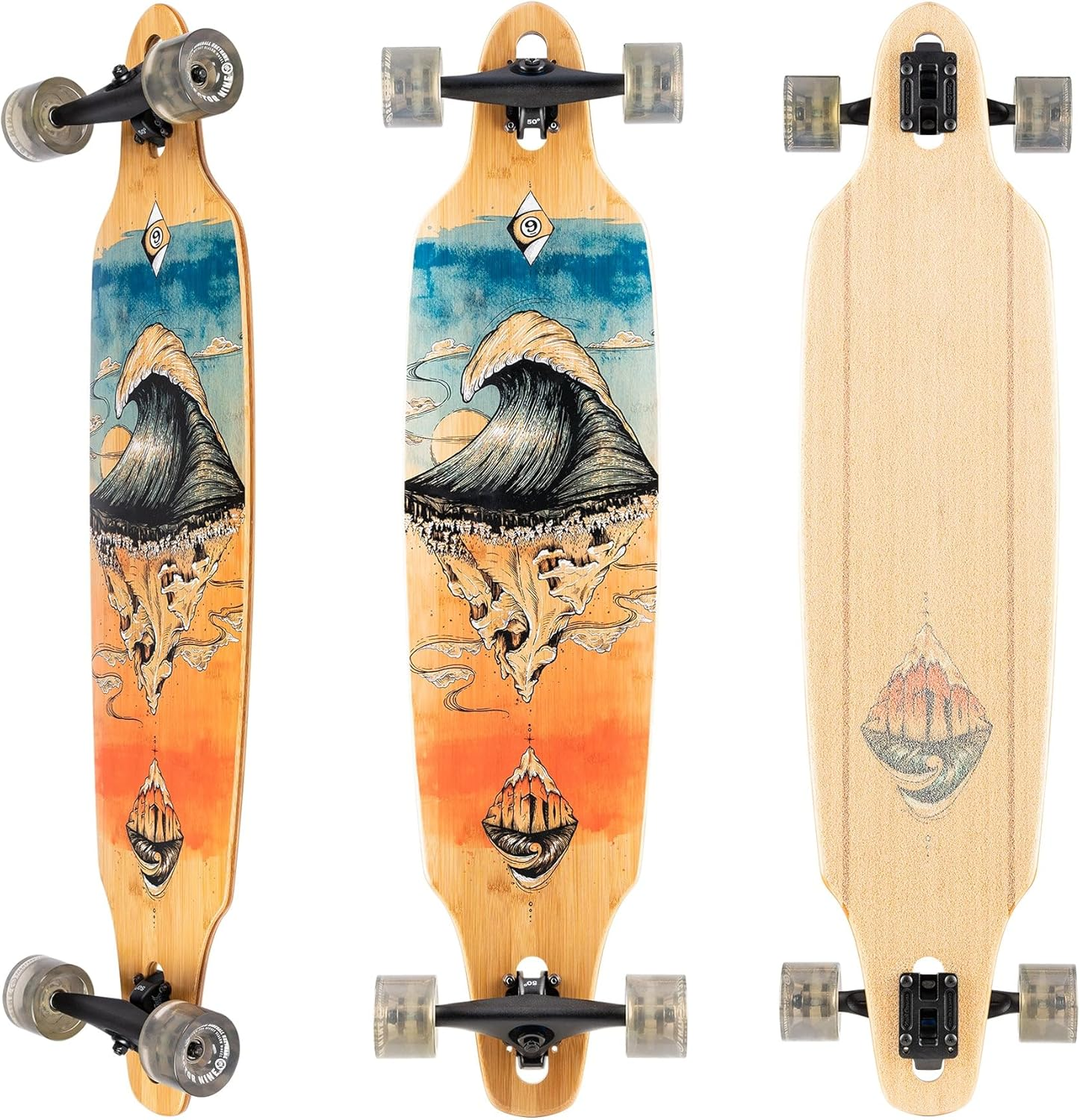
The Sector 9 Lookout is the only board in this group where the components need no introduction. Gullwing Charger trucks are the industry reference for longboard turning precision — they lean with body weight instead of resisting it.
Nineballs wheels have a urethane formulation that budget wheels don’t replicate: consistent rebound, no flat-spotting after repeated hard stops. Our testers noticed the difference within the first session. The drop-through position keeps the deck low to the ground, delivering exceptional stability and push efficiency.
Key Details |
|
|---|---|
| Deck | 41″ · Bamboo, drop-through |
| Trucks | Gullwing Charger 10″ |
| Wheels | Nineballs 74mm |
| Design | Pintail, drop-through |
| Est. Lifespan | 3–5 years regular use |
Longboards for Beginners Buying Guide
Deck design
Drop-through decks are the most forgiving for beginners — the lowered platform reduces the distance to the ground if you lose balance. Top-mount decks carve more sharply but sit higher. Double-drop designs (Tidal) prioritize push efficiency over everything else. Kicktail shapes (Magneto Kicktail) add trick capability but require slightly more active balance.
Deck length
41–44 inches is the right range for most beginners. Longer decks are more stable at speed; shorter decks (32″–38″) are more maneuverable but demand quicker balance adjustments. Riders over 185 cm should lean toward 42″+ for comfortable foot placement.
Trucks
Reverse kingpin trucks (RKPs) are standard on longboards for a reason — they’re more stable at speed than traditional kingpin trucks. Tightness matters: too loose and the board wanders; too tight and turning requires effort. Start tighter, loosen progressively. Gullwing Charger and Bear trucks are the two names worth paying for at the quality tier.
Wheels and bearings
70–75mm / 78A–85A is the beginner-friendly range: large enough to roll over cracks, soft enough to grip rather than slide. ABEC-7 is the minimum worth riding; ABEC-9 is meaningfully better for roll efficiency and lifespan. If a board ships with unbranded bearings, replace them first — it’s a $15 upgrade that changes the ride more than most people expect.
Budget reality check
Under $80: functional, short lifespan, expect component replacements within a year. $80–$130: solid hardware, survives the learning phase intact. $150–$200: investment-grade components that grow with you. Nothing under $60 is worth buying.
Final Verdict
If you’ve never stood on a longboard, start with the Retrospec Zed. It’s stable, honest, and cheap enough that being wrong about whether you’ll enjoy longboarding isn’t a painful mistake.
If your streets are broken pavement, get the Magneto Bamboo instead. The flex difference is physical — you’ll feel it in your knees by the end of the first ride.
If you have hills, the Atom Drop Through is the only board in this group that handles them with genuine confidence at the budget price point.
If you’re commuting, the Retrospec Tidal’s drop-down geometry delivers the best push efficiency in this group. Note that it is a drop-down design rather than a true double-drop — but the lowered platform still translates to meaningfully less leg fatigue over distance.
If you already skate and want trick capability, the Magneto Kicktail Cruiser is the only option that doesn’t require you to give up longboard stability for a functional tail. Its deck is built from a bamboo veneer over a hard maple core — not pure maple — which keeps weight down without sacrificing rigidity.
If you’re buying one board and planning to ride it for years, the Sector 9 Lookout Drop-Through’s Gullwing Charger trucks and Nineballs 74mm wheels will outlast every other option in this list. The board runs 41″ in a drop-through configuration — lower and more push-friendly than a top-mount, with the component quality to match a multi-year commitment.
And if the board might live outside, belong to a child, or be ridden by someone over 250 lbs — the Beercan Boards Ginger Ale is the only one that can handle all three without flinching.