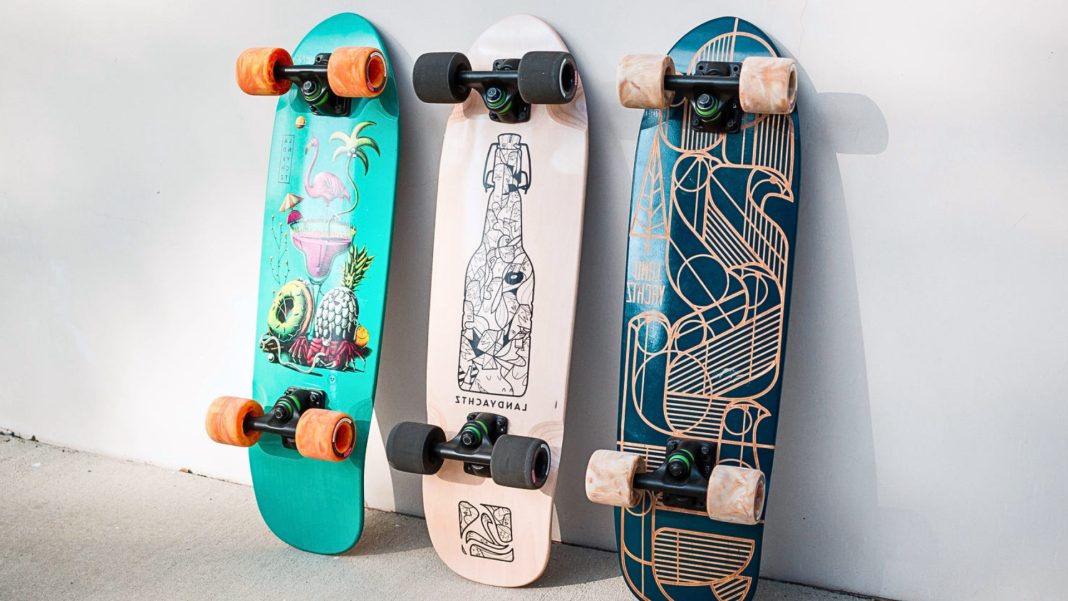


Most longboards aren’t built for you. That’s the honest truth nobody in the skate shop tells a 250-pound rider standing at the rack. The deck bows under your weight, the trucks flex unpredictably, and you get speed wobbles at speeds that wouldn’t rattle a lighter skater. The fix isn’t to ride less — it’s to ride the right board.
We put five boards through serious testing across hills, flat-ground commutes, rough pavement, and extended sessions. Every board was evaluated on structural integrity under real load, stability at speed, truck response, and how the deck held up without warping or deforming over time. These are the ones that made the cut.
Top Picks
Best Premium Pick: Loaded Boards Dervish Sama Flex 1
Best for Stability: Loaded Tangent
Best Budget Pick: Atom Drop Deck 41″
Best Wide Platform: Yocaher Drop Down 41.25″
Most Indestructible: Beercan Boards 40″ Kegger DTP
How We Tested
Weight limit claims on paper mean nothing until a board has actual rider weight on it — moving, turning, and hitting bumps. We tested all five boards with riders ranging from 220 to 310 lbs across four terrain types: smooth concrete, cracked urban pavement, moderate hills, and long flat pushes.
For each board, we evaluated structural integrity after extended sessions, stability at speed, truck response under load, and how the deck held up without warping. Bushings and wheel hardness were kept stock throughout to reflect what most buyers will actually ride. Boards that showed flex instability, truck deformation, or ride degradation over time were disqualified from the list entirely.
Detailed Reviews
1. Loaded Boards Dervish Sama
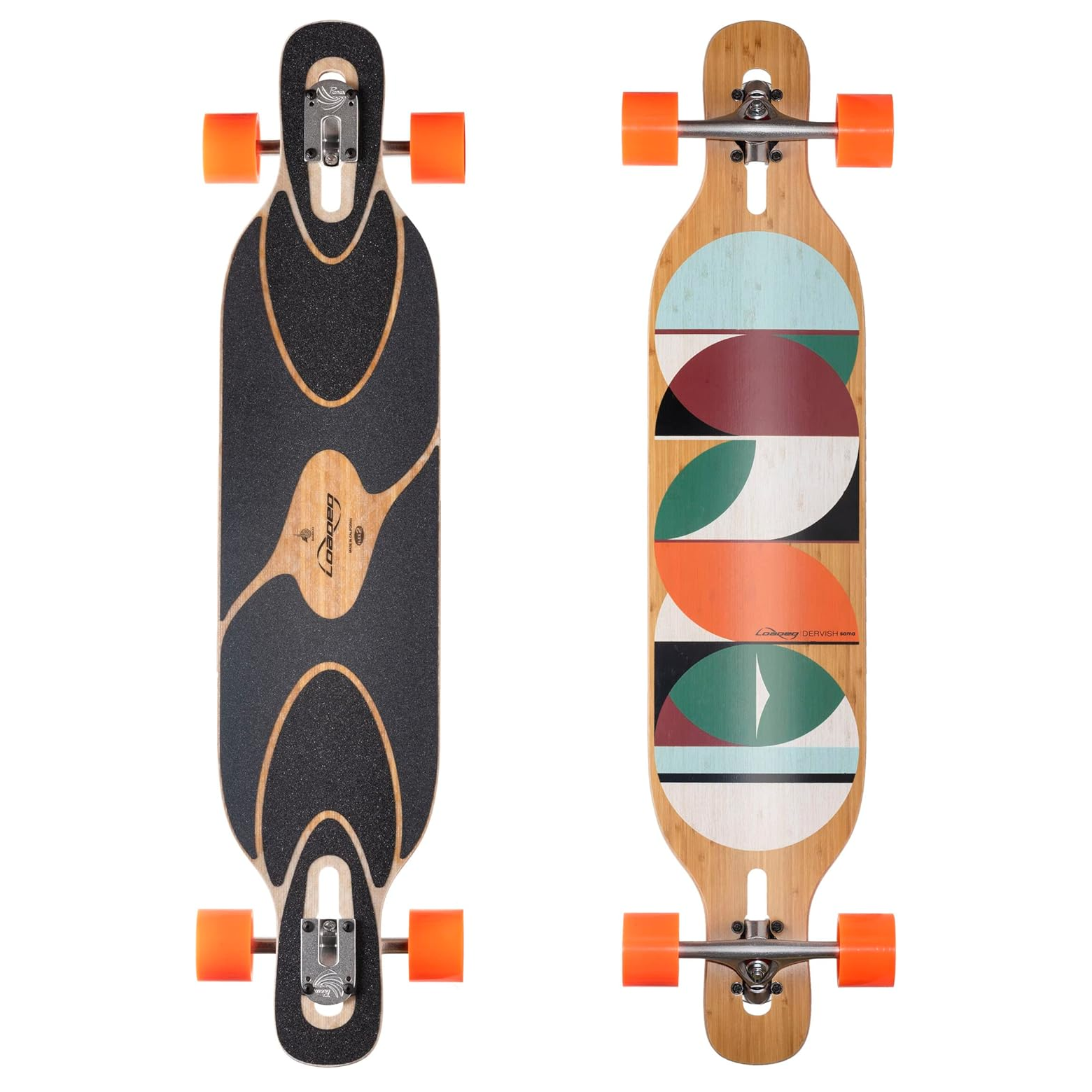
The Dervish Sama is the only board here with flex tuned to rider weight, not left to chance. Flex 1 (170–270+ lbs) uses vertically laminated bamboo and fiberglass—borrowed from snowboard construction—so it absorbs vibration through the material instead of excessive flex. That means it stays smooth underfoot without feeling unstable under load.
Paris 180mm 50° trucks handle cleanly at cruising speed, while 75mm Orangatang wheels glide over rough surfaces. Every component is solid out of the box—no upgrades needed. The camber and large wheel cutouts also allow deep carving without wheelbite, especially important for heavier riders.
Key Details |
|
|---|---|
| Deck Material | Vertically laminated bamboo and fiberglass |
| Deck Size | 42.8″ x 9″ | Wheelbase: 31.5″ |
| Construction | Drop-through with camber profile |
| Trucks | Paris 180mm 50° reverse-kingpin |
| Wheels | Orangatang 75mm 80a In Heat (or 75mm 83a Durian — rider’s choice) |
| Bearings | Loaded Jehu V2 |
| Flex | Flex 1: 170–270+ lbs | Flex 2: 90–185+ lbs |
| Riding Style | Carving, pumping, freestyle, freeride, urban commuting |
| Skill Level | All levels |
| Weight Capacity | 270+ lbs (Flex 1) |
2. Loaded Tangent
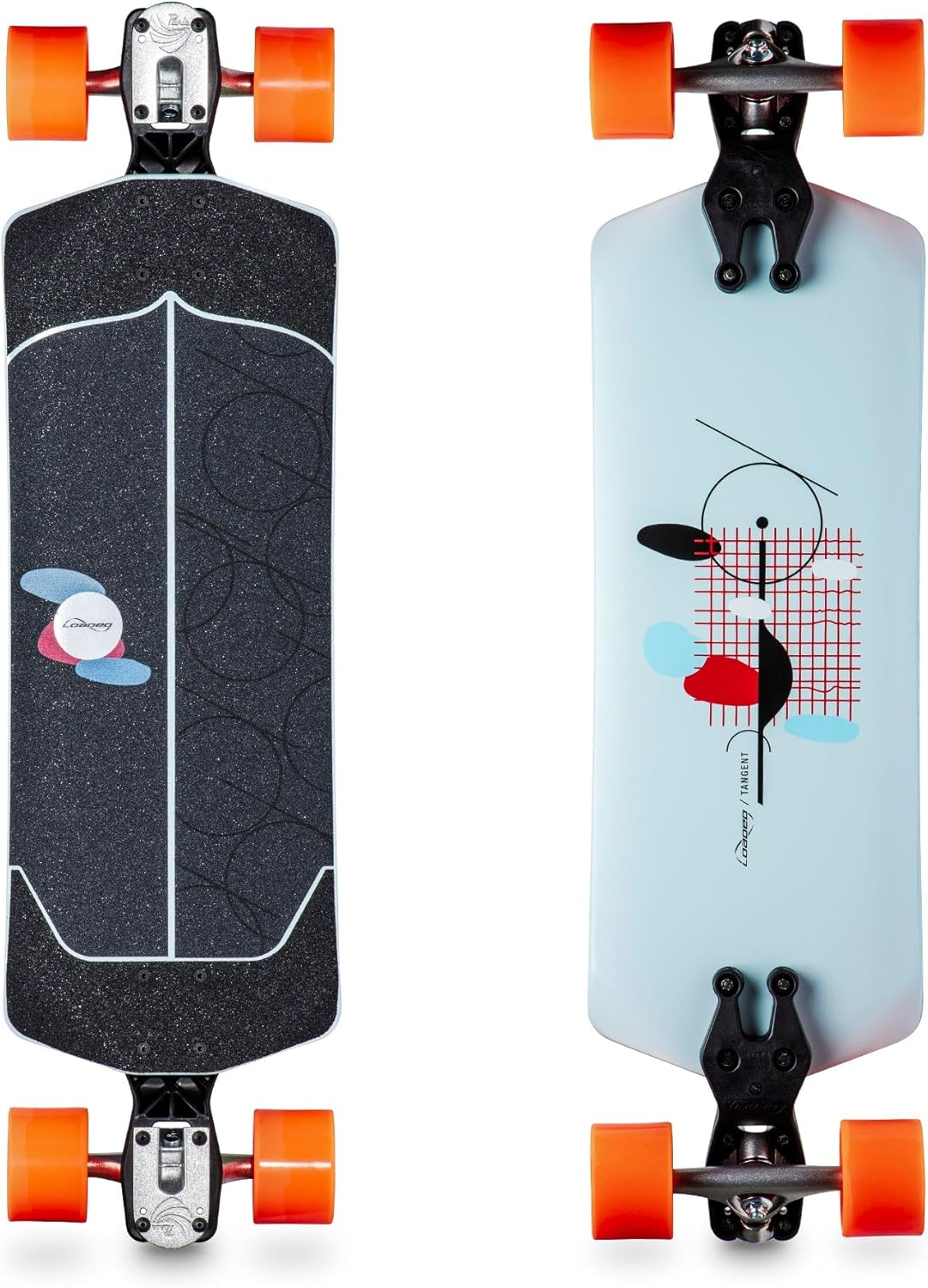
The Tangent is the only board here with a true, officially rated 300 lbs capacity—not a guess or marketing claim. Its maple and basalt construction keeps the deck rigid while still damping road vibration. The double-drop design lowers the platform significantly, reducing push effort and improving stability at speed.
A subtle rocker wedges the trucks for quicker turning than expected, while the 9.75-inch width gives larger feet proper room. The 105mm Orangatang Dad Bod wheels are the highlight, rolling over rough pavement with ease and making long rides far less tiring.
Key Details |
|
|---|---|
| Deck Material | Maple and basalt composite |
| Deck Length | 35.75″ (complete) | 26″ (deck) |
| Deck Width | 9.75″ |
| Wheelbase | 29.375″ (complete) | 20.25″ (deck) |
| Profile | Slight rocker |
| Flex | Subtle |
| Bracket | Loaded Zee Bracket |
| Trucks | Paris V2 150mm 50° (raw) |
| Wheels | Orangatang 105mm Dad Bod (77a, blue) or 85mm Caguama (80a, orange) |
| Bearings | Loaded Jehu V2 |
| Riding Style | Distance, commuting |
| Weight Capacity | Up to 300 lbs (normal use) | 300–350 lbs: minimize aggressive pumping |
3. Atom Drop Deck 41″
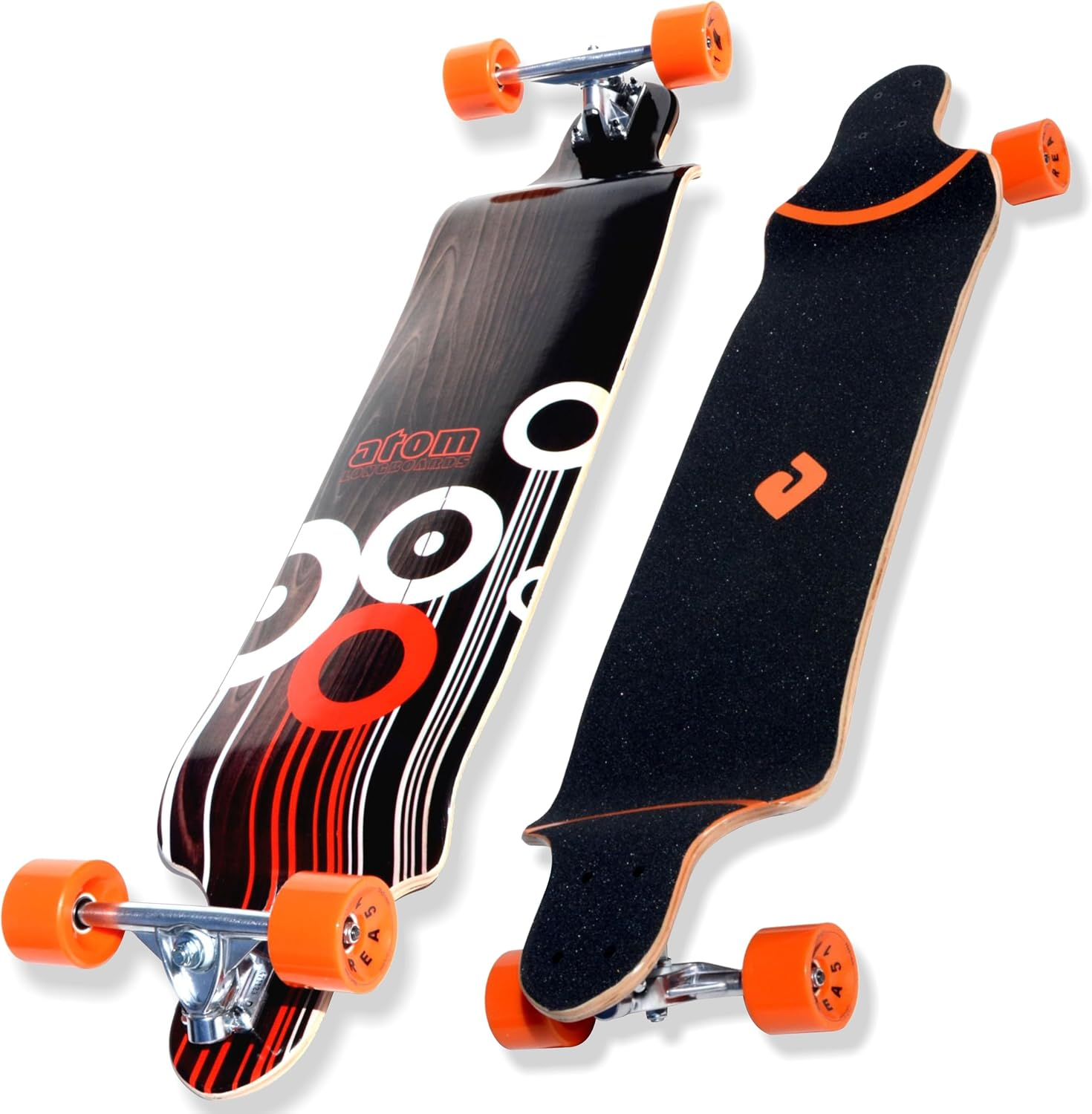
Budget boards usually cheap out on trucks—the Atom doesn’t. Its wide 245mm reverse kingpin setup helps prevent wheel bite, especially for heavier riders compressing bushings in turns. The drop-deck shape also eliminates clearance issues, so you can lean hard without resistance.
The 9-ply maple deck is impressively stiff for the price, and the 70mm wide-lip wheels grip well on urban terrain. The weak point is the stock bushings—they feel too soft over 220 lbs and should be upgraded to 90A–95A. The core setup is solid; the components are just placeholders.
Key Details |
|
|---|---|
| Deck Material | 9-Ply Maple laminate |
| Deck Size | 41″ x 9.5″ | Perimeter drop-deck shape |
| Construction | Drop-deck (top-mount trucks, lowered platform) |
| Trucks | Reverse King Pin (RKP) longboard trucks (245mm axles) | 50 degree base |
| Wheels | Atom wide lip 70mm diameter x 51mm wide — 78A — Super High Rebound |
| Bearings | Rubber shielded ABEC 9 with high speed lubricant |
| Grip | Durable 80 grit silicon carbide |
| Riding Style | Downhilling, long distance riding, commuting |
4. Yocaher Drop Down 41.25″
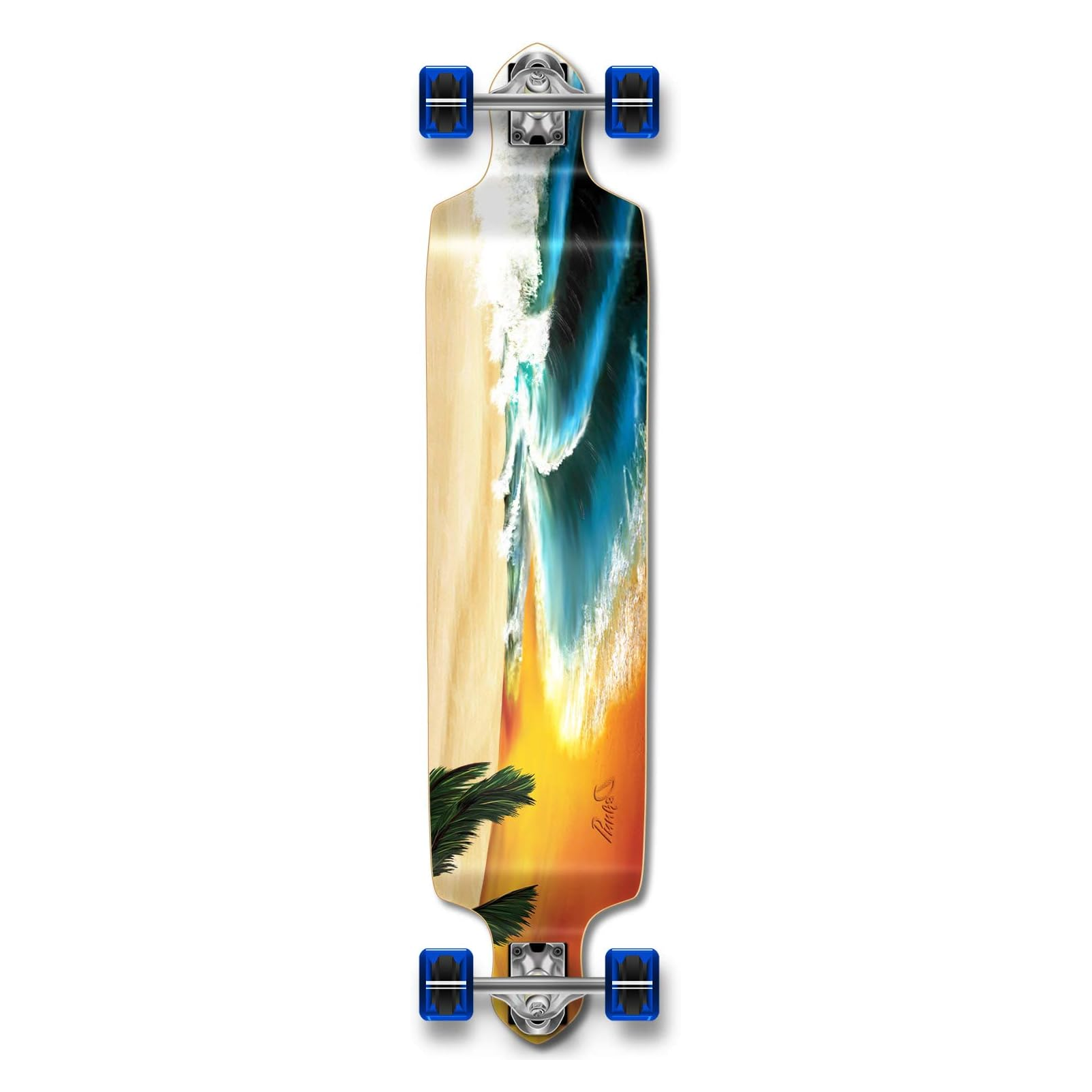
At 10 inches wide, the Yocaher Drop Down offers the most foot room on this list—ideal for larger riders or wider stances. Its 9-ply maple deck is fully rigid, delivering predictable performance without unwanted flex under load.
Grade 8 kingpins set it apart from other budget boards, handling higher torque without bending. The 125mm hanger adds stability, and the stock 90A bushings are already stiff enough for riders in the 220–250 lbs range without needing an immediate upgrade.
Key Details |
|
|---|---|
| Deck Material | 9-Ply Maple, high concave |
| Deck Size | 41.25″ x 10″ | Drop-down |
| Trucks | 7″ HD7 heavy duty aluminum alloy trucks | 125mm hanger | Grade 8 kingpin | 90A PU cushion |
| Wheels | 71mm 78A Q-Ball polyurethane |
| Bearings | ABEC-9 chrome |
| Deck Flex | None |
| Riding Style | Cruising, commuting, downhilling |
| Skill Level | All levels |
| Weight Capacity | 275 lbs |
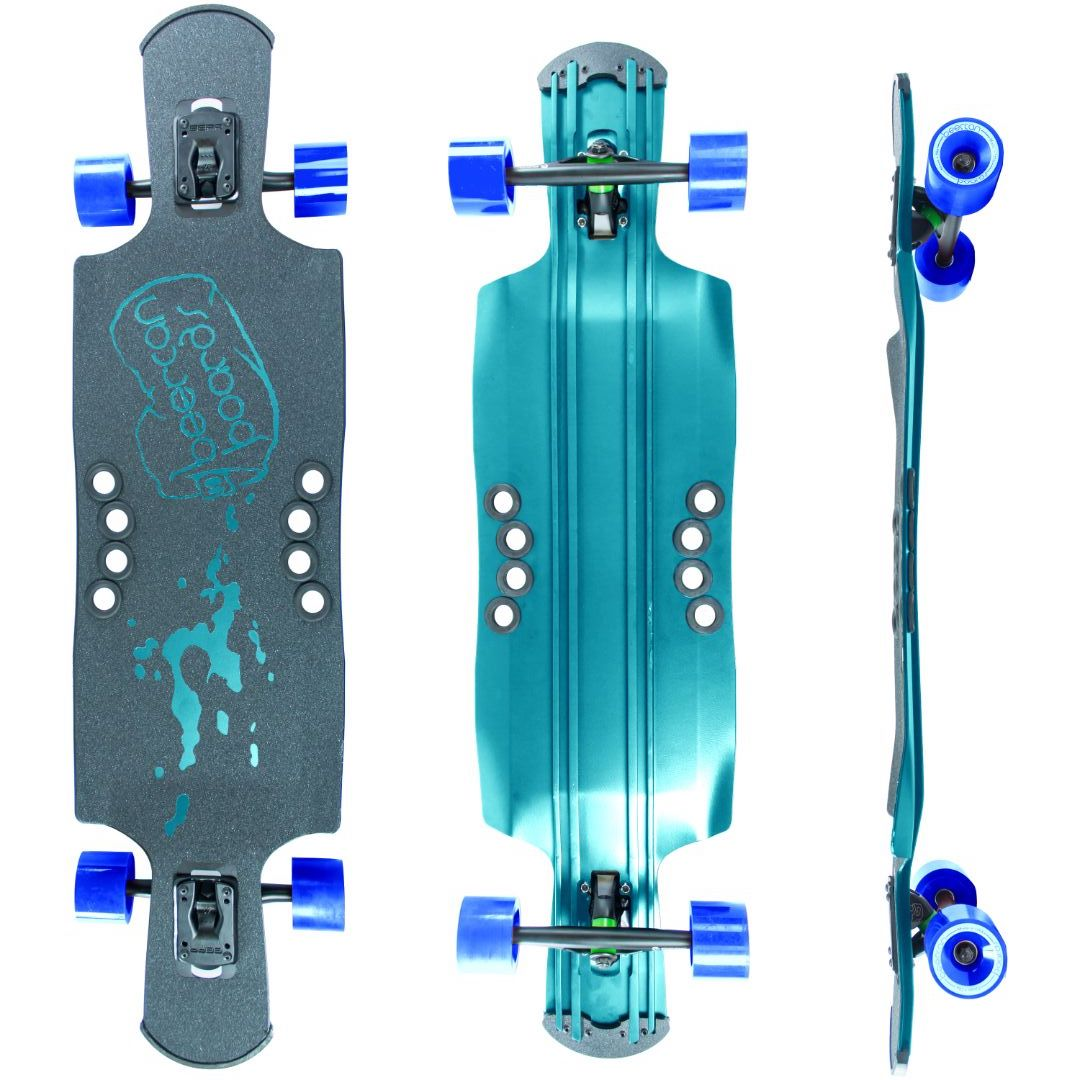
Unlike every other board here, the Kegger is made from recycled aluminum—handmade in Douglas, Georgia—and sits in a category of its own. It won’t warp, crack, or absorb moisture, and its 350+ lbs capacity is a real tested figure, the highest on this list.
At 10.5 inches wide, it’s also the widest. The double-kick design expands urban riding options, while the Tri-Plane Cave profile and drop-through mounting keep the ride low and stable. It comes with quality trucks (Paris, Bear, Caliber, or Gullwing) and even a finger grommet for easier carrying.
The tradeoff is ride feel: aluminum transmits more vibration and feels heavier than wood. It takes a short adjustment, but once dialed in, the durability and confidence are unmatched.
Key Details |
|
|---|---|
| Deck Material | Recycled aluminum and plastics (handmade in USA) |
| Deck Size | 40″ x 10.5″ (widest point) | Platform: 20″ |
| Deck Drop | 0.75″ |
| Wheelbase | 29″ |
| Profile | Tri-Plane Cave | Drop-through |
| Kicks | Double kick (nose and tail) |
| Trucks | Paris / Bear / Caliber / Gullwing (varies by variant) |
| Bearings | ABEC-9 |
| Extras | Finger grommet, bottle cap end caps, powder coat finish |
| Weight Capacity | 350+ lbs (tested) |
| Made in | Douglas, Georgia, USA |
| Riding Style | Freestyle, cruising, freeride, downhill |
Buying Guide: What Heavy Riders Actually Need
Deck Material and Ply Count
Standard longboards use 6 to 7 plies of maple, built for riders around 150 to 180 lbs. Heavy riders need 8 to 9 plies minimum, or alternative construction — bamboo with fiberglass, maple with basalt, or aluminum. More plies mean more resistance to flex under load and longer structural life before the deck loses its shape. Composite construction like the Dervish Sama and Tangent can match or exceed 10-ply maple stiffness while staying lighter.
Deck Geometry: Drop-Deck vs Drop-Through
Both designs lower the rider closer to the ground, which matters more for heavier riders than lighter ones. A lower center of gravity means more stability at speed and less push effort per stride. Drop-deck boards (like the Atom and Yocaher) keep the deck stiff because the trucks mount on top. Drop-through boards (like the Dervish Sama) mount the trucks through the deck for an even lower ride height. The Tangent’s bracket system combines both for the lowest platform of all.
Trucks: Brand and Hanger Width
Cheap trucks bend. For riders over 230 lbs, off-brand trucks are a structural liability — they will deform under repeated load and compromise turning precision. Stick to Paris, Bear, Caliber, or Gullwing. Wider hangers (180mm+) increase stability and reduce the leverage that causes speed wobble under heavy riders. The Grade 8 kingpin on the Yocaher is the budget-level equivalent of this principle applied to hardware specs.
Bushings: Harder Is Better
Stock bushings on most boards run 85A or softer — adequate for average-weight riders, inadequate for heavy ones. Riders over 220 lbs should plan to replace stock bushings with 90A to 95A double barrel. This single upgrade improves turn stability and eliminates the squirrely feeling that heavier riders notice on stock setups. The Atom is the board where this is most urgent; the Tangent is the board where it matters least.
Wheels: Diameter and Durometer
For heavy riders, 70 to 75mm wheels with a durometer between 78A and 85A are the target range. Larger diameter rolls over surface imperfections more easily. Mid-range hardness balances grip with rolling speed. Riders over 250 lbs may want to move toward the firmer end (85A to 90A) to prevent excessive wear. The Tangent’s 105mm Dad Bod option is the extreme version of this principle — maximum size, maximum roll distance per push.
Deck Width
Wider decks (9.5 inches and above) give heavier riders more foot room and a more stable platform for wider stances. For riders with shoe sizes US 11 and above, a 10-inch-plus deck makes a noticeable comfort difference on longer sessions. The Yocaher at 10 inches and the Kegger at 10.5 inches are the two boards on this list purpose-built for this requirement.
Verified Weight Capacity
The difference between rated weight and tested weight matters. Many brands list a conservative recommended limit rather than an actual test value. When boards publish test results — like the Tangent’s published 300 lbs capacity or the Kegger’s 350+ lbs test data — that figure is more meaningful than a generic spec sheet number. Treat any board without a published weight rating as rated for 200 lbs unless you have evidence otherwise.
Match the Board to the Actual Ride
- Long-distance commuting / pushing: Loaded Tangent — lowest ride height, biggest wheels, 300 lbs rated
- Premium all-around carving: Loaded Dervish Sama Flex 1 — bamboo and fiberglass construction, Paris trucks, weight-matched flex
- Budget entry point: Atom Drop Deck — wide axles, 9-ply maple, upgrade the bushings
- Maximum foot room: Yocaher Drop Down — 10-inch deck, Grade 8 hardware
- Outdoor / weathered use or 300+ lbs: Beercan Kegger — aluminum, indestructible, 350+ lbs tested
Final Verdict
Five boards, one question: which one makes sense for your actual weight, your actual terrain, and your actual budget?
The Loaded Dervish Sama Flex 1 is for riders who want a board that was actually designed with their weight in mind — the flex rating, the bamboo and fiberglass construction, and the Paris trucks are all working together rather than working against each other. It is the most complete out-of-the-box package on this list.
The Loaded Tangent is for the heavy rider who covers real distance on foot power alone. Its 300 lbs published capacity, double-drop bracket geometry, and 105mm wheel option combine to produce a board where longer pushes feel genuinely easier — not just marginally so.
The Atom Drop Deck is for the rider who needs to start somewhere without overspending. The 245mm axle width is the single design decision that makes it worth recommending despite the budget components — it solves the wheel bite problem that makes heavy riders uncomfortable on narrower setups.
The Yocaher Drop Down is for the rider whose primary complaint about every other longboard is that there isn’t enough foot room. Ten inches of deck width and Grade 8 hardware at a budget price is a combination that doesn’t exist elsewhere on Amazon in this category.
The Beercan Kegger stands apart from everything else on this list. Aluminum doesn’t warp, doesn’t delaminate, and doesn’t care about rain. If you have broken boards before, or if your weight exceeds what any wood deck can confidently handle, the Kegger is the answer — not just the best answer, the only answer.