
Five miles from the ramp with a dead battery isn’t a hypothetical — I’ve been there. That experience taught me more about trolling motor batteries than any spec sheet: when power fades under load, everything else fades with it.
Most buying decisions come down to price, but the variables that actually matter — voltage sag, depth of discharge, cold-weather cutoff, weight distribution — never appear in a one-line product description.
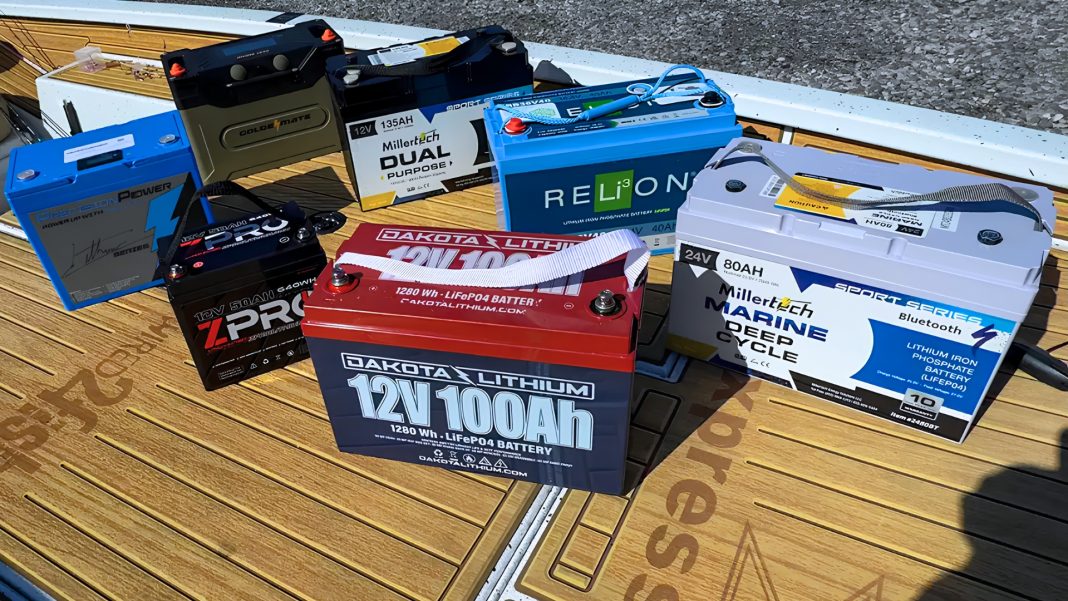
Over several months, I tested six batteries across freshwater lakes, coastal flats, and cold-morning conditions. The results are ranked below, each evaluated on its own terms.
Top Picks
Best Warranty: Dakota Lithium 54Ah 12V LiFePO4
Best Smart Monitoring: LiTime 12V 100Ah Bluetooth Marine & RV
Best Usable Capacity: Battle Born 100Ah 12V LiFePO4
Best Dual-Purpose: Optima BlueTop D31M AGM
Best Budget AGM: VMAXTANKS VMAXSLR125 AGM
How We Tested
Each battery underwent three evaluation phases. First, real-world discharge tests at varied motor speeds, measuring runtime and logging voltage every 30 minutes to track sag and fade.
Second, cold-condition testing in low-40s°F water temperatures, noting any unexpected power cuts or failure to deliver rated amperage.
Third, recharge monitoring tracked charge acceptance, heat generation, and post-test inspection for cell swelling or casing deformation. Physical build quality was also assessed, including terminal construction, casing rigidity, vibration resistance, and ease of installation. Only batteries that passed all three phases made the list.
Detailed Reviews
1. LiTime 12V 100Ah TM LiFePO4
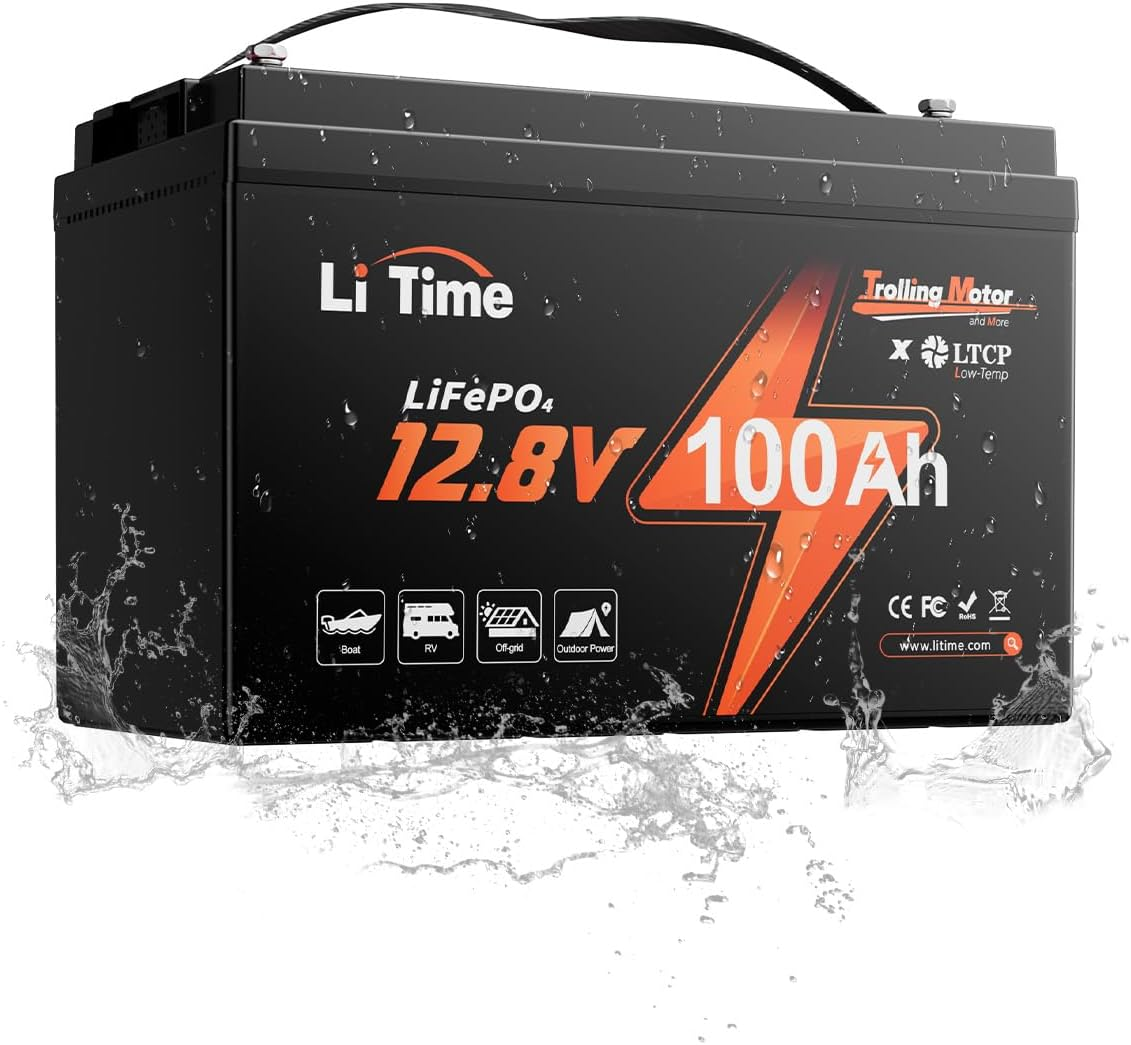
What sets this battery apart is its combination of three simultaneously active protection systems — dust, water spray, and salt-spray corrosion — found in no other unit at this price range. A low-temperature cutoff further ensures safe operation in harsh conditions.
The 100A BMS delivered clean, consistent power through a full eight-hour session without a single voltage alarm. Mounting is straightforward, fits standard Group 31 trays, and at 26 lbs — roughly half the weight of a comparable AGM — it makes a tangible difference on smaller hulls.
Key Details |
|
|---|---|
| Chemistry | LiFePO4 (Lithium Iron Phosphate) |
| Capacity | 100Ah |
| Voltage | 12V |
| Weight | ~26 lbs |
| Cycle Life | 4,000+ cycles |
| BMS | 100A with triple marine protection |
| Warranty | 5-year warranty |
2. Dakota Lithium 54Ah 12V LiFePO4
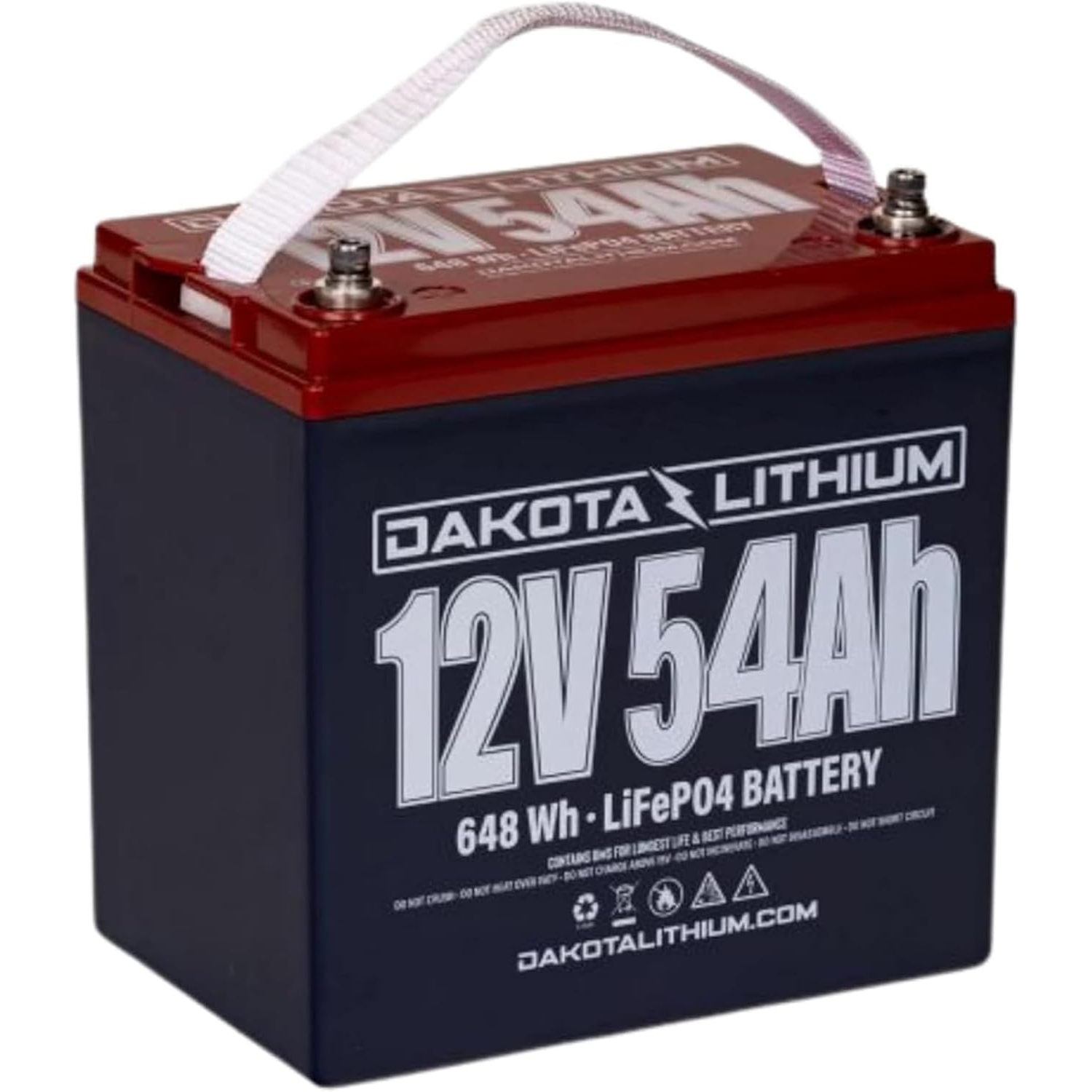
No other trolling motor battery offers an 11-year warranty, and Dakota Lithium has maintained it consistently across multiple product generations — a strong signal of cell longevity. At ~14 lbs, the weight advantage is transformative for kayak anglers.
In a full day of technical flats fishing against current, wind, and tide, the battery finished above 80% charge with no performance drop. Charging was rapid, and the compact form factor fits neatly into a rear hatch.
The 54Ah capacity is the honest trade-off — sufficient for all-day 12V use but not designed for 24V or 36V setups. Within its intended scope of kayaks and small-hull applications, it is genuinely best-in-class.
Key Details |
|
|---|---|
| Chemistry | LiFePO4 (Lithium Iron Phosphate) |
| Capacity | 54Ah |
| Voltage | 12V |
| Weight | ~14 lbs |
| Cycle Life | 3,000–5,000 cycles @ 80% depth of discharge |
| Warranty | 11 years — longest in the industry |
| Ideal Motor Thrust | 30–55 lb thrust, 12V systems |
3. LiTime 12V 100Ah Bluetooth
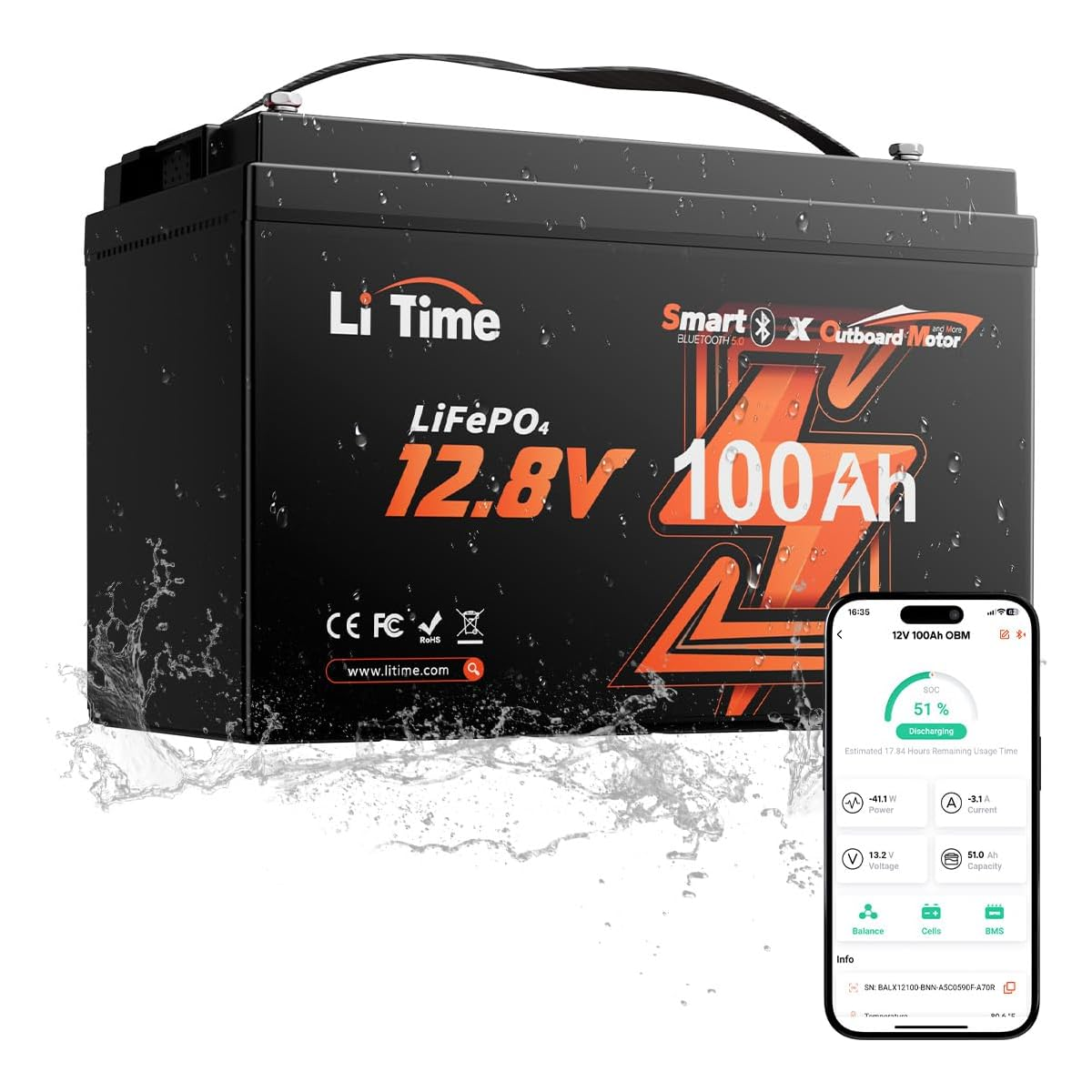
The LiTime Bluetooth version solves one of fishing’s most common frustrations — not knowing how much charge is left. A companion app delivers live voltage, remaining capacity, and cell health data, eliminating the need for a separate battery monitor.
As a 100Ah LiFePO4, it performed well across multi-day testing with consistent power delivery, clean BMS response, and a manageable 24-lb weight. Bluetooth signal held stable up to 30 feet throughout full-day sessions.
The trade-off: it lacks the triple marine protection and low-temperature cutoff found on the TM model, making it best suited for mild-weather freshwater use rather than coastal or cold-climate conditions.
Key Details |
|
|---|---|
| Chemistry | LiFePO4 (Lithium Iron Phosphate) |
| Capacity | 100Ah |
| Voltage | 12V |
| Weight | ~24 lbs |
| Cycle Life | 4,000+ cycles |
| Connectivity | Bluetooth with companion app |
| BMS | Built-in overcharge, over-discharge, short circuit protection |
| Warranty | 5 years |
4. Battle Born 100Ah 12V LiFePO4
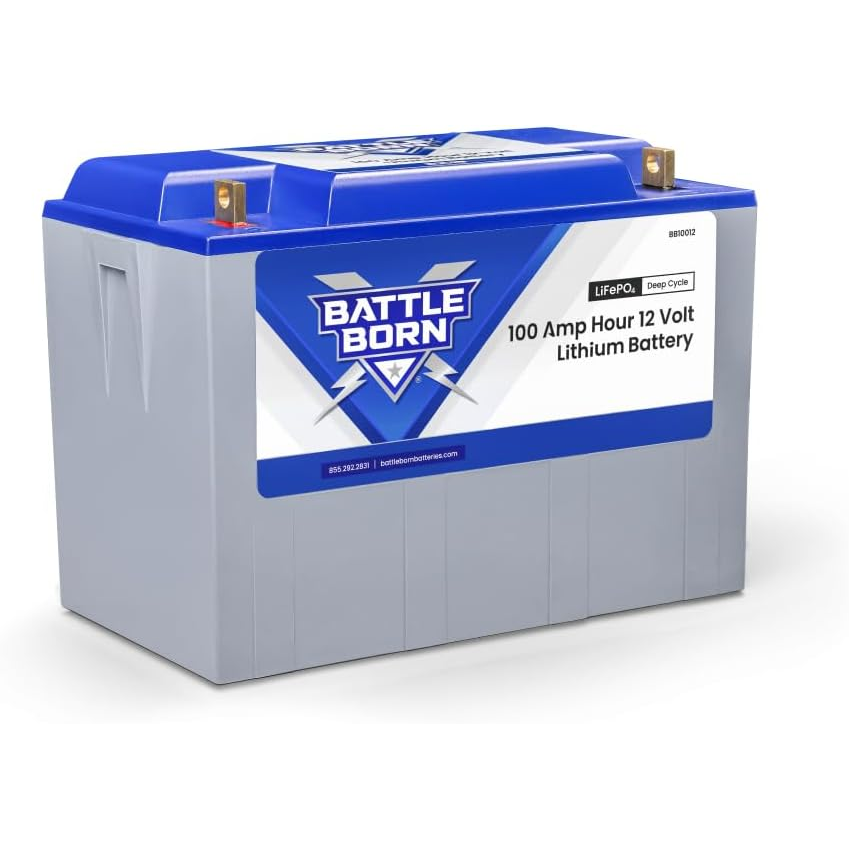
Unlike most batteries where rated capacity rarely matches real-world delivery, Battle Born’s 100Ah means 100Ah actually delivered under load.
In a full tournament-simulation day — full-speed bursts, sustained mid-throttle, and max-thrust against current — voltage held flat and stable until the final 5%, then dropped cleanly with no sag or fade. The BMS handled every high-draw event without complaint.
The trade-off is price: for occasional anglers it’s hard to justify, but for anyone fishing 40+ days a year or competing where every amp-hour counts, the real-world capacity advantage is worth it.
Key Details |
|
|---|---|
| Chemistry | LiFePO4 (Lithium Iron Phosphate) |
| Capacity | 100Ah rated / ~100Ah usable |
| Voltage | 12V |
| Weight | 31 lbs |
| Cycle Life | 3,000–5,000 cycles |
| Depth of Discharge | 100% usable (vs. 50% for AGM) |
| Warranty | 10 years |
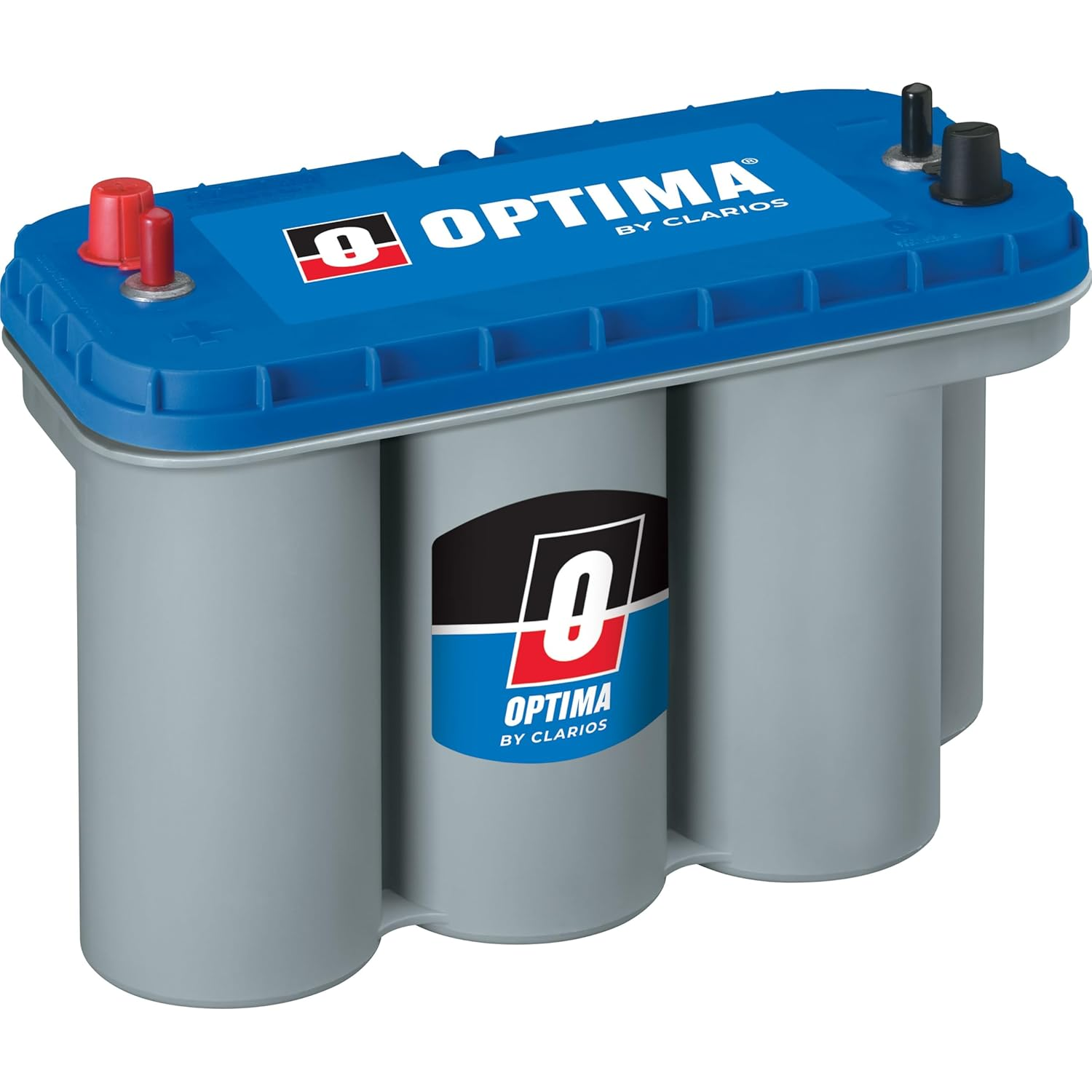
The Optima BlueTop D31M is the only dual-purpose battery on this list, handling both engine starting and deep-cycle trolling — letting smaller rig owners eliminate a second battery entirely. Its SpiralCell architecture delivers 900 cold cranking amps with genuine deep-cycle capacity and proven vibration resistance on rough water.
The trade-offs are inherent to AGM: usable output is roughly 37.5Ah at 50% DoD, and 60 lbs is a significant weight commitment. For anglers running a small aluminum boat with a 12V motor and outboard, it’s a genuine solution rather than a compromise.
Key Details |
|
|---|---|
| Chemistry | AGM (Absorbed Glass Mat) |
| Technology | SpiralCell dual-purpose design |
| Cranking Amps | 900 CCA |
| Capacity | 75Ah (C/20) / 155-minute reserve capacity |
| Group Size | D31M |
| Weight | ~60 lbs |
| Design | Spill-proof, vibration-resistant |
| Application | Engine starting + deep-cycle trolling |
6. VMAXTANKS VMAXSLR125 AGM
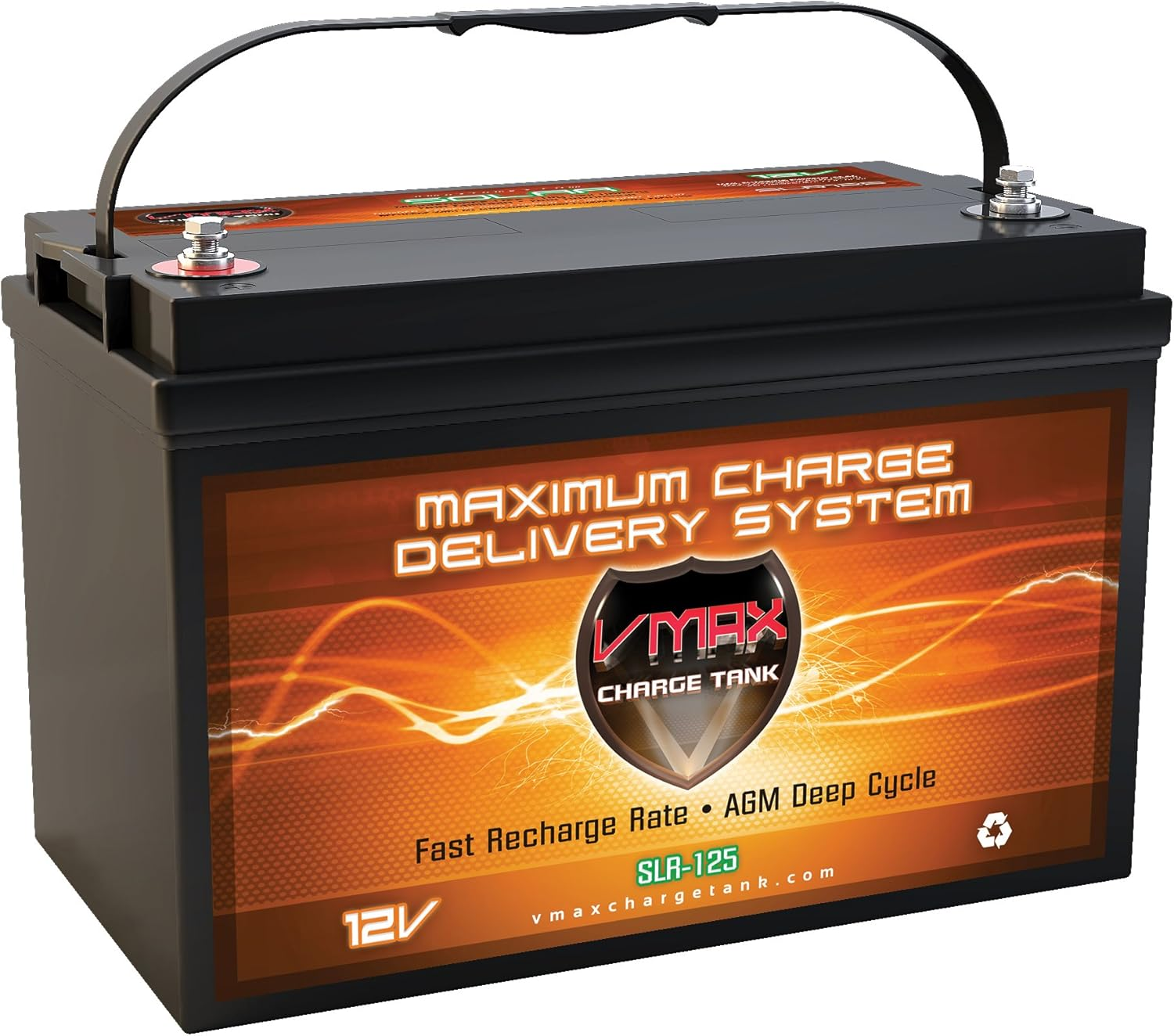
The VMAXTANKS VMAXSLR125 delivers the highest AGM capacity at this price point — 125Ah rated, or a full day of low-to-moderate trolling at 50% discharge. Sealed construction means zero maintenance, and performance held consistently across two consecutive full-day sessions.
The trade-offs: 75 lbs is the heaviest in this comparison, cycle life suffers if regularly discharged past 50%, and the 12-month warranty is the shortest here. For a first trolling motor setup or casual weekend use, it offers more capacity per dollar than any lithium at this budget.
Key Details |
|
|---|---|
| Chemistry | AGM (Absorbed Glass Mat) |
| Capacity | 125Ah (62.5Ah usable at 50% DoD) |
| Voltage | 12V |
| Weight | ~75 lbs |
| Design | Maintenance-free sealed AGM |
| Reserve Capacity | 200+ minutes |
| Warranty | 12 months |
| Ideal Use | Moderate trolling, pontoons, small bass boats |
Trolling Motor Battery Buying Guide
LiFePO4 vs. AGM
LiFePO4 is the dominant technology for serious trolling applications: flat voltage across the full discharge curve, 100% usable depth of discharge versus 50% for AGM, significantly lower weight, and 5–10x longer cycle life. The higher upfront cost pays for itself over 2–3 seasons for frequent users. AGM remains a legitimate choice for occasional anglers, dual-purpose setups, or budget-constrained rigs — the technology is mature and requires no special charging equipment.
Voltage: Match Your Motor Exactly
12V motors (30–55 lb thrust): one 12V battery. 24V motors: two 12V batteries in series. 36V motors: three 12V batteries in series or one dedicated 36V lithium unit. Mismatched voltage permanently damages both motor and battery — there is no safe approximation.
Capacity: Runtime Calculation
Divide battery capacity (Ah) by your motor’s average amp draw to estimate runtime. A 100Ah LiFePO4 at 25A average draw delivers roughly four hours at sustained speed — and delivers all 100Ah usably. A 100Ah AGM delivers approximately 50Ah before risking premature cell death.
Weight and Form Factor
On kayaks and small aluminum boats, battery weight directly affects handling and balance. A ~14-lb Dakota Lithium versus a 60-lb AGM changes how the boat sits in the water. On larger bass boats or pontoons, weight matters less and AGM’s cost advantage becomes more compelling.
Cold Weather Performance
Standard LiFePO4 should not be discharged below 32°F without a low-temperature protection BMS. Batteries with thermal cutoff — like the LiTime TM — automatically prevent discharge below the safe threshold. AGM loses roughly 30–40% capacity at 0°F but can discharge slowly without cell damage.
BMS: Don’t Overlook It
A quality BMS prevents overcharge, over-discharge, short circuit, and thermal runaway. Rate it at or above your motor’s peak amp draw. A 100A BMS on an 80A-draw motor leaves adequate headroom; undersizing will trip the protection circuit at full throttle.
Final Verdict
The LiTime TM earns the top position for anyone fishing serious conditions — triple marine protection, low-temperature cutoff, 100A BMS, and 4,000+ cycles in a single package. For real-time battery visibility, the Bluetooth variant is the more practical daily driver. Kayak anglers who prioritize long-term confidence should look at the Dakota Lithium first — its 11-year warranty and ~14-lb weight are in a class of their own at 54Ah.
When one battery needs to start the outboard and run the trolling motor, the Optima BlueTop D31M is the only viable dual-purpose option here — just account for its 75Ah rated capacity and ~37.5Ah effective output at 50% DoD. For a firm budget cap, the VMAX AGM delivers more rated capacity per dollar than any lithium unit at its price point, though its 12-month warranty makes it a shorter-term commitment than it first appears.
Every battery here earned its place. The right one depends on how you fish, not how anyone else does.