

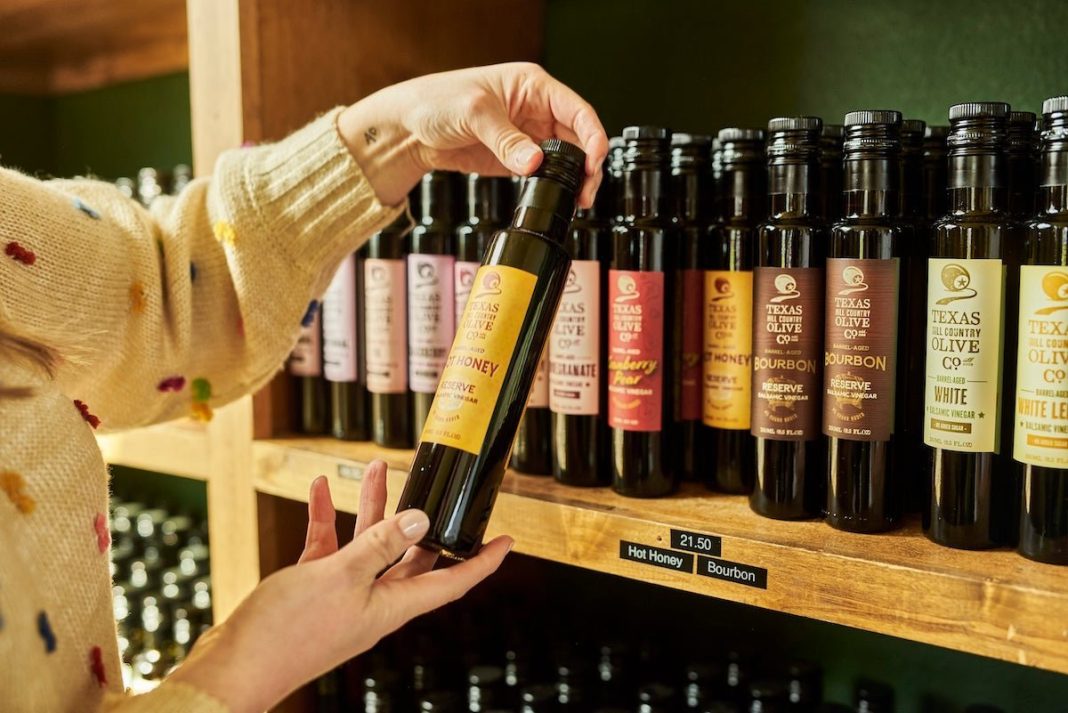
Most balsamic vinegar guides rank bottles against each other as if they all do the same thing. They don’t. A dense, syrupy finishing balsamic that’s perfect over a cheese board will disappoint you in a marinade. A clean, acidic everyday vinegar will fall flat as a bread dip.
The nine picks below are matched to how you’ll actually use them — not ranked against each other, but chosen for a specific job. One for cooking, one for drizzling, one for salad dressings, one for dipping bread, and so on. Find your use case, get the right bottle.
Top Picks
BEST FOR COOKING & MARINADES: Colavita Aged Balsamic Vinegar of Modena IGP
BEST FOR DRIZZLING & FINISHING: Due Vittorie Oro Gold
BEST FOR DIPPING BREAD: Nonna Pia’s Classic Balsamic Glaze
BEST FOR SALADS & CHEESE: Giusti 3 Gold Medals Gran Deposito
BEST FOR CAPRESE & PIZZA: Alessi Balsamic Vinegar Reduction (Traditional)
BEST FOR DESSERTS & ICE CREAM: Mantova Organic Flavored Balsamic Vinegar 4-Pack
BEST EVERYDAY DRIZZLE: Blazing Bella Barrel Aged Balsamic Vinegar
BEST FOR SALAD DRESSINGS: Carandini Emilio Balsamic Vinegar of Modena
BEST ORGANIC: Fini Balsamic Vinegar of Modena
Detailed Reviews
1. Colavita Aged Balsamic Vinegar of Modena IGP
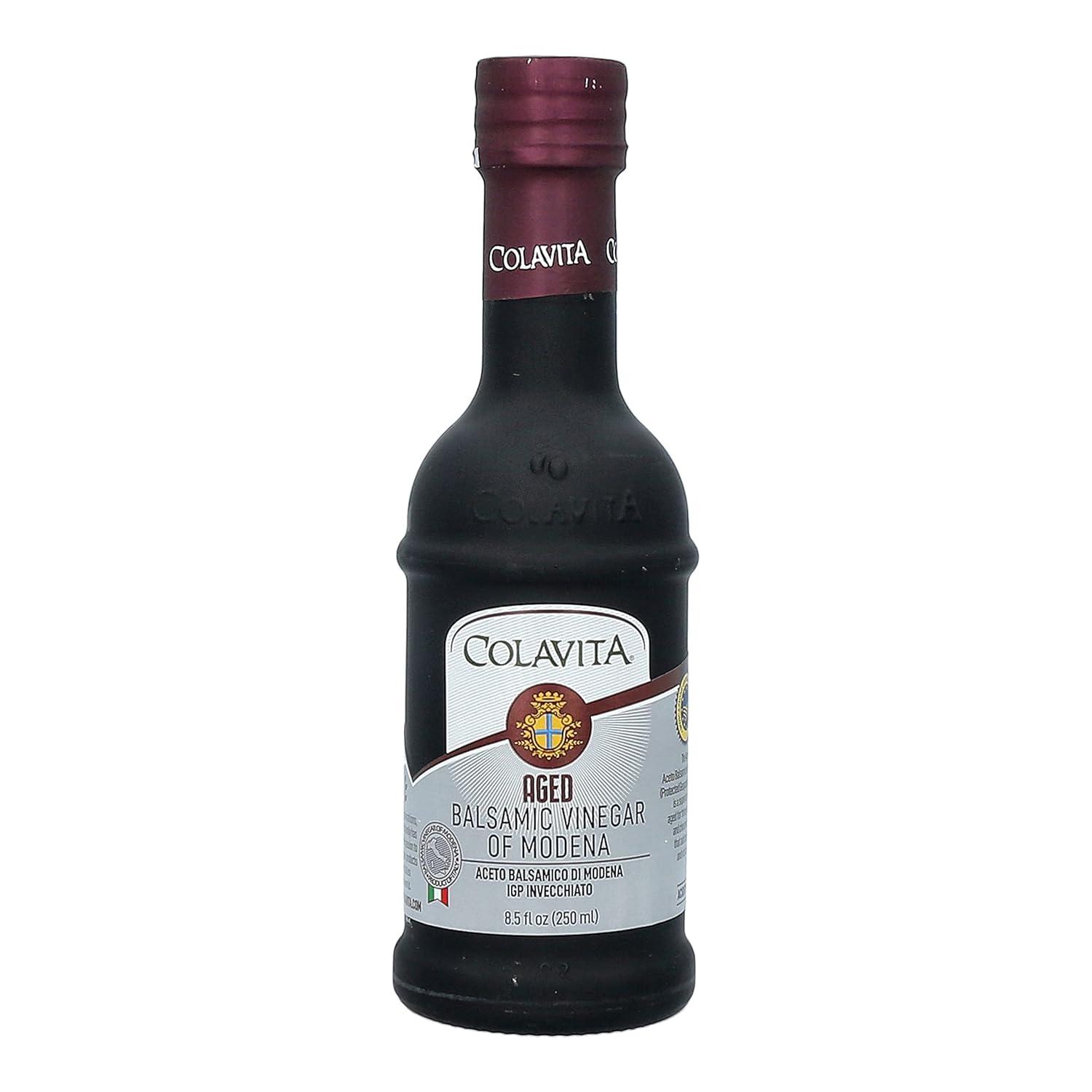
Three years of aging across oak, cherry, and walnut barrels gives Colavita a backbone that holds up to heat — where thinner balsamics turn flat in a pan, this one doesn’t.
The 55% grape must content puts it well above the Italian legal minimum, which means more body and sweetness without additives. It’s the bottle you reach for when deglazing a pan, building a meat sauce, or whisking together a quick marinade, not for finishing a plate.
Key Details |
|
|---|---|
| Certification | IGP |
| Aging | 3 years |
| Grape Must | 55% |
| Acidity | 6% |
| Volume | 8.5 fl oz (250ml) |
| Best For | Marinades, glazes, deglazing, pasta sauces |
2. Due Vittorie Oro Gold
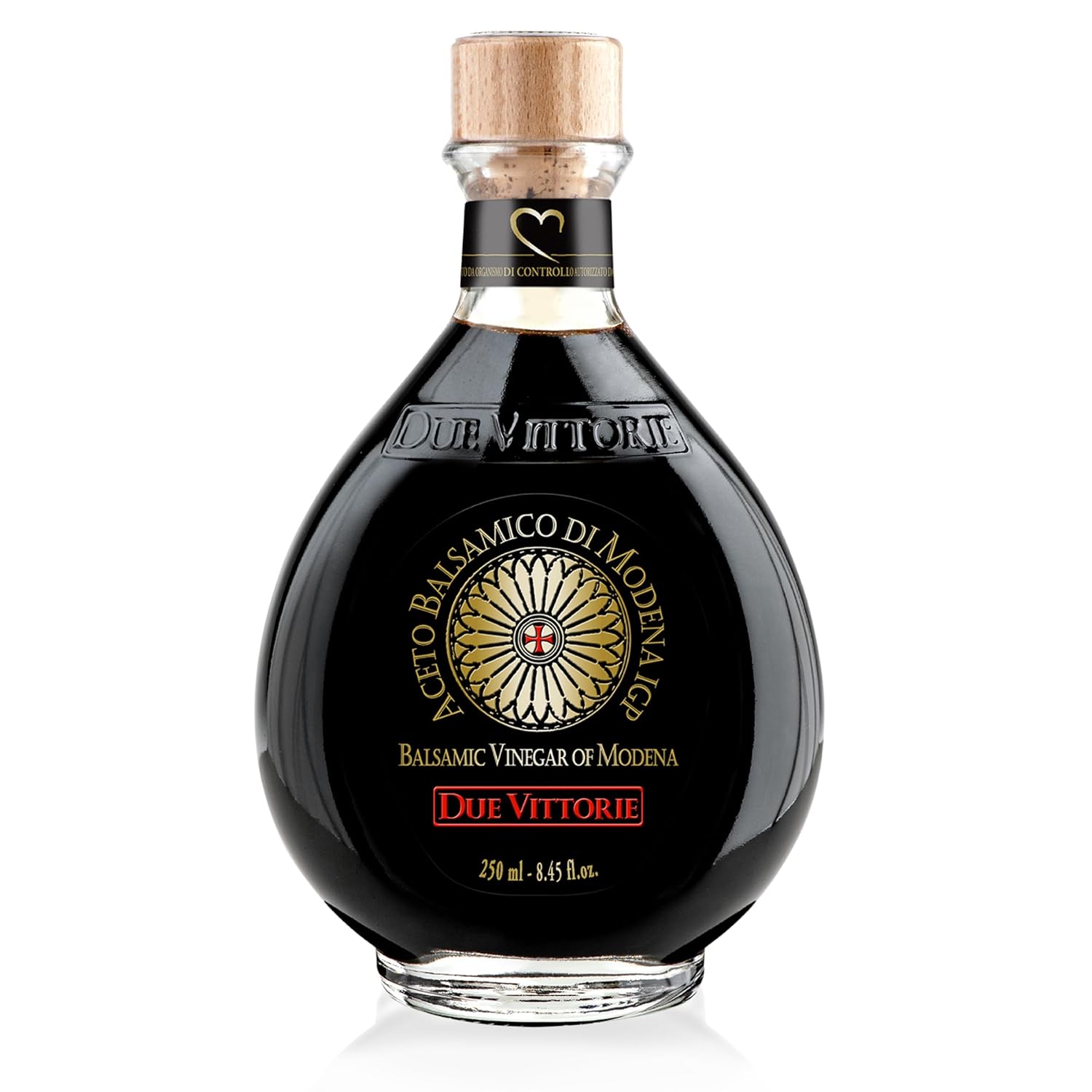
The bestselling balsamic in Italy for three consecutive years, and the reason is obvious the moment you pour it: dense, slow-moving, syrupy without being cloying.
The durmast oak aging pulls out tannins that give it a faint wild cherry finish, and the texture is thick enough to cling to whatever it lands on.
Unlike most IGP balsamics that feel thin on a plate, Oro Gold performs like a finishing vinegar twice its price. The built-in cork pourer is a practical detail that actually matters — no drips, no mess.
Key Details |
|
|---|---|
| Certification | IGP |
| Grape Varieties | Trebbiano & Lambrusco |
| Acidity | 6% |
| Volume | 8.5 fl oz (250ml) |
| Best For | Drizzling, finishing, steak, cheese, fruit, ice cream |
3. Nonna Pia’s Classic Balsamic Glaze
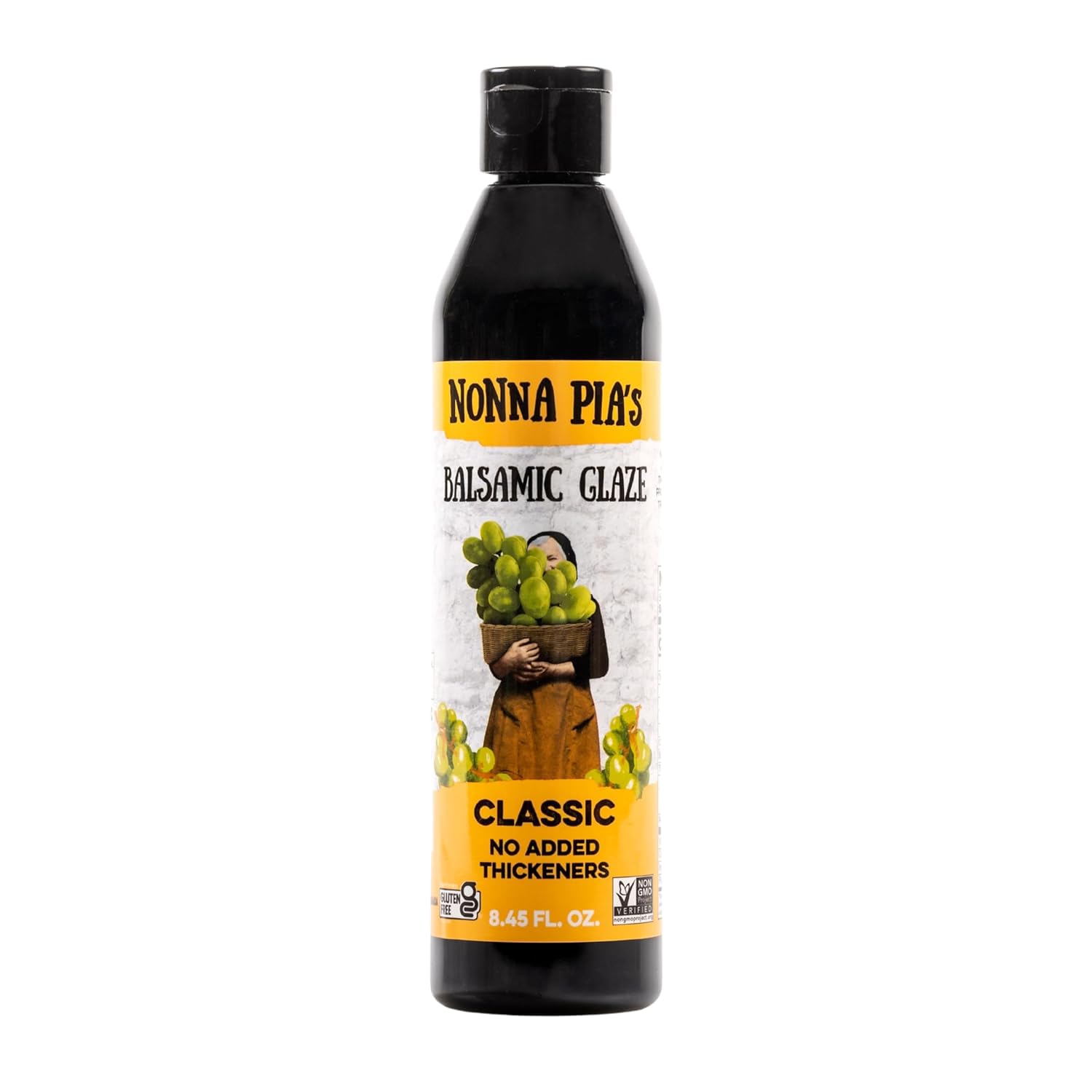
A glaze, not a vinegar — and that distinction matters. Nonna Pia’s slow-simmers Modena balsamic down to a thick, velvety consistency that clings to bread the way a reduction should.
No added thickeners, no artificial flavors, just balsamic vinegar and non-GMO cane sugar reduced to a glossy, pourable syrup. The squeeze bottle gives you precise control over how much you use, which matters for bread dipping where the ratio of olive oil to glaze is everything. It’s also the most approachable entry on this list for anyone new to balsamic.
Key Details |
|
|---|---|
| Type | Balsamic glaze (reduction) |
| Certification | IGP-sourced balsamic base |
| Ingredients | Balsamic vinegar of Modena, non-GMO cane sugar |
| Volume | 8.45 oz |
| Best For | Bread dipping, bruschetta, pizza drizzle, caprese |
4. Giusti 3 Gold Medals Gran Deposito
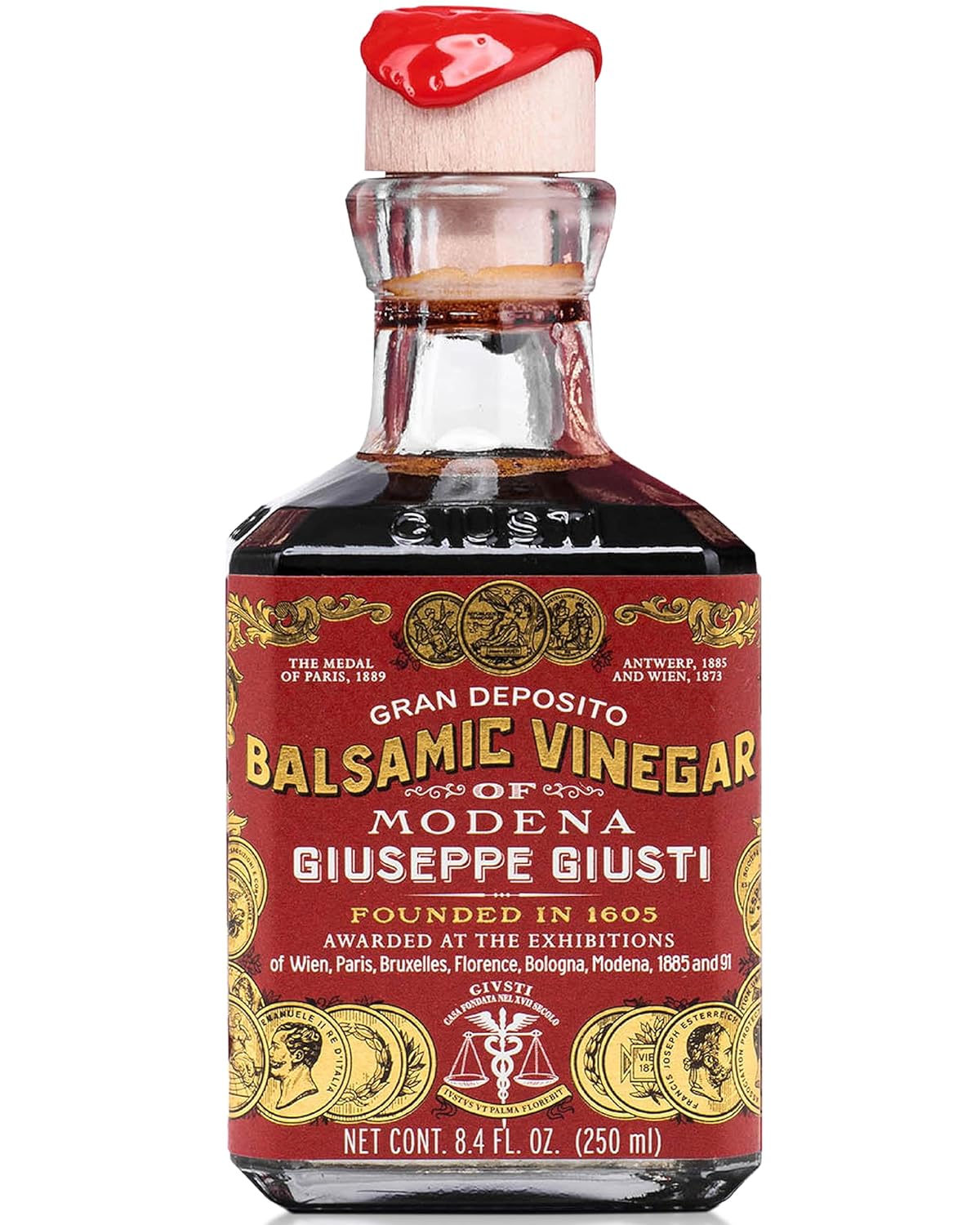
Founded in 1605 and still run by the 17th generation of the same family, Giusti is the oldest balsamic producer in the world — and the 3 Gold Medals is their most versatile expression.
The flavor profile runs deep: plum jam, red fruit, honey, and vanilla layered over a dense, sweet base that balances perfectly against bitter greens or aged cheese.
Featured on Stanley Tucci’s Searching for Italy, it has crossover appeal from serious food writers to home cooks. At this price point, it’s the best bridge between everyday use and gourmet quality.
Key Details |
|
|---|---|
| Certification | IGP |
| Heritage | Founded 1605, 17th generation |
| Flavor Notes | Plum jam, red fruit, honey, vanilla |
| Acidity | 6% |
| Volume | 8.45 fl oz (250ml) |
| Best For | Salad finishing, cheese boards, caprese, bruschetta |
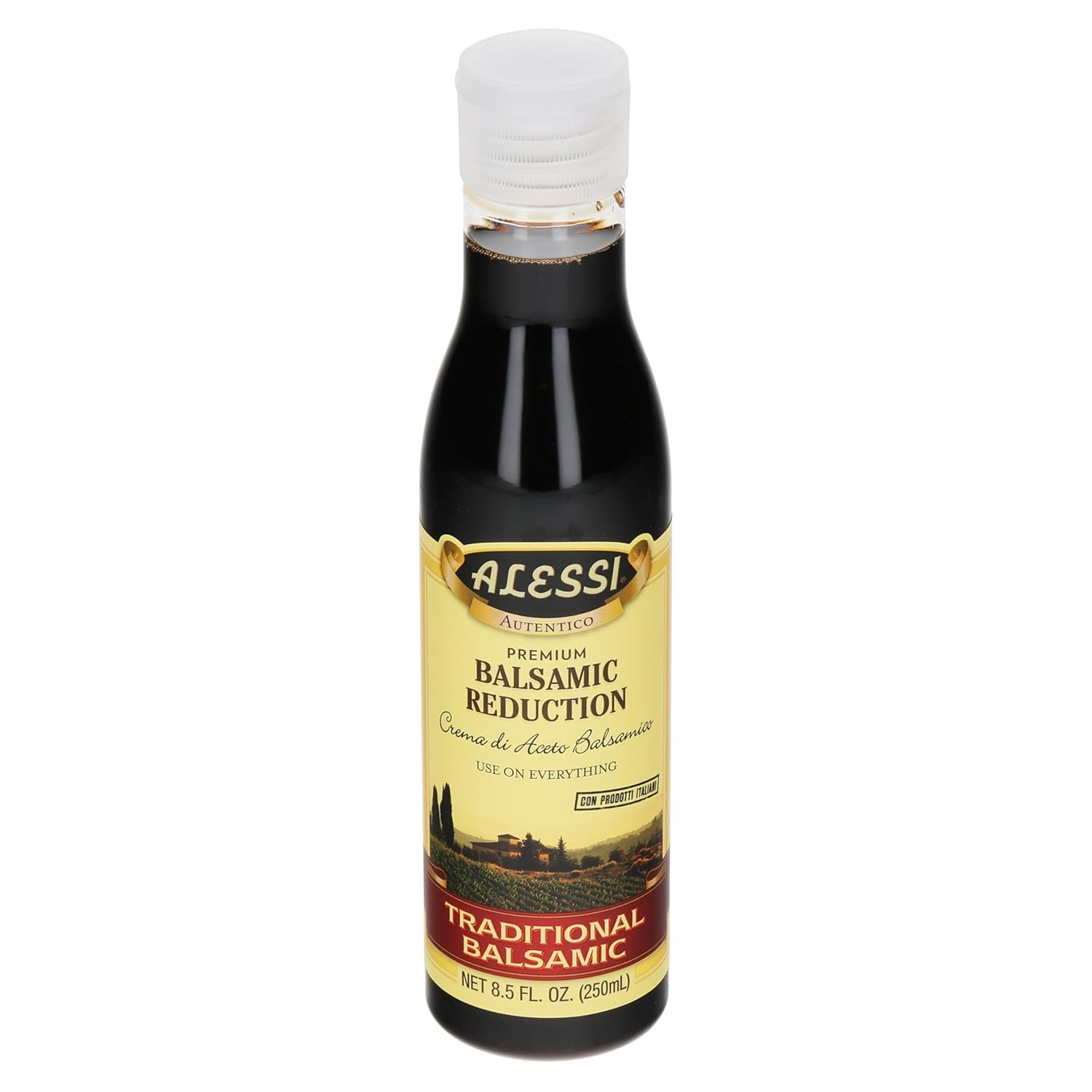
Alessi keeps it clean: balsamic vinegar reduced with pure cane sugar, no thickeners, no starches, no gums. The result is a glossy, syrupy reduction that presents beautifully on a plate — the kind of decorative drizzle that turns a simple caprese into something restaurant-worthy.
Reviewers consistently name it their go-to for caprese salads and as an olive oil dip for artisan bread, and the price makes it easy to use liberally. One note: it runs sweeter than a straight balsamic, so anyone who prefers more tang may want to look elsewhere.
Key Details |
|
|---|---|
| Type | Balsamic reduction |
| Ingredients | Concentrated balsamic vinegar, pure cane sugar |
| Volume | 8.5 fl oz |
| Best For | Caprese, pizza drizzle, cheese plates, fruit |
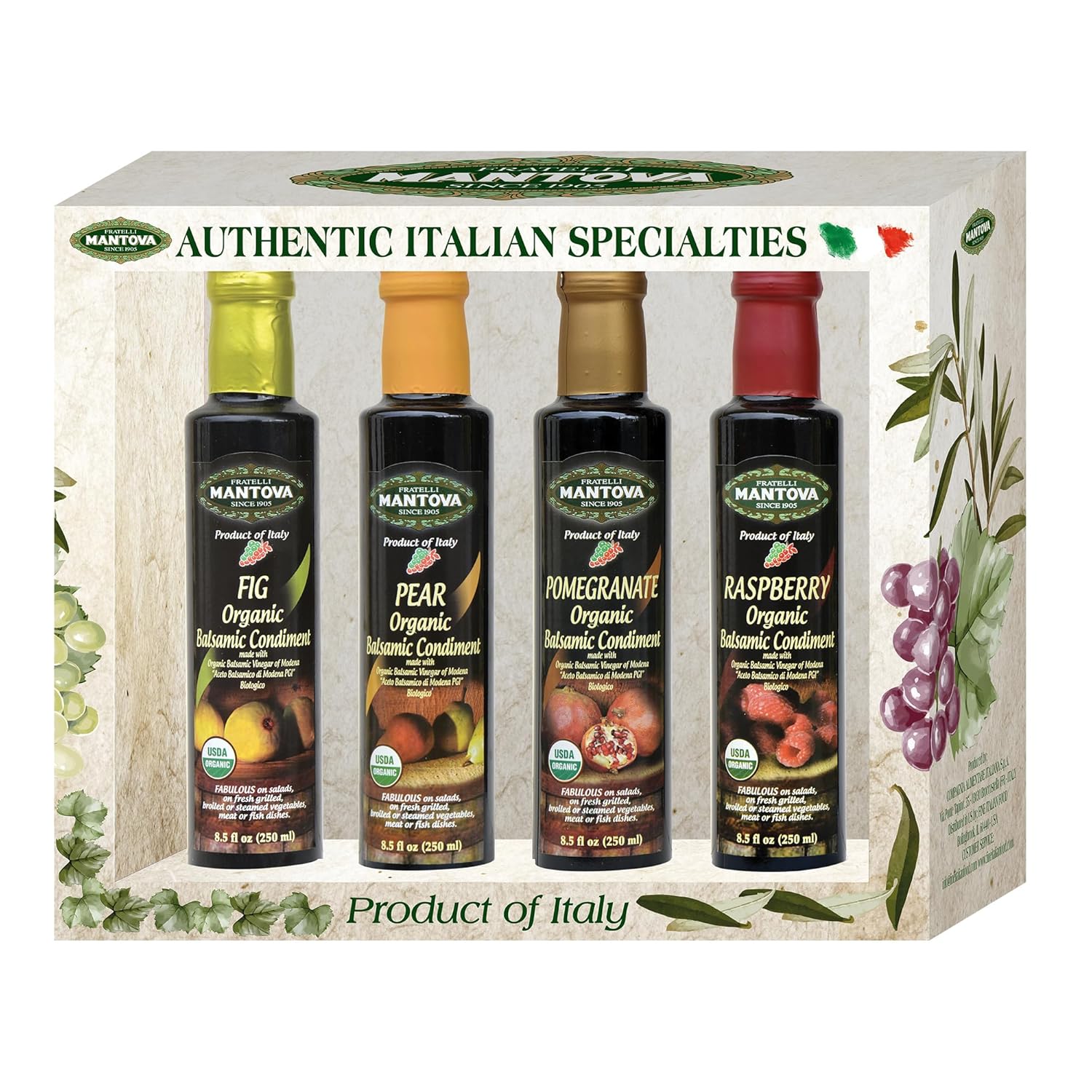
Four bottles — fig, pear, pomegranate, and raspberry — each built on a USDA Organic balsamic base from Modena with 1% natural fruit flavoring added. The fruited versions open up use cases that a straight balsamic can’t: raspberry over vanilla ice cream, fig over a cheese board, pear stirred into a cocktail.
The 99% organic balsamic base is solid — 6% acidity, real fruit, no artificial additives — and the variety pack format makes it both a gift-ready option and a practical way to experiment without committing to a full bottle of any single flavor.
Key Details |
|
|---|---|
| Certification | USDA Organic, IGP base |
| Flavors | Fig, Pear, Pomegranate, Raspberry |
| Acidity | 6% |
| Volume | 8.5 oz per bottle (4 bottles) |
| Best For | Ice cream, fruit, desserts, cocktails, cheese boards |
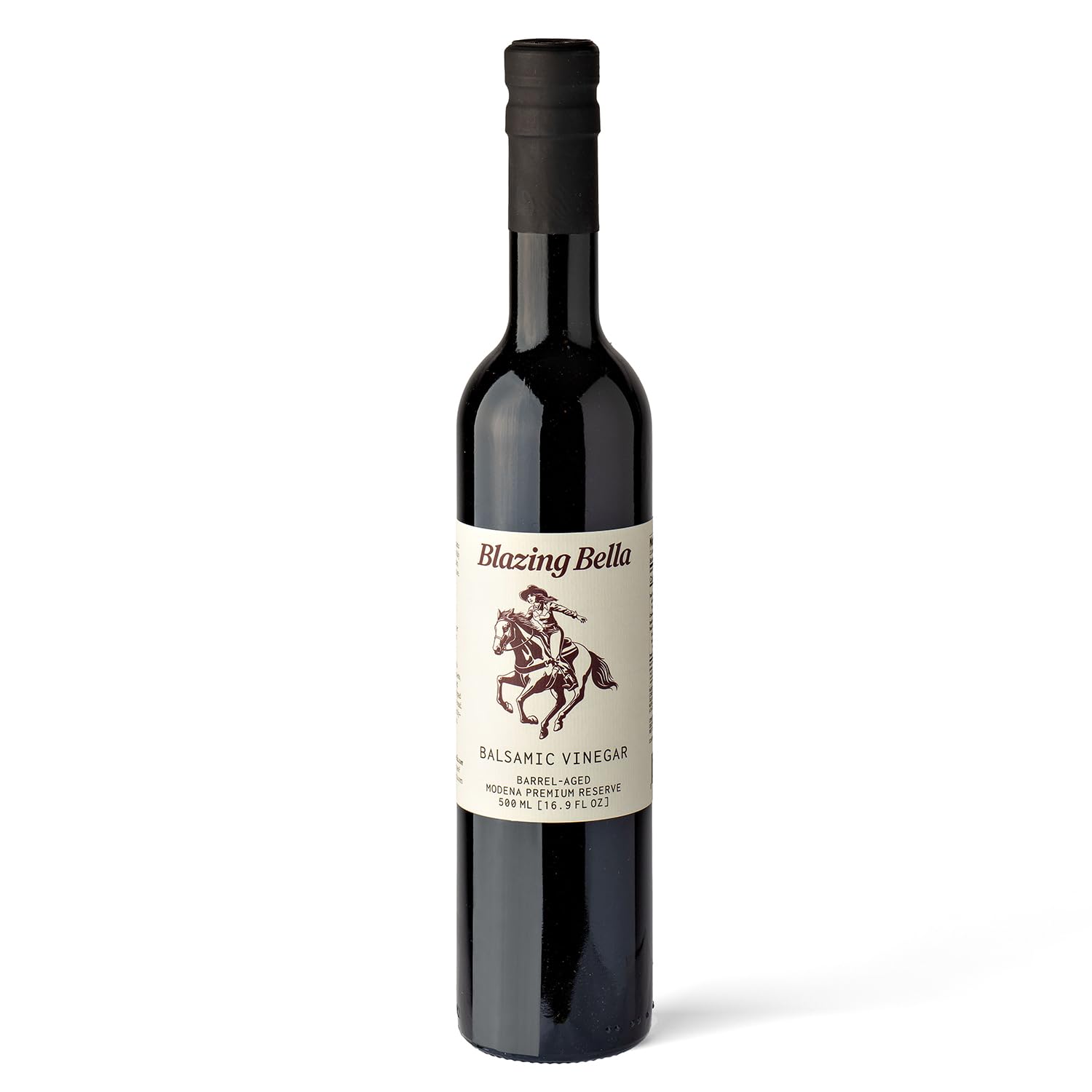
Produced by the same family since 1889, aged in Modena in chestnut, oak, and juniper barrels, and sized at 500ml — the largest bottle on this list. Blazing Bella is designed to be used without thinking about it, which is exactly the right philosophy for an everyday balsamic.
The balance of sweetness and acidity sits in the middle — not as dense as Due Vittorie, not as acidic as Colavita — making it the most versatile all-purpose drizzle here. The 500ml bottle means you’re not rationing it, which is the whole point.
Key Details |
|
|---|---|
| Aging | Chestnut, oak & juniper barrels |
| Volume | 16.9 fl oz (500ml) |
| Ingredients | 100% Balsamic Vinegar of Modena |
| Best For | Daily drizzling, salads, bread, vegetables, cheese |
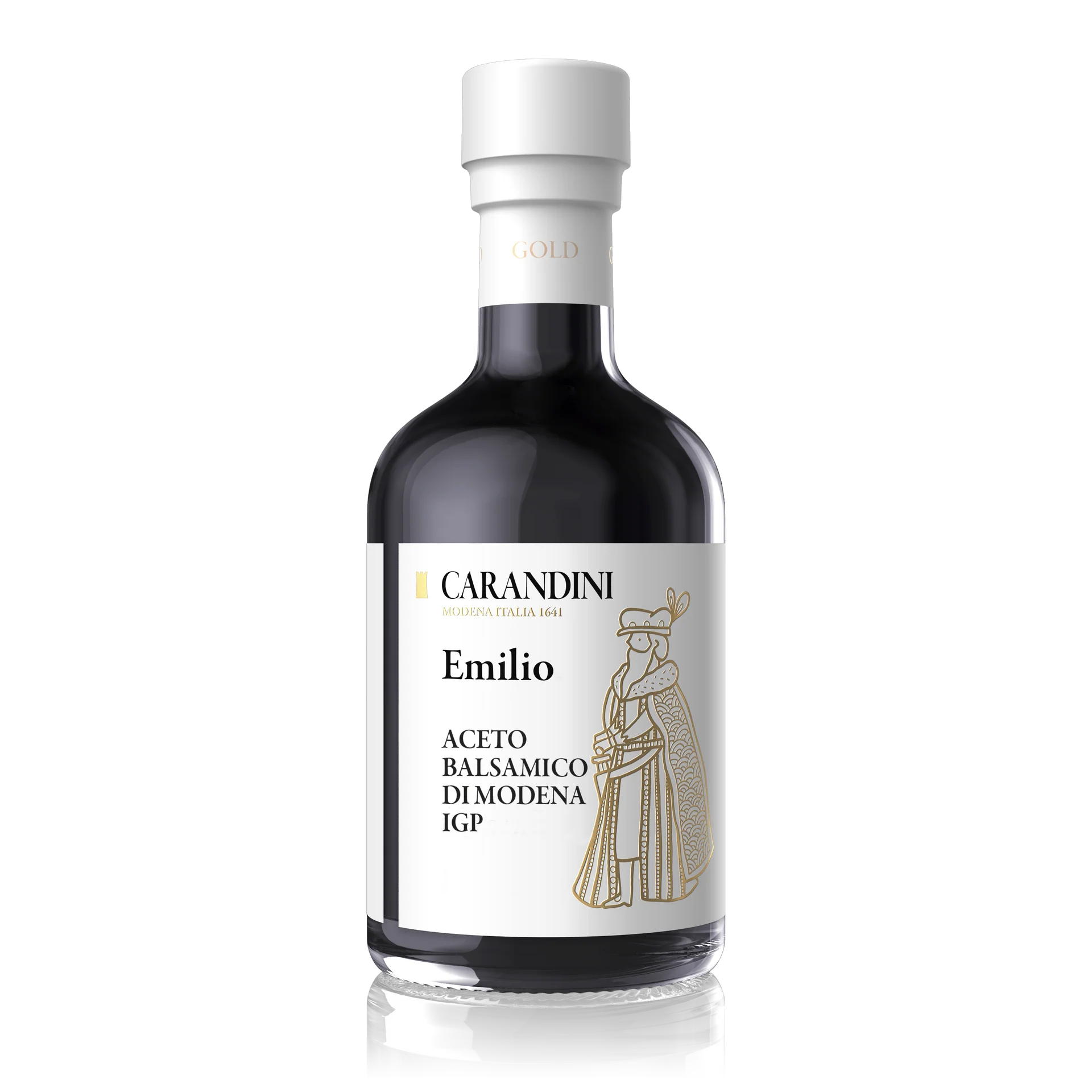
The Carandini family has been making balsamic in Modena since 1641, and the Emilio line is their everyday workhorse — a clean, well-balanced vinegar with 6% acidity that emulsifies easily with olive oil.
The flavor is fresher and more acidic than a finishing balsamic, which is exactly what you want when it’s going to be whisked with oil, garlic, and Dijon. Reviewers specifically flag the “sweet, fruity aftertaste” as the detail that makes it work better than generic grocery store options.
Key Details |
|
|---|---|
| Certification | IGP |
| Heritage | Since 1641 |
| Acidity | 6% |
| Volume | 8.45 fl oz (250ml) |
| Best For | Salad dressings, vinaigrettes, light marinades |
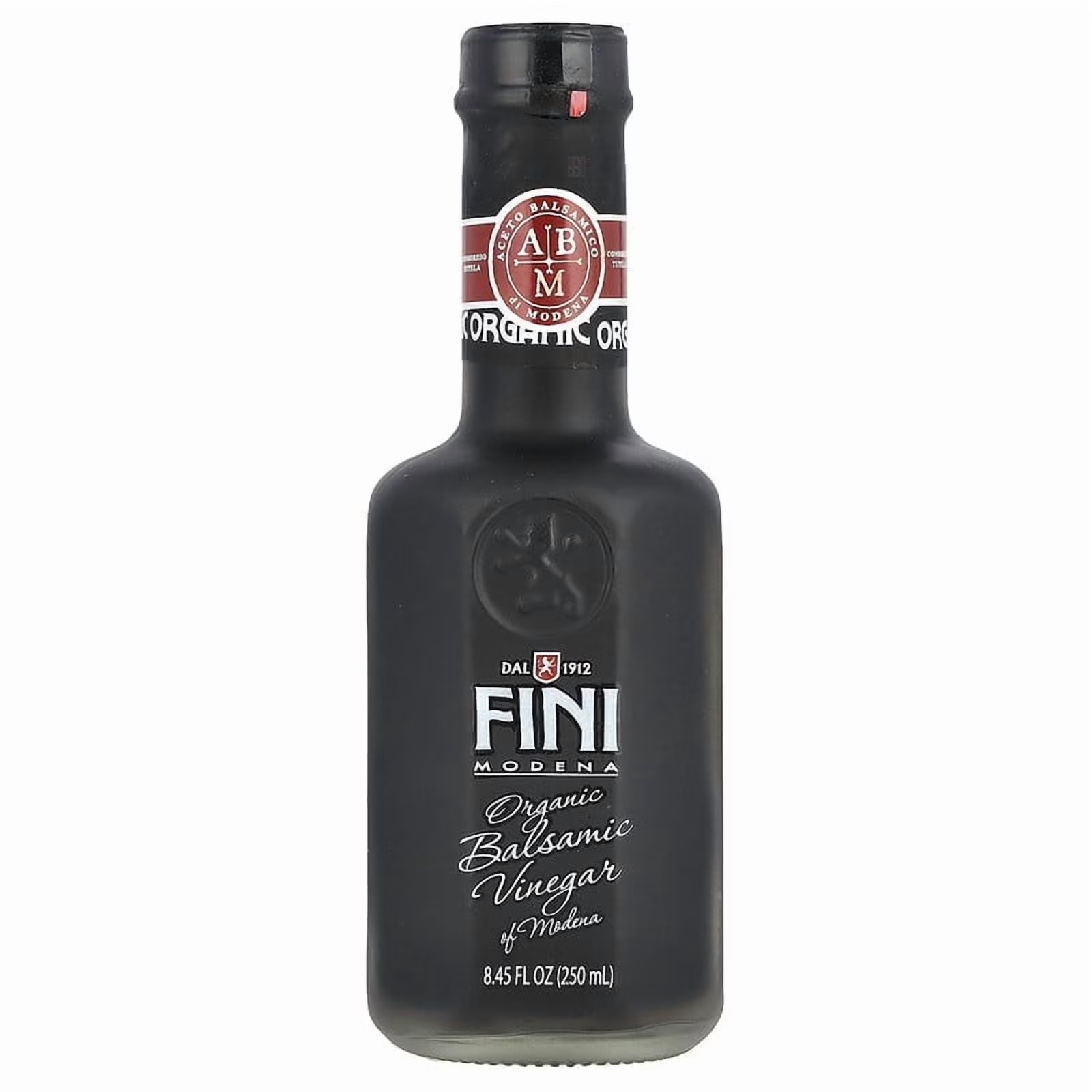
One of the oldest producers in Modena — Fini opened its gourmet store there in 1912 and was among the founding members of the Balsamic Vinegar of Modena Consortium. The current version is USDA Organic, made from organic cooked grape must and organic wine vinegar with no artificial additives.
The flavor runs sweeter than the original Fini, which some long-time buyers have noted, but reviewers consistently praise its smooth, non-biting profile and call it the go-to for anyone who finds most balsamics too aggressive. A solid organic option at a price that doesn’t penalize you for the certification.
Key Details |
|
|---|---|
| Certification | USDA Organic, IGP |
| Ingredients | Organic cooked grape must, organic wine vinegar |
| Heritage | Since 1912, Consortium co-founder |
| Volume | 8.45 fl oz (250ml) |
| Best For | Salad dressings, drizzling, desserts, strawberries |
Buying Guide
IGP vs. DOP — What the Labels Mean
IGP (Protected Geographical Indication) means the vinegar was produced in Modena following regulated methods, blending cooked grape must with wine vinegar and aged at least 60 days. Most bottles on this list are IGP — they vary from thin and acidic to thick and syrupy depending on the producer.
DOP (Protected Designation of Origin) is the traditional, premium tier. Made exclusively from cooked grape must, aged a minimum of 12 years, no wine vinegar added. Rich, complex, and expensive — typically $60+ for a small bottle. None of the picks on this list are DOP, which keeps everything in the $10–$30 range without sacrificing quality.
Glaze/Reduction is neither IGP nor DOP — it’s balsamic vinegar reduced down to a thick, pourable syrup, sometimes with added sugar. Two picks on this list (Nonna Pia’s and Alessi) fall into this category. They’re the right choice when texture and sweetness matter more than complexity.
Thickness: Why It Matters More Than Price
Thickness is the single most useful indicator of how a balsamic will perform on the plate. A thin balsamic emulsifies easily into dressings and sauces. A thick one clings to food and holds its shape as a drizzle. Neither is better — they’re just different tools. When a bottle description says “extra dense” or “syrupy,” that’s a signal it’s built for finishing, not cooking.
A Note on Grape Must Percentage
Italian law requires a minimum of 20% grape must in IGP balsamic vinegar. Better producers exceed this significantly — Colavita’s Aged IGP, for example, contains 55%. Higher grape must means more natural sweetness, more body, and better flavor without additives. It’s worth checking this number when comparing bottles at similar price points.
Final Verdict
If you only want one bottle to start with, Due Vittorie Oro Gold is the safest pick — dense enough to finish a dish, balanced enough to use on almost anything. For everyday cooking, Colavita Aged IGP gives you the most utility per dollar. And if you’re building a kitchen that’s properly stocked, add Nonna Pia’s for bread and appetizers and Giusti 3 Gold Medals for the moments when the balsamic is the star of the plate. The rest of the list fills in from there depending on how you eat.