
There’s a moment every driver dreads: you’re sitting at a red light, traffic is moving normally, and then — impact. The at-fault driver disputes everything. The police report is inconclusive. It becomes your word against theirs, and suddenly your word isn’t enough.
A dash cam changes that equation entirely. The footage doesn’t lie, doesn’t misremember, and doesn’t get nervous under pressure. What once required a complex, professional installation can now be set up in minutes with a compact device mounted right on your windshield. 4K resolution, Sony STARVIS 2 sensors, GPS logging, buffered parking mode — features that used to be reserved for high-end systems are now standard in many consumer models.
We tested seven top-performing dash cams across three months of real-world driving — from daily commutes and night runs to highway stretches and parking garage scenarios. These are the ones that truly earned their place on your windshield.
Top Picks
BEST OVERALL: Viofo A329 Plus
BEST VALUE: Garmin Dash Cam 67W
BEST FOR PARKING MODE: Blackvue Elite 9 2CH
BEST BUDGET: Viofo A119 Mini 2
BEST 3-CHANNEL: Vantrue N4 Pro
BEST MIRROR CAM: Wolfbox G900 Mirror Dash Cam
PRO PICK: Thinkware U3000 Pro
How We Tested
A dash cam that performs flawlessly on a sunny highway at 9 AM tells you almost nothing about how it will behave at 2 AM in a wet parking garage, or when a delivery truck clips your bumper at 45 mph and you need that license plate to be readable.
We mounted all seven units simultaneously — front and rear — in the same test vehicle and drove the same routes under the same conditions. A 22-mile urban commute with stop-and-go intersections. A 60-mph highway stretch at dusk. Three night runs through unlit suburban roads. Two deliberate parking-mode incident simulations in a covered structure. Every unit purchased at retail. Every score based on actual footage.
The criteria that mattered most: license plate legibility at speed, low-light clarity without blown highlights, parking mode reliability, and — critically — the footage quality after a simulated impact when the G-sensor fires.
Detailed Reviews
1. Viofo A329 Plus
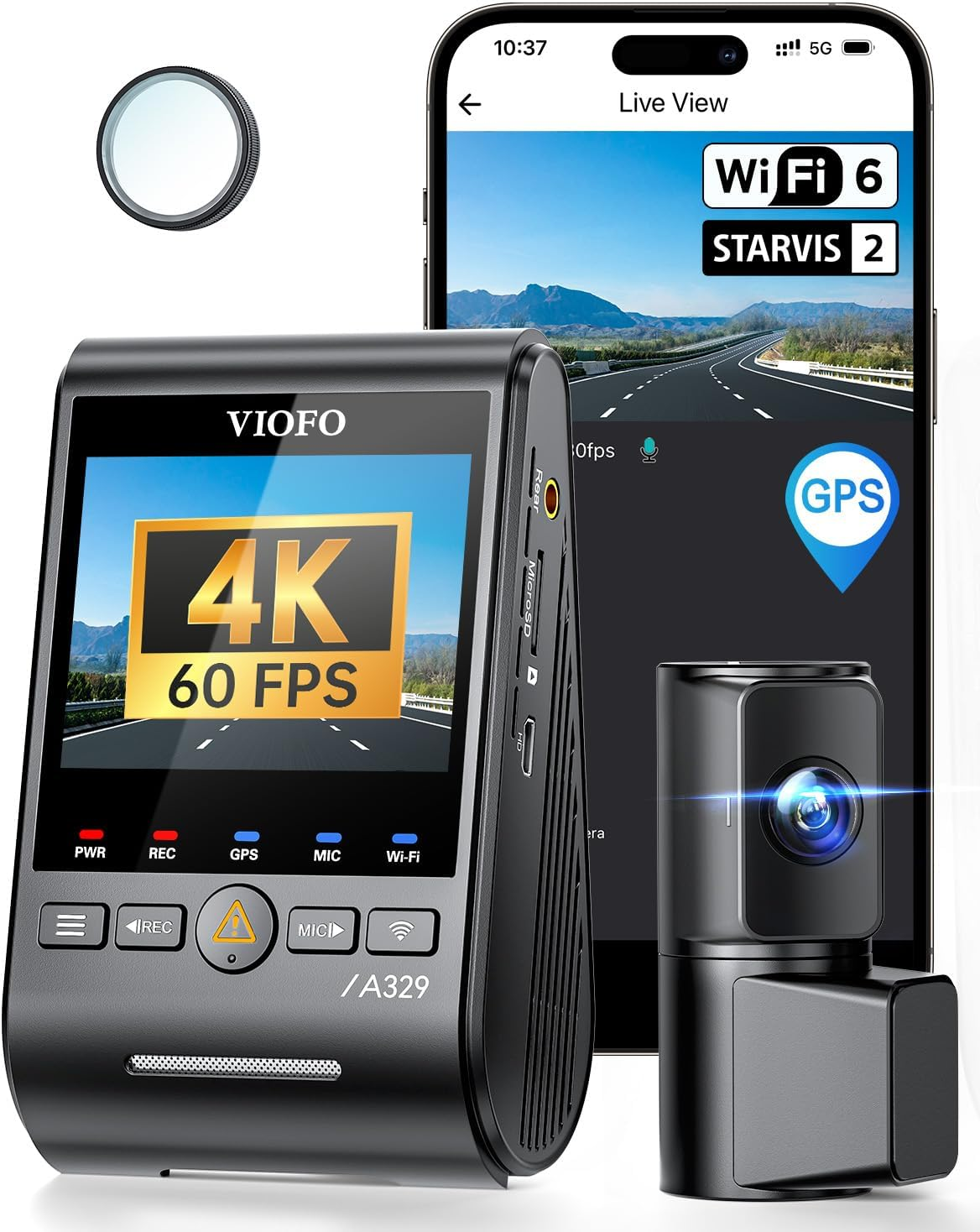
The A329 Plus excels in nighttime license plate capture, delivering clear results in most test runs at speed—outperforming competitors. Its Sony STARVIS 2 IMX678 sensor provides strong low-light performance and handles glare while preserving detail. Daytime footage is sharp and natural, even at highway speeds. The buffered parking mode captures moments before and after an incident, offering more complete evidence when it matters.
Key Specifications |
|
|---|---|
| Front Resolution | 4K @ 30fps |
| Rear Resolution | 2.7K @ 30fps |
| Sensor | Sony STARVIS 2 (front & rear) |
| Storage | Up to 512GB microSD |
| GPS | Built-in |
| Parking Mode | Buffered impact + motion detection |
| Power | Supercapacitor |
| Wi-Fi | Yes — 5GHz |
2. Garmin Dash Cam 67W
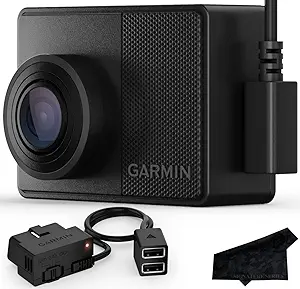
The Garmin 67W doesn’t lead in specs, but it excels in real-world use. Setup is quick with its magnetic mount, and the Garmin Drive app organizes footage automatically. Voice control is highly reliable, responding when needed. Its true 180-degree field of view captures more detail at the edges, improving overall awareness. With smooth incident detection and instant clip sharing, it focuses on practicality and delivers where it matters.
Key Specifications |
|
|---|---|
| Front Resolution | 1440p @ 30fps |
| Lens Angle | 180 degrees |
| GPS | Built-in |
| Voice Control | Yes |
| Parking Mode | Requires hardwire kit (sold separately) |
| Mount | Magnetic — tool-free install |
| Companion App | Garmin Drive |
| Incident Detection | Automatic — notifies emergency contact |
3. Blackvue Elite 9 2CH
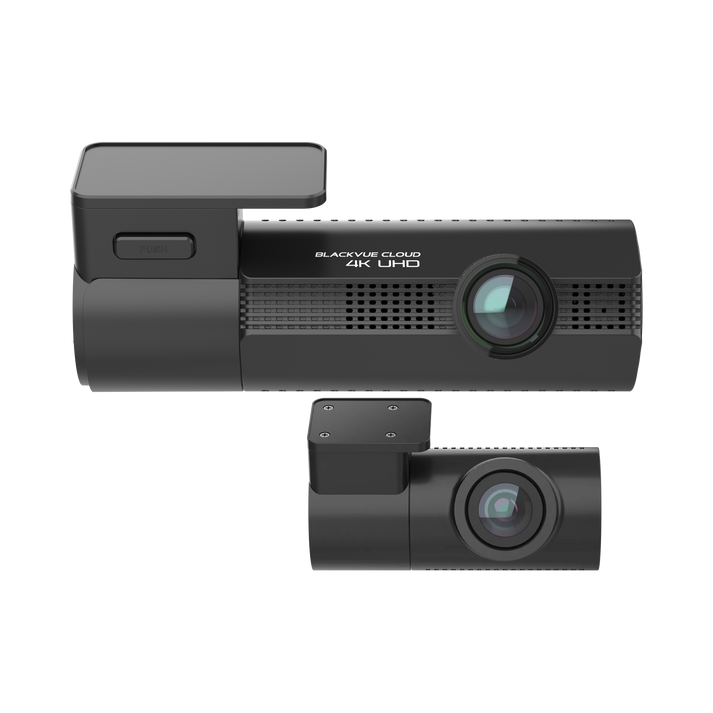
The Blackvue Elite 9 stands out not for its 4K resolution or Sony sensor, but for its smart parking mode. Its dual-radar system uses minimal power and activates in under a second, capturing events before they fully enter view—unlike typical dash cams that drain batteries or react too slowly. The cloud feature provides true live video access, making it easy to monitor or even locate your car in real time. While it works well without a subscription, adding one unlocks remote access and cloud storage, making it a separate value decision.
Key Specifications |
|
|---|---|
| Front Resolution | 4K @ 30fps |
| Rear Resolution | 2K @ 30fps |
| Sensor | Sony STARVIS 2 |
| Parking Mode | Dual-radar low-power, <1 second wakeup |
| Cloud | Yes — Blackvue Cloud (subscription) |
| Remote Live View | Yes |
| Battery Draw (sleep) | Ultra-low |
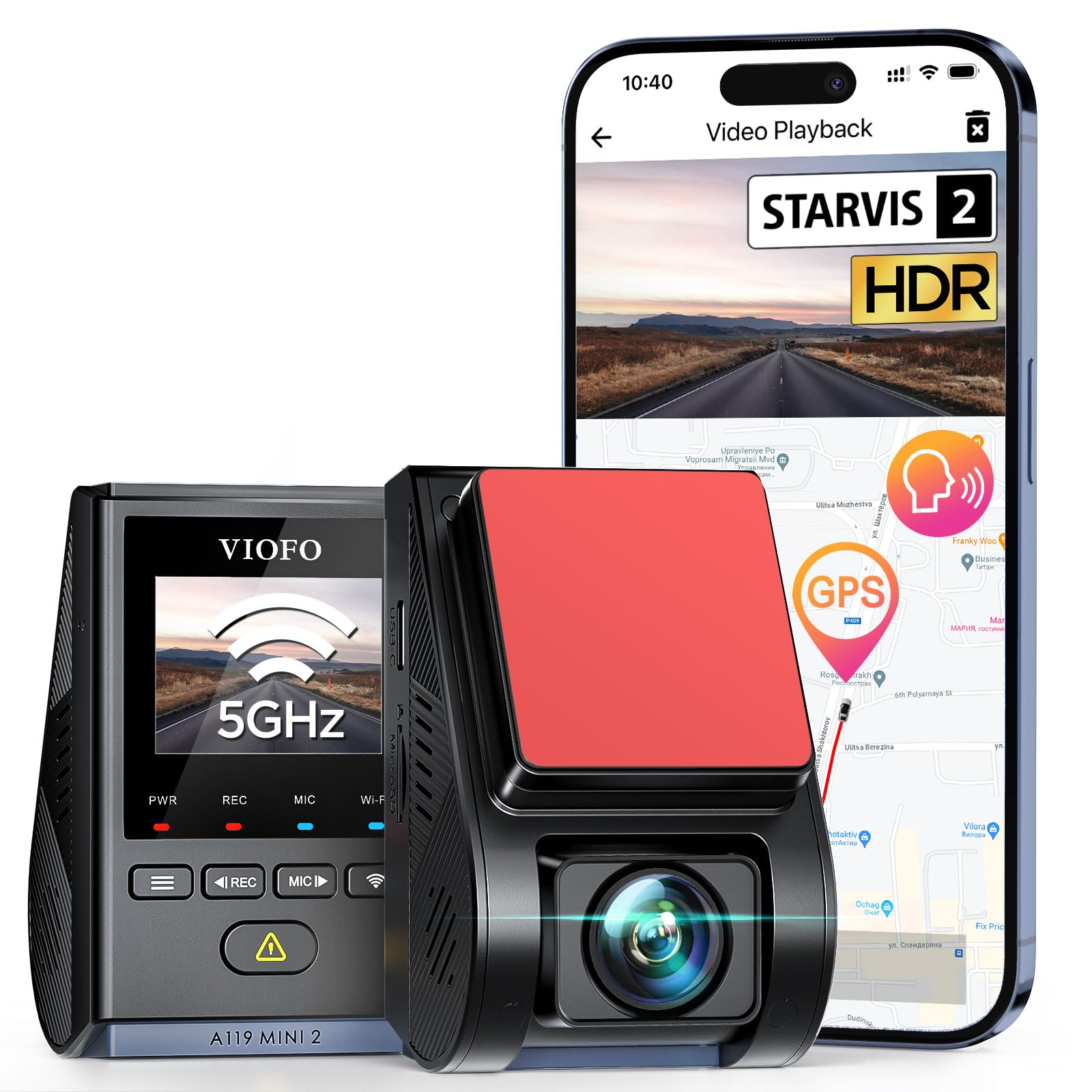
Most budget dash cams use outdated sensors and struggle at night, often missing critical details like license plates. The A119 Mini 2 stands out with its Sony STARVIS 2 sensor, delivering noticeably better low-light footage. In testing, it was the only camera able to capture the color and shape of an unlit vehicle at night. Its compact design stays hidden behind the rearview mirror, improving both security and aesthetics. For simple, reliable front recording, it’s one of the best options available.
Key Specifications |
|
|---|---|
| Resolution | 2K (1440p) @ 30fps |
| Sensor | Sony STARVIS 2 |
| HDR | Yes |
| GPS | Optional external module |
| Parking Mode | Buffered (via hardwire or battery pack) |
| Form Factor | Ultra-compact |
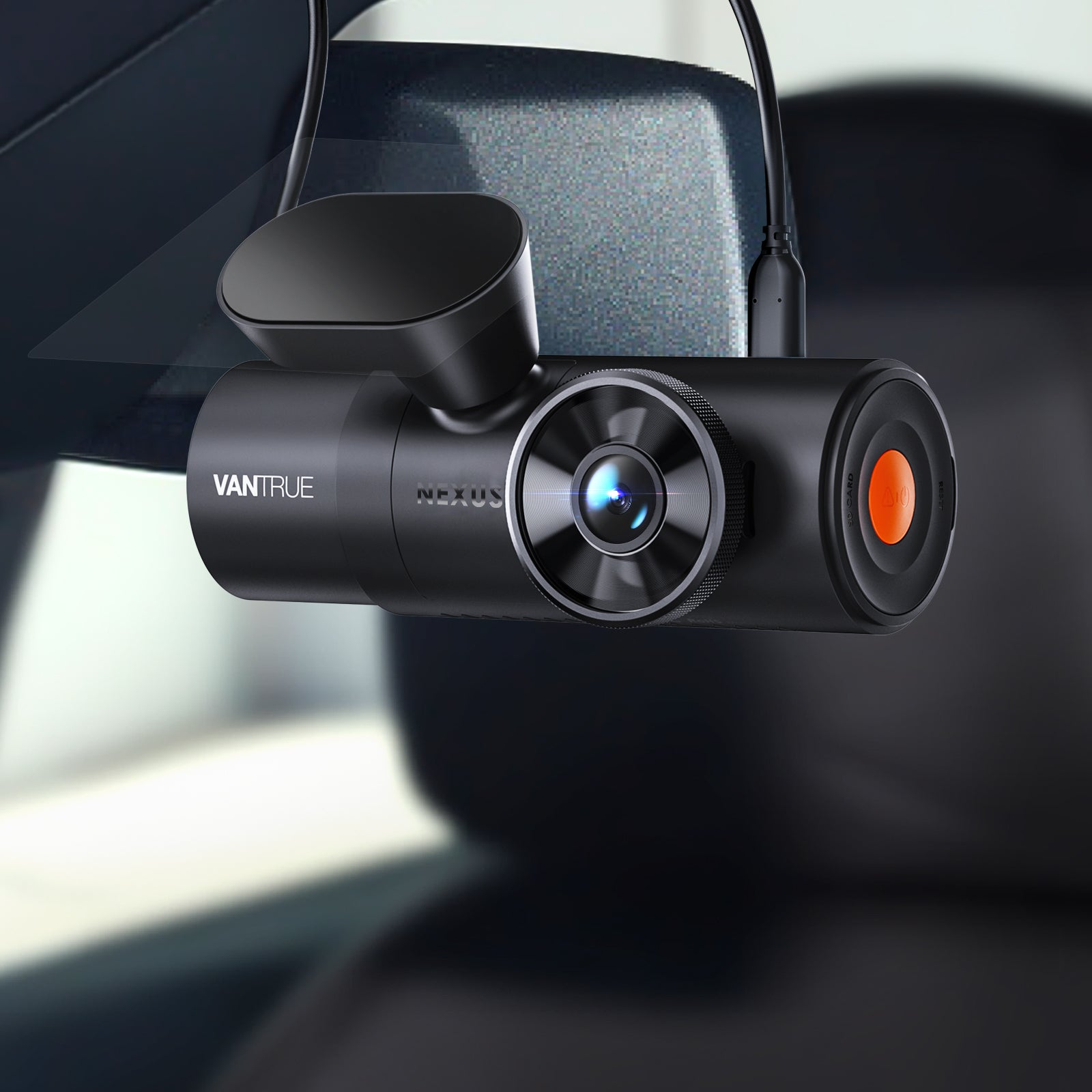
The Vantrue N4 Pro stands out by addressing a key issue: interior recording. This is crucial for handling passenger disputes, injury claims, or rideshare situations. In testing, its infrared interior camera delivered clear nighttime footage—capturing faces, seatbelts, and passenger positions even in complete darkness. It also maintained consistent quality across all three channels without compression, unlike many competitors. For rideshare and delivery drivers, it’s an essential choice; for others, it’s a strong safeguard in case of disputed incidents.
Key Specifications |
|
|---|---|
| Front Resolution | 4K @ 30fps |
| Rear Resolution | 2.5K @ 30fps |
| Interior Resolution | 1080p (IR night vision) |
| Channels | 3 — simultaneous recording |
| Rear Camera | IPX5 waterproof |
| Parking Mode | Motion + impact trigger |
| Infrared Interior | Yes |
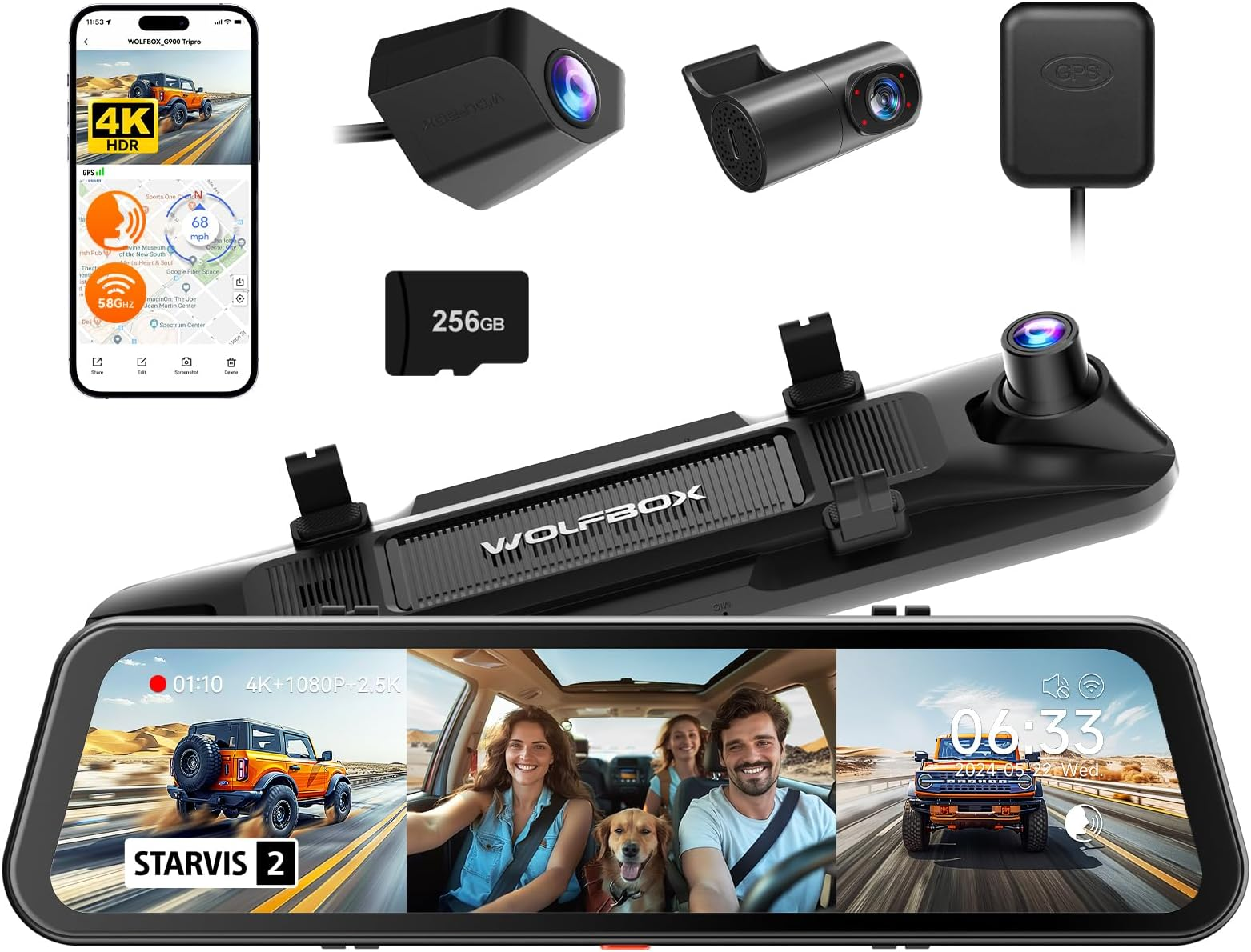
Traditional mirrors often have blind spots caused by passengers or cargo. The Wolfbox G900 solves this by replacing the mirror with a 12-inch display connected to a rear camera, providing a full, unobstructed view. In testing, it delivered clear visibility even in a fully loaded SUV, improving confidence when changing lanes. The 4K front camera offers solid recording quality, while the interior IR camera adds cabin coverage in a clean, factory-like setup.
Key Specifications |
|
|---|---|
| Screen | 12-inch anti-glare touchscreen |
| Front Resolution | 4K @ 30fps |
| Rear Resolution | 2.5K |
| Interior Channel | 1080p IR |
| Mount Type | Clip-over existing mirror |
| Digital Rear Mirror | Yes — live rear camera feed |
| Channels | 3 |
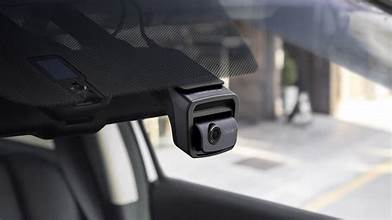
The Thinkware U3000 Pro is built for reliability when it matters most. Its dual-radar parking mode detects only relevant movement, reducing unnecessary recordings while capturing real threats. The ADAS features run continuously and performed with high accuracy, showing no false alerts in testing. Designed for dependable performance in critical moments, it’s ideal for drivers who see a dash cam as essential, not optional.
Key Specifications |
|
|---|---|
| Resolution | True 4K UHD |
| Parking Detection | Dual-radar (proximity-aware) |
| Lane departure, forward collision, speed alerts | |
| ADAS | Extreme heat/cold certified |
| Climate Rating | Optional LTE module |
| Cloud | Low-profile, discreet |
| Form Factor | Supercapacitor |
| Power | |
Dash Cam Buying Guide
Resolution: How Much Do You Actually Need?
The case for 4K is straightforward: license plates. At 1080p, a plate captured at highway speed is often legible in theory and unreadable in practice. At 2K (1440p), you gain enough detail for most daylight conditions. At 4K, even partially-obscured plates at speed produce usable text in good lighting.
The trade-off is storage. 4K footage consumes roughly four times the space of 1080p at the same frame rate. Most drivers hardwire their camera and run a 128GB or 256GB card on loop — at 4K, that’s typically 4-6 hours of footage before the loop overwrites. For daily commuters who only need to save clips after incidents, this is plenty.
If you commute primarily in daylight and mainly want proof of fault in collisions, 1440p is a practical sweet spot. If you drive at night or in complex urban environments, prioritize a camera with a quality sensor (Sony STARVIS 2) over raw resolution numbers.
Parking Mode: The Feature Most Buyers Overlook
The National Insurance Crime Bureau estimates that over 30% of vehicle damage claims involve incidents that occur while the car is parked and unattended. A dash cam without parking mode records approximately 10% of the time your vehicle is exposed to risk.
Motion-triggered parking mode wakes the camera when it detects movement in the frame. Prone to false alarms from wind, shadows, and passing pedestrians.
Impact-triggered parking mode activates when the G-sensor detects a physical shock. More reliable for actual incidents, but misses non-contact damage.
Buffered parking mode (Viofo A329 Plus, Blackvue Elite 9) maintains a short recording loop that captures footage before the triggering event. The most useful format for actual evidence.
Radar-based parking mode (Thinkware U3000 Pro, Blackvue Elite 9) uses active proximity sensors to distinguish genuine threats from ambient motion. Most reliable, highest battery efficiency.
To use any parking mode, most cameras require either a continuous power source via hardwire kit or a dedicated battery pack. Check the camera’s requirements before purchasing if parking surveillance is a priority.
Single Channel vs. Dual Channel vs. 3-Channel
Single channel (front only) is the entry point. Covers the most common collision scenario — a front-end impact or rear-end strike — and is sufficient for most commuters.
Dual channel (front + rear) is the practical standard for most drivers. Rear footage is decisive in rear-end collisions, the single most common insurance dispute. The cost premium over single-channel is small; the coverage improvement is significant.
3-channel (front + rear + interior) is the right choice for rideshare drivers, parents with young children, and anyone driving a commercial or work vehicle. Interior footage is the difference between a verified incident and a disputed account.
GPS: More Useful Than It Sounds
Built-in GPS does more than mark your location on a map. It timestamps every clip with speed data — meaning your recorded footage can confirm or dispute a speeding claim, document your actual velocity at the moment of impact, and place your vehicle’s exact position during an incident. For insurance purposes, speed data in footage is significantly more persuasive than footage alone.
Garmin units offer the best GPS integration through their app. Viofo’s GPS logging is accurate but requires more manual review. Cameras without GPS built-in often offer an optional add-on module.
Sensor Technology: What STARVIS 2 Actually Means
Sony’s STARVIS 2 is the current benchmark for dash cam low-light performance. Compared to the original STARVIS and competing sensors at this price range, it offers better dynamic range (handling bright and dark areas simultaneously), lower noise in night footage, and improved color accuracy in mixed lighting.
If night driving is a significant part of your use case — or if your car regularly parks in structures or unlit lots — prioritize cameras confirmed to use the STARVIS 2 sensor (IMX678 or IMX675). The difference in footage quality is visible to any observer.
Final Verdict
Most drivers shopping for a dash cam need two things: footage that holds up in an insurance dispute, and a device they don’t have to think about. The Viofo A329 Plus delivers both — dual Sony STARVIS 2 sensors, GPS, buffered parking mode, and footage quality that outperformed every camera on this list in our critical night license plate test.
If simplicity is the priority, the Garmin Dash Cam 67W is the easiest, most seamless installation and daily operation experience available at any price. The resolution trade-off is real, but for the majority of drivers, the Garmin’s execution advantage makes it the more practical choice.
For parking protection in urban environments, nothing on this list approaches the Blackvue Elite 9. The cloud connectivity and radar-based wakeup system are in a different category from conventional parking modes.Budget shoppers who want quality evidence rather than just a recording: the Viofo A119 Mini 2 is the only sub-$100 camera we’d trust with a real insurance claim.