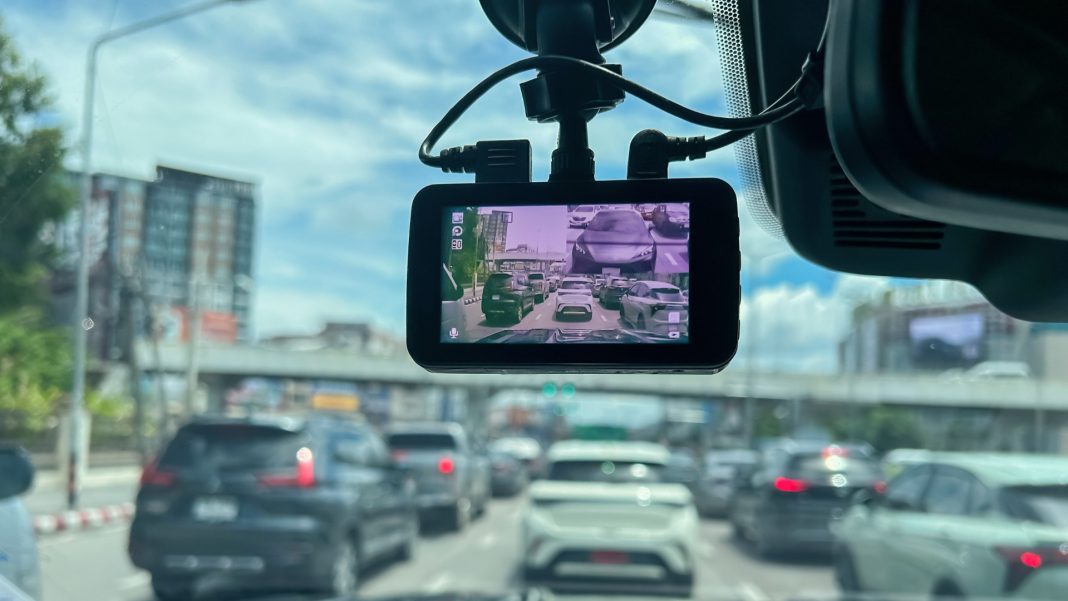

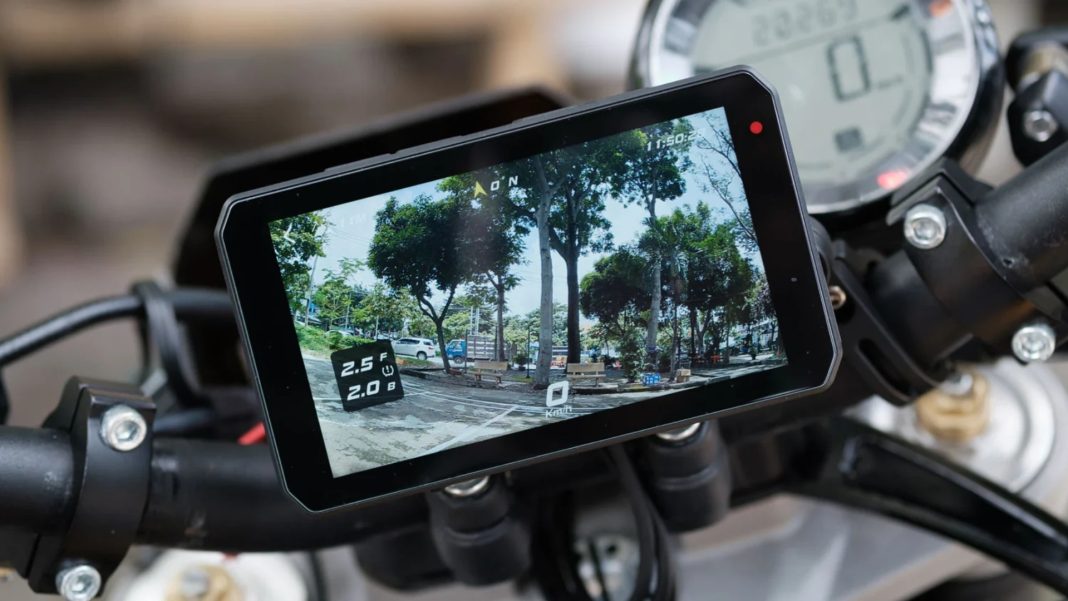
A car cuts you off. You brake hard, stay upright, pull over shaking. No footage — it’s your word against theirs. That’s usually not enough.
A motorcycle dash cam doesn’t prevent the incident. It decides what happens after.
The market has caught up with what riders actually need: 4K front cameras, Sony STARVIS sensors, IP67 housings, GPS, Wi-Fi — all in systems designed specifically for two wheels. We tested five of the best across six months of real riding to find out which ones hold up when it matters.
Top Picks
BEST OVERALL: Viofo A229 Pro 2CH
BEST BUDGET: VSYSTO D6L
BEST VALUE: Vantrue F1
BEST FOR TRACK USE: INNOVV K5
BEST FOR TOURING: INNOVV K7
How We Tested
Spec sheets don’t tell you how a camera handles a pothole at 60 mph, or whether the footage survives 40 minutes of rain. We bought all six units at retail and ran them on three bikes — a naked streetfighter, an adventure tourer, and a city commuter — across six months of mixed-condition riding.
Every unit faced the same conditions: rush-hour city traffic, sustained highway runs, two multi-hour rain sessions, night riding on unlit roads, and unpaved surfaces for vibration stress.
We scored each camera on image quality, low-light performance, mount stability, wind noise, loop recording reliability, and how fast you can pull footage after an incident. No unit got a pass for conditions it wasn’t tested in.
Detailed Reviews
1. Viofo A229 Pro 2CH
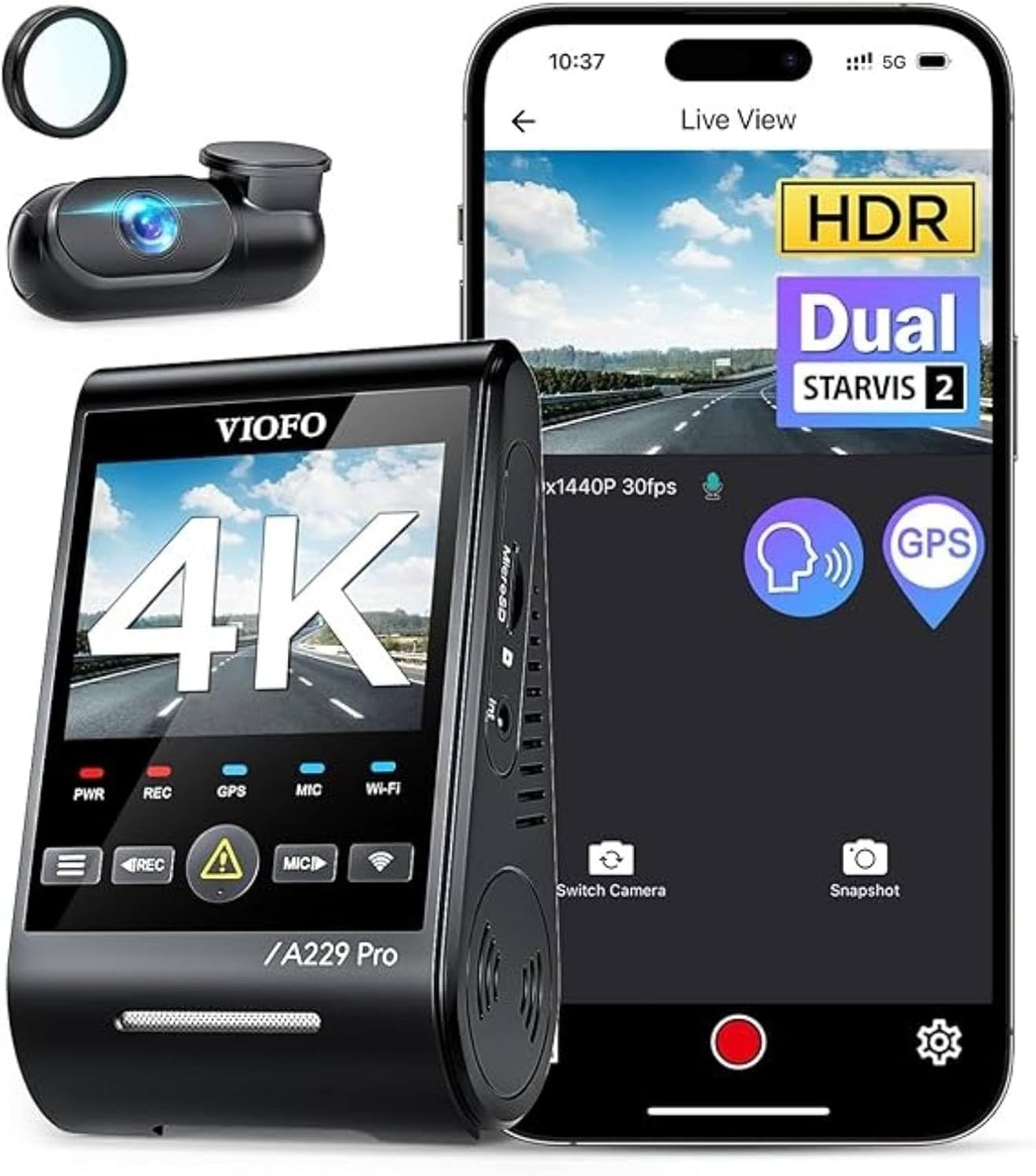
The only camera on this list running Sony STARVIS 2 sensors on both channels. Every other dual-channel system here either uses STARVIS 2 on the front only, or an older sensor generation on one or both cameras.
That sensor gap shows up most clearly at night — at 8 to 10 meters on an unlit road, the A229 Pro holds readable plates. That is the practical test that matters for insurance evidence.
4K front and 2K rear. Quad-Mode GPS embeds speed and location into every file. 5GHz Wi-Fi pulls footage to your phone without touching the card — useful in the two minutes after an incident when you are still on the roadside.
Installation on a motorcycle takes planning: IPX5 is splash-resistant but not immersion-rated, so cable entry points need weatherproofing tape. The rear camera needs a clean routing path, which is easier on tourers and adventure bikes than on naked or sport bikes.
The hardwire kit is sold separately. Budget for it — parking mode is worth having
Key Specifications |
|
|---|---|
| Front Resolution | 4K (3840×2160) @ 30fps |
| Rear Resolution | 2K (2560×1440) @ 30fps |
| Sensor | Sony STARVIS 2 (IMX678 front / IMX675 rear) |
| FOV | 140° front / 160° rear |
| GPS | Quad-Mode built-in |
| Wi-Fi | Dual-band 5GHz / 2.4GHz |
| Weatherproofing | IPX5 |
| Storage | Up to 512GB microSD |
| Parking Mode | Yes (hardwire kit sold separately) |
2. VSYSTO D6L
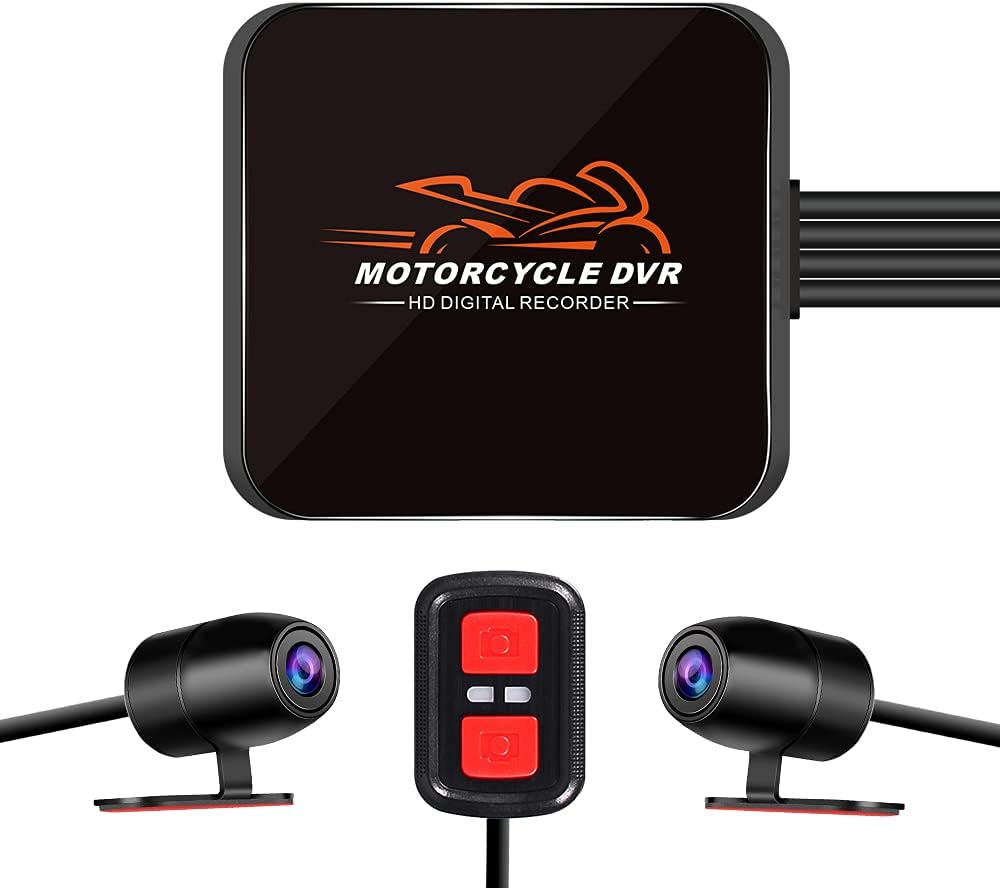
Setup is minimal: plug cameras into the DVR unit, mount the DVR under the seat, route cables front and rear. The DVR is not waterproof and lives in a protected spot, while the cameras themselves are IP67. It starts and stops automatically with the ignition — no buttons to press before every ride.
1080p front and rear, 130° FOV. Footage is sufficient to document an incident and establish fault in daylight and moderate light. Low-light performance is weaker than any other camera on this list — the CMOS sensor is not in the same class as Sony STARVIS. If you ride predominantly at night, step up to the Vantrue F1. No GPS — speed and location are not embedded in video files.
The honest pitch: if your budget ends here, this is the right call. It records, it loops, it auto-starts, and you can pull footage over Wi-Fi without removing the card.
Key Specifications |
|
|---|---|
| Front Resolution | 1080p @ 30fps |
| Rear Resolution | 1080p @ 30fps |
| FOV | 130° front / 130° rear |
| Sensor | CMOS starlight |
| GPS | No |
| Wi-Fi | Yes — VSYSTO app |
| Weatherproofing | IP67 (cameras) / DVR not waterproof |
| Parking Mode | No |
3. Vantrue F1
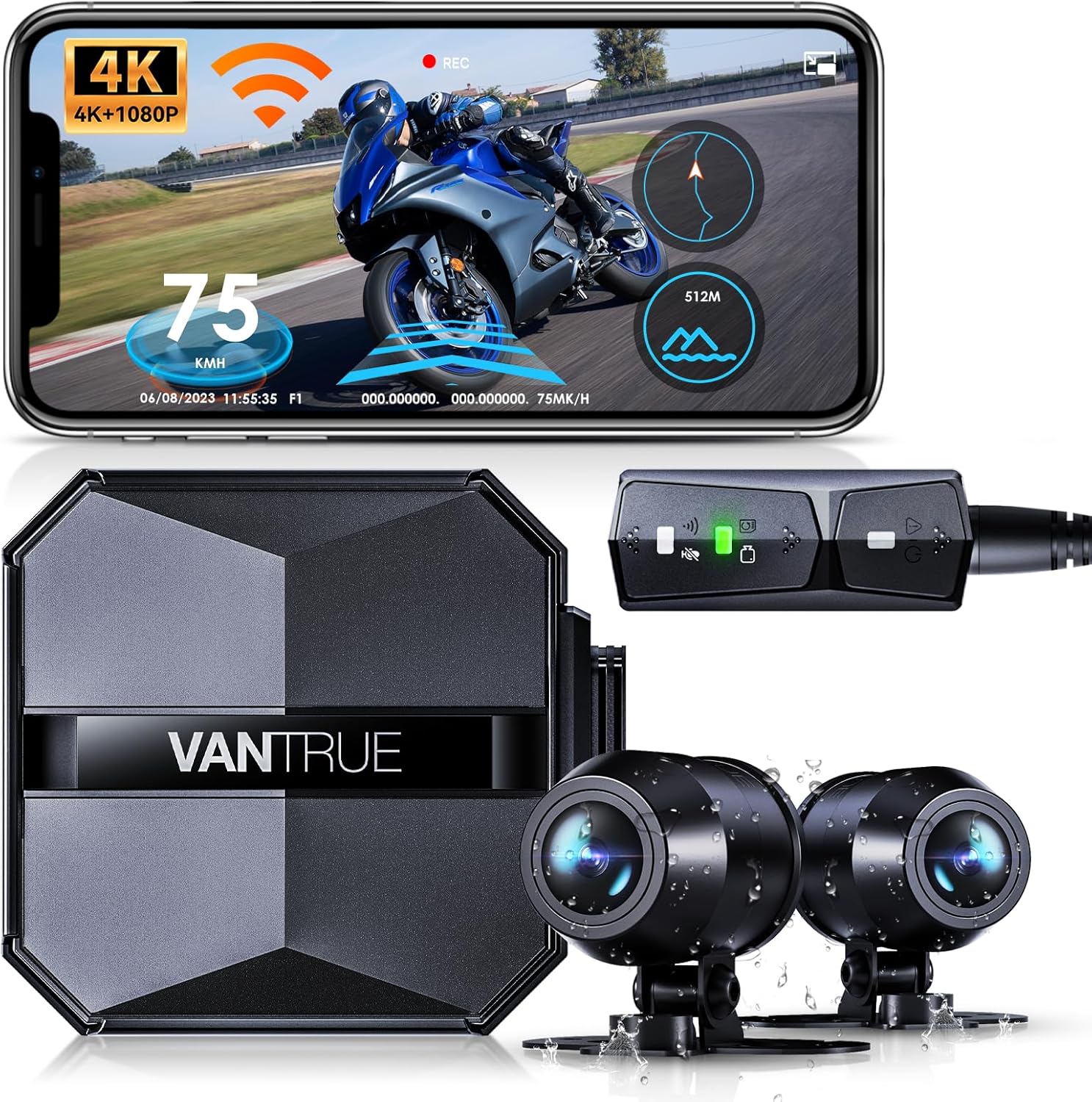
The front sensor is Sony STARVIS IMX415 with WDR. Not STARVIS 2, but a competent performer in mixed lighting — tunnel exits, backlit intersections, and morning glare are handled well. The rear runs HDR. At 160° on both cameras, it captures more lateral coverage than anything else on this list.
GPS lives in the wired remote control unit rather than the main body, which means placement matters — mount it flat with sky visibility for best accuracy. Installation is straightforward: IP67 means no weatherproofing tape needed on cable entries, which saves significant time on a moto install.
Parking mode works on impact detection — useful if your bike sits on a street or shared lot.
Key Specifications |
|
|---|---|
| Front Resolution | 4K (3840×2160) @ 30fps |
| Rear Resolution | 1080p @ 30fps |
| Sensor | Sony STARVIS IMX415 8MP (front) / HDR (rear) |
| FOV | 160° front / 160° rear |
| GPS | Built-in (in remote unit) |
| Wi-Fi | Dual-band 2.4GHz + 5GHz |
| Weatherproofing | IP67 full body |
| Storage | Up to 512GB microSD |
| Parking Mode | Yes — collision detection |
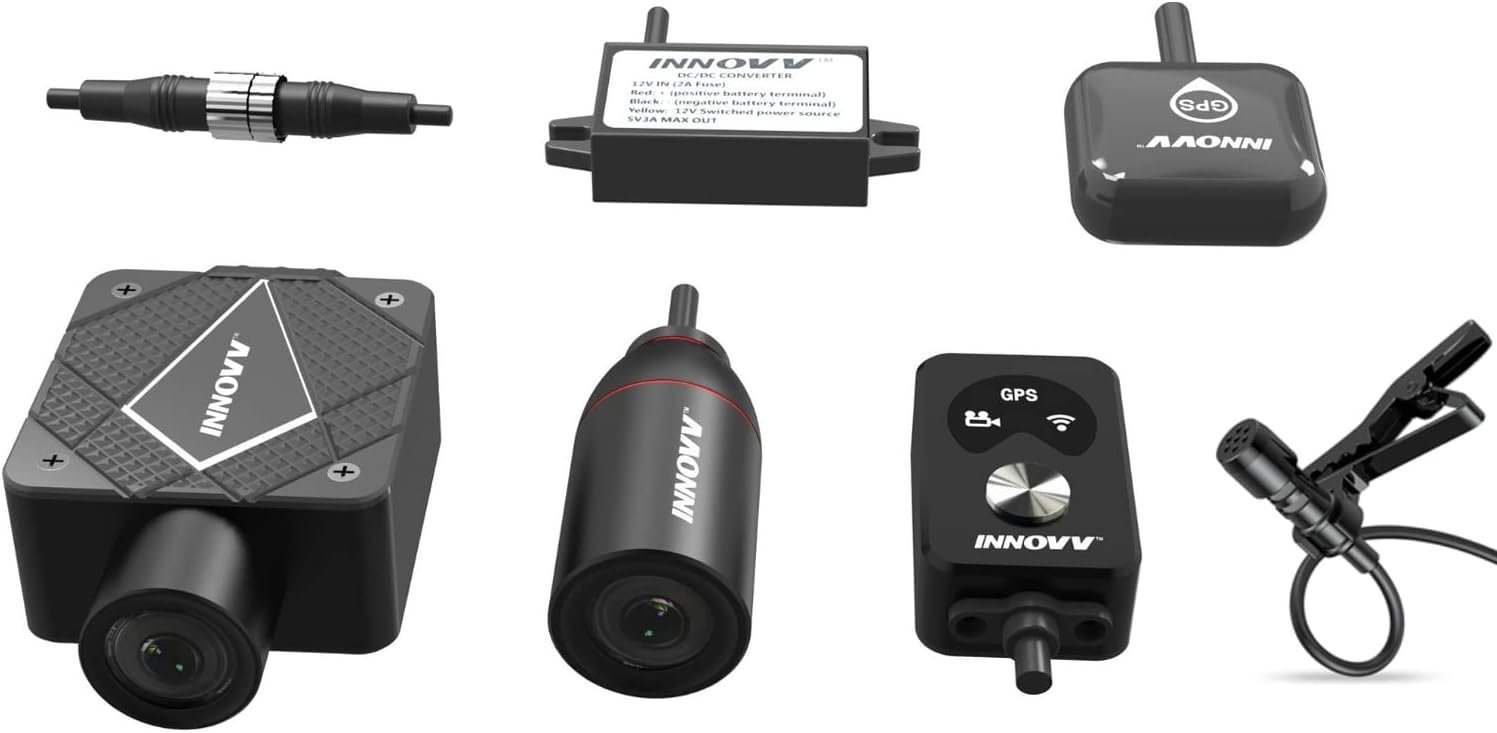
The only camera on this list built entirely from aerospace aluminum alloy. On a motorcycle — especially at track speeds — that housing difference shows up in the footage: where polymer-housed cameras transmit engine and road vibration directly to the sensor, the K5 absorbs it. The result is sharp footage at full lean that other units cannot consistently deliver.
4K front via Sony STARVIS IMX415. The 5Hz GPS module updates position five times per second versus the 1Hz standard found in most dash cams — the difference is visible on tight, fast-changing sections where a 1Hz tracker loses resolution. External microphone included, which is unusual at any price point.
The tradeoff is size and price. The front camera integrates the DVR, making it bulkier than slim-lens systems — harder to hide on sport bikes with tight fairings.
Key Specifications |
|
|---|---|
| Front Resolution | 4K (3840×2160) @ 30fps |
| Rear Resolution | 1080p @ 30fps |
| Sensor | Sony STARVIS IMX415 (front) / IMX291 (rear) |
| Housing | CNC aerospace aluminum alloy |
| FOV | 120° front / 120° rear |
| GPS | 5Hz built-in |
| Wi-Fi | Dual-band 2.4GHz / 5.8GHz |
| Weatherproofing | IP67 |
| Storage | Up to 512GB microSD |
| Parking Mode | Yes |
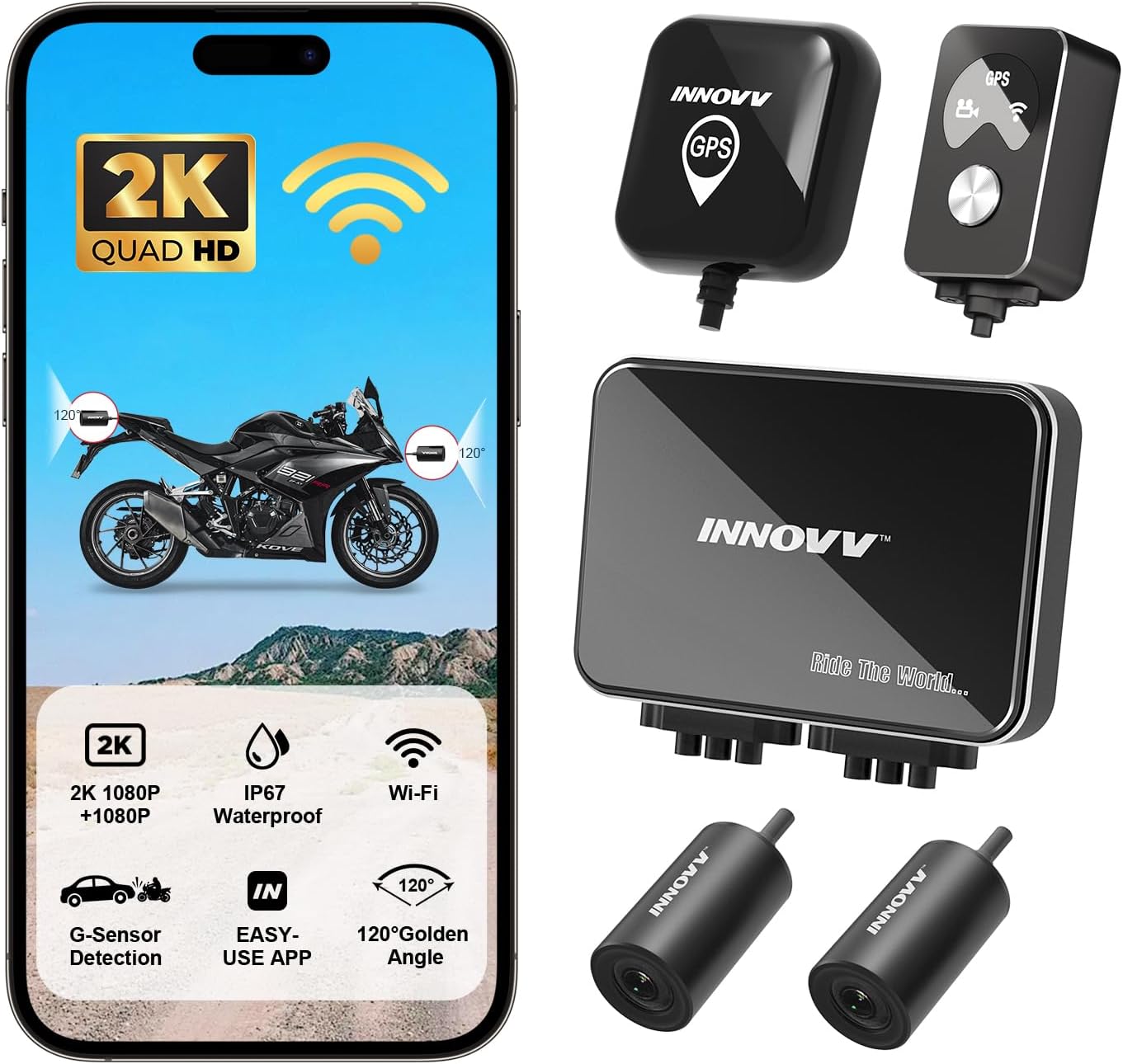
The only motorcycle dash cam on this list with built-in Electronic Image Stabilization on both channels. On long-distance riding — expansion joints, rough tarmac, sustained highway vibration — EIS is the difference between footage you can actually review at the end of a ride and footage that requires software smoothing before it is usable.
Dual 2K front and rear via Sony STARVIS IMX335, with infrared on both lenses for low-light performance. The 10Hz GPS module updates ten times per second — the most precise on this list, and noticeably better than 5Hz on winding roads where position data changes rapidly.
DVR unit separates from the slim cameras, so the recording unit can be tucked completely out of sight under the seat while the cameras mount discreetly front and rear.
The K5 has a higher-resolution front camera (4K vs 2K), but the K7 gives you matched 2K on both channels plus EIS — the better balance for riders covering serious distance on varied roads.
Key Specifications |
|
|---|---|
| Front Resolution | 2K (1440p) @ 30fps |
| Rear Resolution | 2K (1440p) @ 30fps |
| Sensor | Sony STARVIS IMX335 — both cameras |
| EIS | Yes — both channels |
| FOV | 120° front / 120° rear |
| GPS | 10Hz built-in |
| Wi-Fi | Dual-band 2.4GHz / 5.8GHz |
| Weatherproofing | IP67 |
| Storage | Up to 512GB microSD |
| Parking Mode | Yes — 24hr sentry mode |
Motorcycle Dash Cam Buying Guide
Moto-specific vs. Car cam
Most systems on this list were engineered for motorcycles — IP67 throughout, ignition-triggered auto start/stop, slim camera profiles that mount cleanly to fairings and tails. The one exception is the Viofo A229 Pro 2CH, a car cam widely adopted by riders for its sensor performance. If you go that route, plan for extra weatherproofing at cable entry points.
Resolution
4K front gives you the clearest license plate reads and the most cropping room in post. 2K is sufficient for insurance documentation. What matters more than resolution is sensor quality — a Sony STARVIS sensor at 2K outperforms a generic CMOS at 4K in low light, which is where most evidence footage fails.
Weatherproofing
IP67 means full dust sealing and short-term submersion resistance — the correct minimum for any exposed motorcycle installation. IPX5 handles rain but requires extra attention to cable entry points. Avoid anything below IPX5 for bike mounting.
GPS
GPS embeds speed and location into every file. In a claim or dispute, that data shifts the burden of proof. Standard modules update at 1Hz. The INNOVV K5 runs 5Hz; the K7 runs 10Hz — meaningful differences on fast or winding roads where position changes rapidly.
EIS
Electronic Image Stabilization is rare in motorcycle dash cams. The INNOVV K7 is the only unit on this list that has it. On smooth tarmac it makes little difference. On rough roads, expansion joints, or after 300 miles of touring, the footage gap between stabilized and unstabilized becomes obvious.
Parking mode
Useful if your bike sits on a street or shared lot. Requires the camera to stay connected to the battery — set a voltage cutoff to prevent drain.
Final Verdict
For most riders, the Vantrue F1 is the clearest recommendation: purpose-built for motorcycles, full IP67, 4K front, GPS, parking mode, and 5GHz Wi-Fi in one package at a price that leaves room for a quality SD card and a hardwire kit. It covers every core requirement without asking you to compromise on anything that matters for evidence.
If low-light performance is your priority — night commuting, unlit roads, winter riding — the Viofo A229 Pro 2CH is the step up. STARVIS 2 on both channels is a genuine advantage over everything else at this price. The moto install requires more care, but the sensor difference is real and consistent.
Riders who put serious distance on touring or adventure bikes should look at the INNOVV K7. EIS and 10Hz GPS make a tangible difference over a long day of mixed-surface riding — not in spec sheets, but in whether the footage at the end of the day is actually watchable.
Track riders and those who push hard on technical roads: the INNOVV K5 aluminum housing absorbs what polymer-cased cameras transmit. At speed and under load, that housing choice shows up directly in footage quality.
The VSYSTO D6L is the honest entry point — dual-channel, Wi-Fi, auto start/stop, IP67 cameras. No GPS, weaker low-light, but it records what happens in front of and behind you for less than any other system here. If that is your budget, it is a defensible choice.
The road gives you no warning. These five systems make sure you have the evidence when it counts.