
Most parents buying an underwater scooter for a child are working through the same short list of concerns: will the propeller hurt someone, can a smaller kid actually hold it, and will it be too fast or too difficult before the child is ready for it. These are the right questions, and the answers vary considerably depending on which unit you choose.
The market has grown to the point where a few manufacturers now design specifically for younger users, with narrower grips, lighter trigger pulls, fully enclosed propellers, and physical safety switches that work regardless of whether the child remembers to use them. Others are adult units that happen to work adequately for kids. Knowing which is which before buying saves a frustrating afternoon on the water.
Testing covered seven units purchased at retail, across pool sessions, a busy resort snorkel site, and open-water dives with young teens. The recommendations below are organized by the specific situation each unit suits best.
Top Picks
BEST OVERALL: Sublue WhiteShark Mix
BEST SAFETY FEATURES: Asiwo Manta Sea Scooter
BEST FOR BEGINNERS: QYSEA FIFISH V6 Expert Junior
BEST LIGHTWEIGHT: Sublue WhiteShark Tini
BEST OLDER KIDS / TEENS: Geneinno S1 Sea Scooter
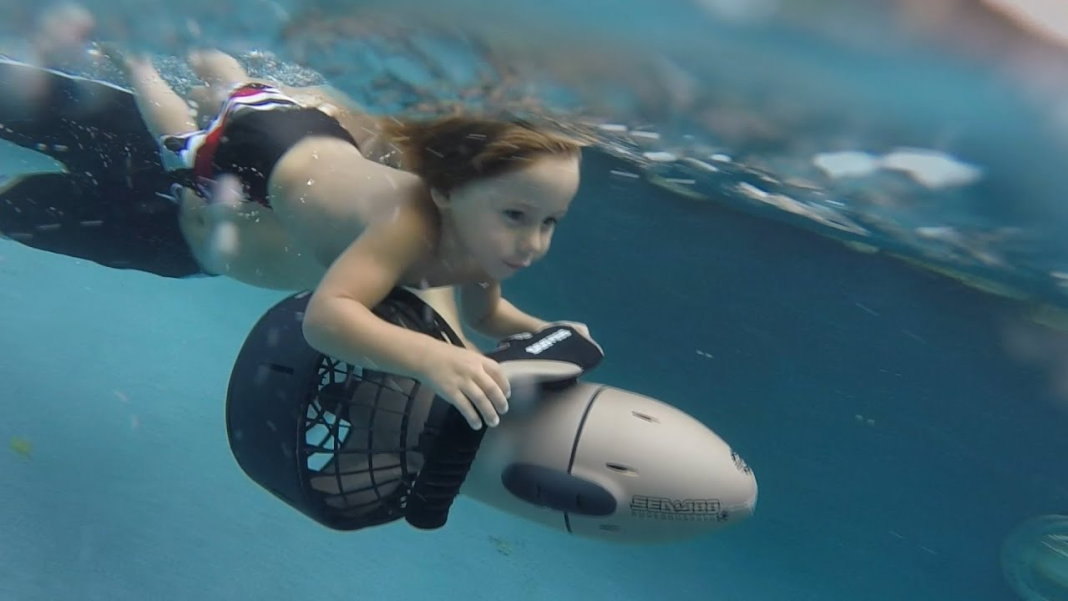
BEST POOL / RESORT USE: Yamaha RDS200 Seascooter
BEST FOR TRAVEL FAMILIES: Waydoo Subnado (Single Unit)
BEST SHALLOW DIVE: LEFEET P1 Lite (Kids Setup)
BEST BUDGET: Windek SEABOW Mini
BEST FAMILY SHARE: Sublue WhiteShark Mix Pro
How We Tested
Seven units, all bought at retail — no loaners, no manufacturer samples. Each one went through a 25-meter pool with multiple age groups present, then a crowded resort snorkel beach where supervision is split across several kids at once, then open-water reef sessions with young teens. Testers ranged from seven to sixteen years old and covered a range of swimming abilities, from basic to confident. Safety hardware was checked first: trigger resistance, prop guard coverage, and whether any safety lock actually held under water pressure. Battery runtimes were timed independently at each speed setting. Eight weeks of testing across salt and fresh water.
Detailed Reviews
1. Sublue WhiteShark Mix
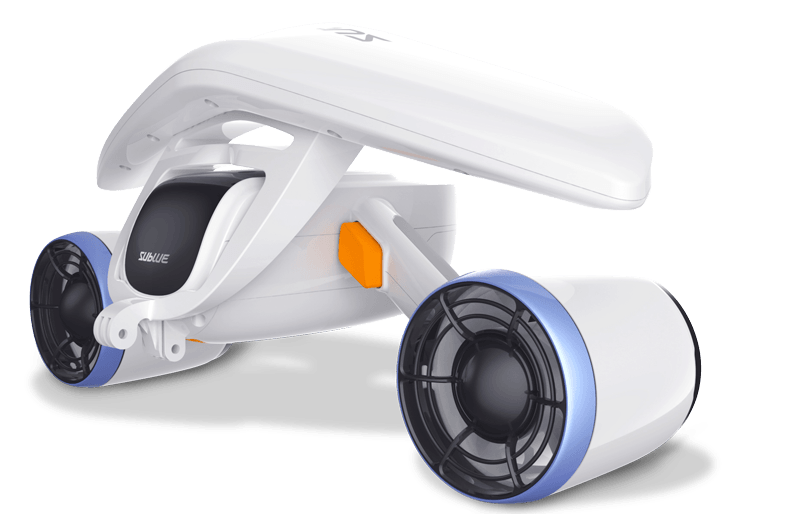
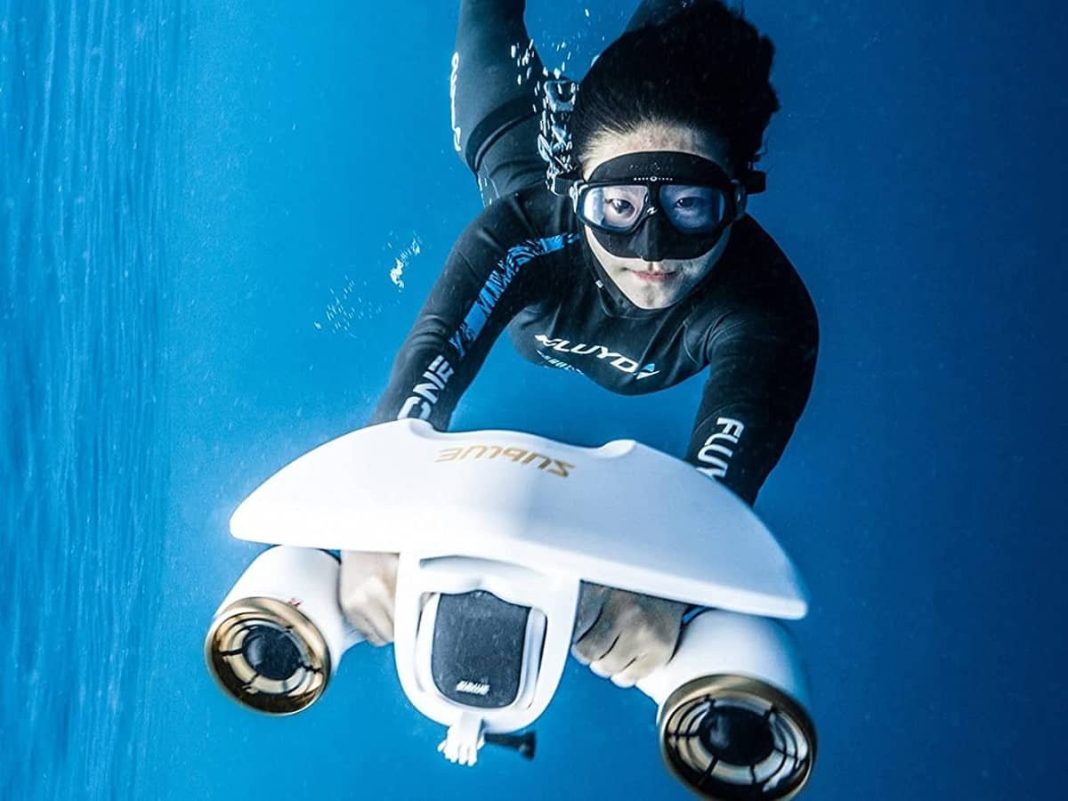
An eight-year-old who had never held a sea scooter before was moving in a straight line within two minutes of being handed this unit — no coaching beyond the basics. The trigger positions suit smaller hands well, and the detachable floater means the unit stays visible and accessible at the surface between dives rather than sinking out of reach. Prop guards are fully enclosed. The motor is audible at full speed, which seems to be a positive for most kids rather than a drawback.
Key Specifications |
|
|---|---|
| Motor | Dual brushless |
| Max Speed | 3.4 mph |
| Depth Rating | 131 ft / 40 m |
| Battery | Swappable Li-ion |
| Runtime | 30–60 min |
| Charge Time | 3.5 hr |
| Weight | 3.5 kg / 7.7 lbs |
| Special | Detachable floater, enclosed props, GoPro mount |
2. Asiwo Manta Sea Scooter
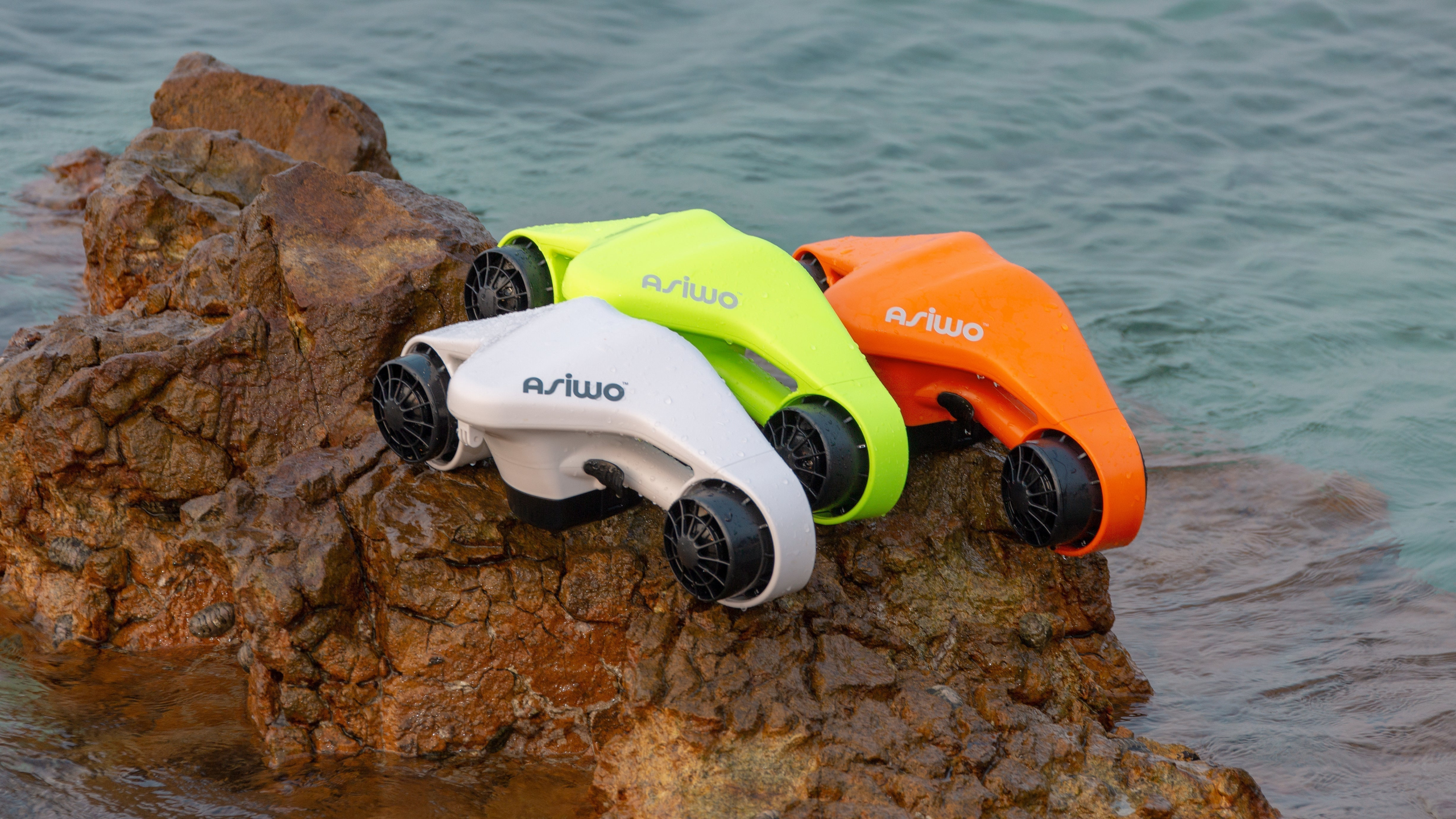
At a crowded resort snorkel beach with multiple children sharing the water, the Manta’s safety features matter in a context where supervision is divided. The propeller housing is fully enclosed with no gaps, the safety lock is a dedicated physical switch rather than a settings option, and the auto shut-off activates when the unit comes to the surface — all three features work passively, without relying on a child remembering to engage them. Younger kids found the compact body shape easier to hold than larger units.
Key Specifications |
|
|---|---|
| Motor | Dual brushless |
| Max Speed | ~3.4 mph |
| Depth Rating | 131 ft / 40 m |
| Battery | Airline-compliant Li-ion |
| Runtime | 45–60 min |
| Weight | ~3.5 kg / 7.7 lbs |
| Special | Enclosed props, child safety lock, auto shut-off |
3. QYSEA FIFISH V6 Expert Junior
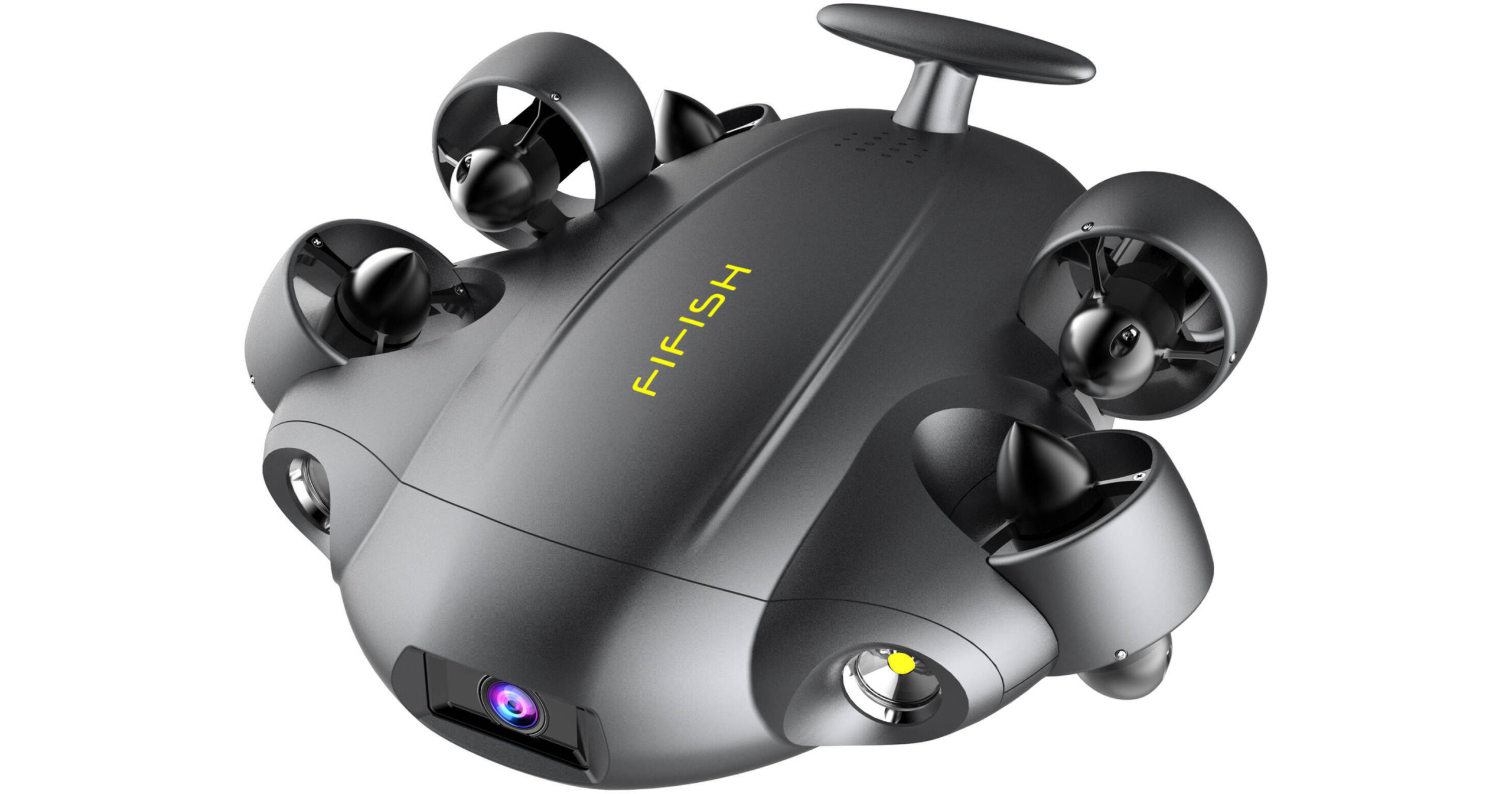
The grip diameter on this unit is measurably narrower than adult-targeted models — a small difference that becomes significant when a seven-year-old is trying to hold on and steer simultaneously. Operation is straightforward: one button starts the motor, the trigger controls speed between two settings. Children who were still developing their swimming confidence found this level of simplicity easier to manage than units with more controls, and there was noticeably less hesitation before they got moving.
Key Specifications |
|
|---|---|
| Motor | Single brushless |
| Max Speed | ~2.5 mph |
| Depth Rating | 100 ft / 30 m |
| Battery | Li-ion |
| Runtime | ~40 min |
| Weight | ~2.2 kg / 4.9 lbs |
| Special | Narrower grip, light trigger, child-scale design |
At under 3 kg, this unit is light enough that children carry it to the water themselves, which removes one task from the parent managing everything else on a beach day. Single-unit speed is appropriate for snorkeling without being fast enough to cause concern in shared water. The stackable design is a genuine practical advantage for families: the same unit purchased for a nine-year-old can be joined with a second unit when that child is a teenager and wants more performance, without buying an entirely new product.
Key Specifications |
|
|---|---|
| Motor | Dual props |
| Max Speed | 3.1 mph (×1) / 4.5 mph (×2) |
| Depth Rating | 65 ft / 20 m |
| Battery | Li-ion per unit |
| Runtime | ~45 min |
| Weight | 3 kg / 6.6 lbs |
| Special | Stackable, wireless remote, camera + SUP mount |
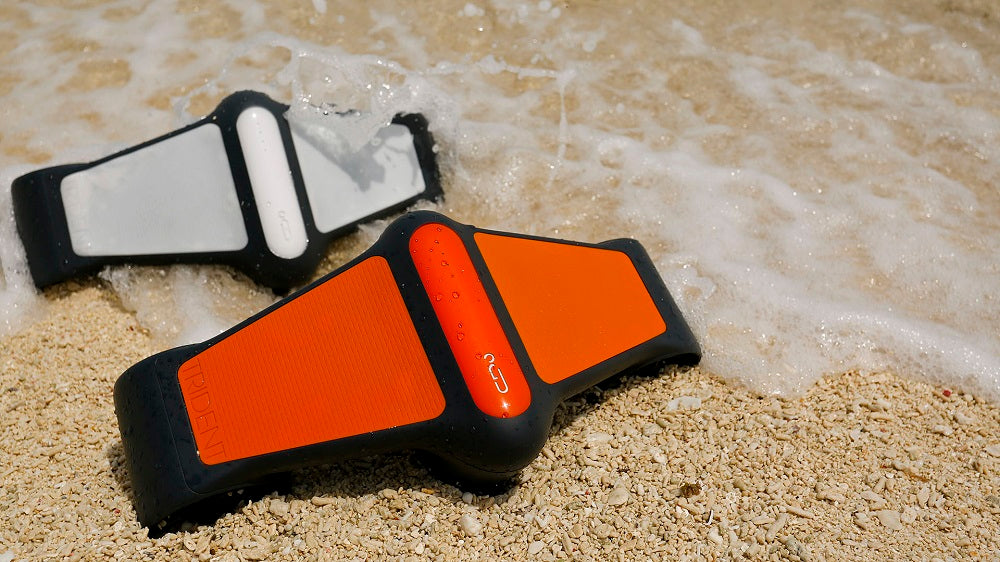
For teenagers who have been using slower units for a year or two and are ready for something with real performance, the S1 closes the gap between kids’ products and adult equipment. The speed and depth rating are equivalent to what an adult recreational diver would use, but the operation is not more complicated than beginner units. Neutral buoyancy in salt water is particularly useful for young divers who are still developing buoyancy control — the scooter does not add an additional variable to manage at depth.
Key Specifications |
|
|---|---|
| Motor | Dual brushless |
| Max Speed | 4.3 mph |
| Depth Rating | 131 ft / 40 m |
| Battery | Swappable Li-ion |
| Runtime | 30–50 min |
| Weight | 3.7 kg / 8.2 lbs |
| Special | Neutral buoyancy, LED battery indicator |
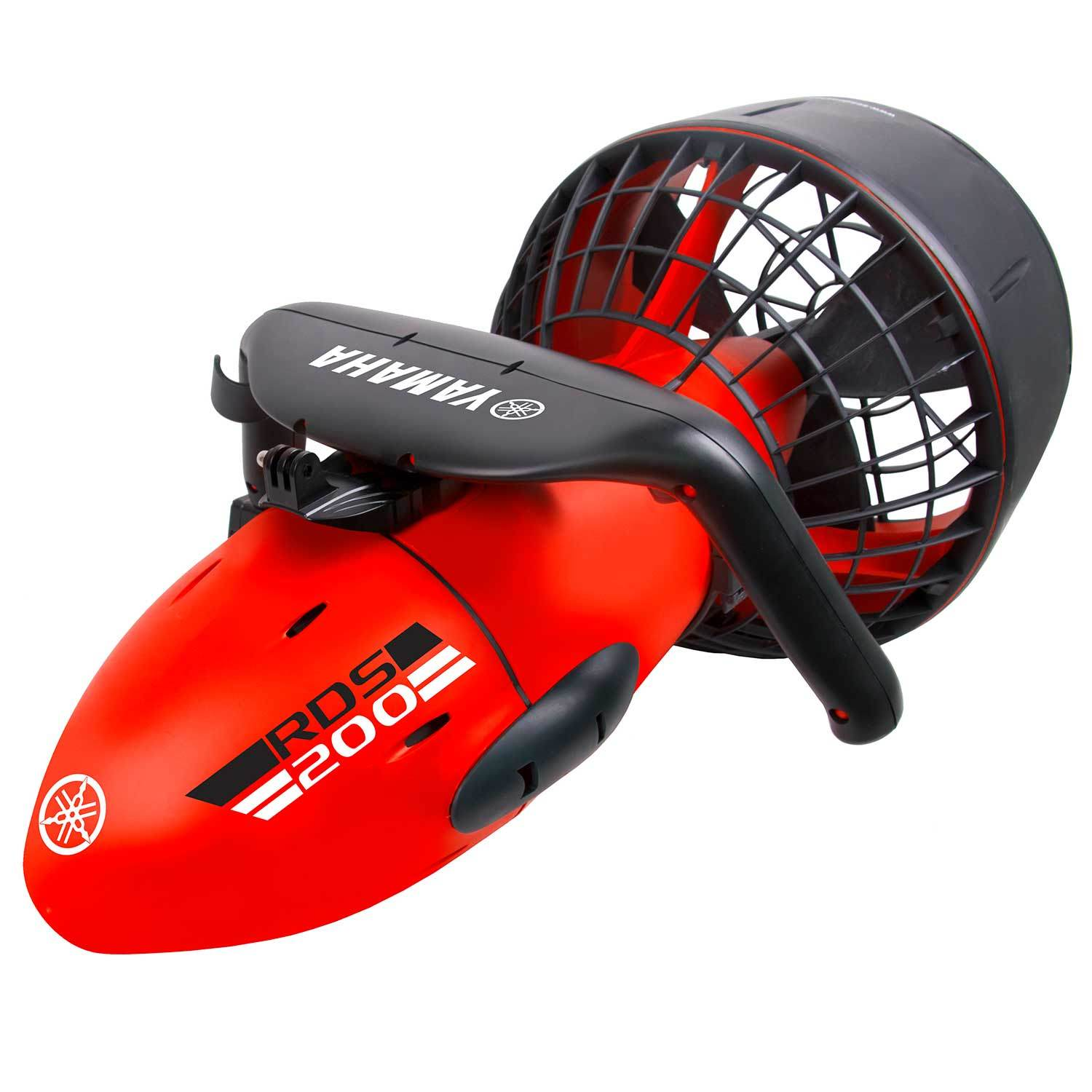
The single-trigger control system on the RDS200 is about as simple as underwater scooter operation gets — one action to accelerate, one to stop. This makes it particularly practical in mixed-age situations where the same unit gets passed between a child and an adult without either needing to re-learn anything. The high-visibility yellow shell makes it easy to track at the surface from a boat or the shore, which simplifies supervision when multiple people are in the water.
Key Specifications |
|
|---|---|
| Motor | Single brushless |
| Max Speed | ~3.5 mph |
| Depth Rating | 100 ft / 30 m |
| Battery | Non-swappable Li-ion |
| Runtime | ~45 min |
| Weight | ~2.8 kg / 6.2 lbs |
| Special | Single-trigger control, high-visibility design |
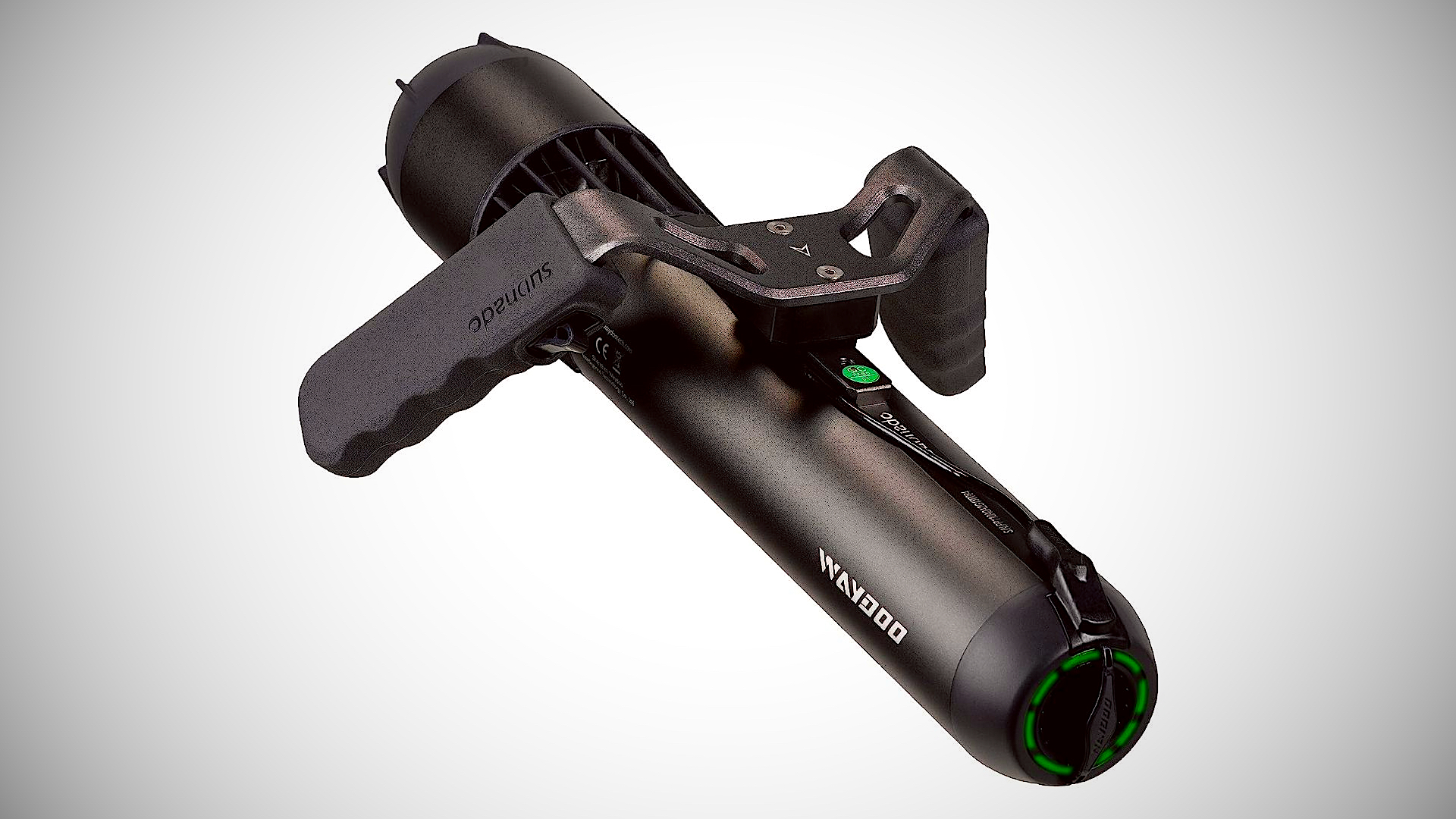
The Subnado’s weight — 1.4 kg — is the specification that matters most for traveling families. It fits in a standard carry-on bag without requiring a checked luggage allowance or a conversation at airport security, and it charges from empty to full in under 75 minutes, which means a morning session and an afternoon session are both achievable on the same charge cycle. For families who travel between dive locations, these practical factors often matter more than absolute performance.
Key Specifications |
|
|---|---|
| Motor | Single brushless |
| Max Speed | 3.1 mph (single) / 4.3 mph (dual) |
| Depth Rating | 196 ft / 60 m |
| Battery | 98Wh non-swappable |
| Runtime | ~56 min |
| Charge Time | 1.2 hr fast charge |
| Weight | 1.4 kg / 3.1 lbs |
| Special | Power bank, forearm/tank/SUP/kayak mounts |
8. LEFEET P1 Lite (Kids Setup)
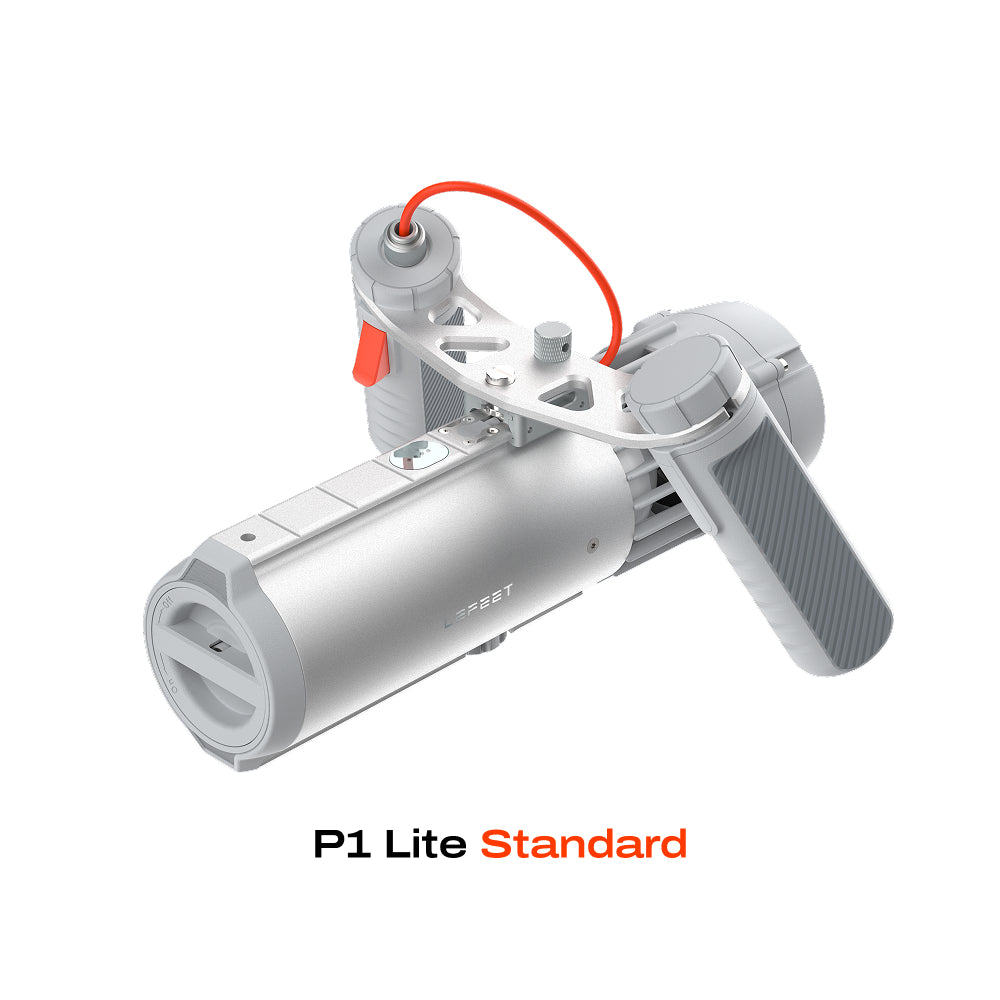
The P1 Lite runs the same 60-meter depth rating as the full adult P1 in a lighter, simpler package that removes the accessories a child won’t use. Mounted on a tank or carried in hand, it assembles in under two minutes with no tools. For young teens being introduced to shallow scuba diving alongside a parent, the depth headroom means the scooter is never the limiting factor — and the USB-C charging is handled with the same cable as everything else in the bag.
Key Specifications |
|
|---|---|
| Motor | Brushless |
| Max Speed | ~2.0 m/s (4 LED speeds) |
| Depth Rating | 200 ft / 60 m |
| Battery | Airline-compliant, USB-C |
| Runtime | Up to 60 min |
| Weight | ~1.8 kg / 4 lbs |
| Special | No-tools assembly, tank mount, modular |
9. Windek SEABOW Mini
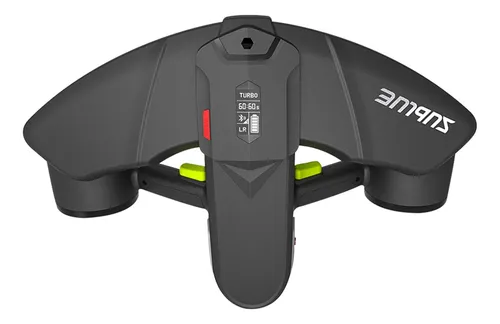
The SEABOW Mini is a compact single-motor unit with a straightforward design targeted at younger or lighter users on a restricted budget. The handle diameter is smaller than most adult units, the trigger requires minimal pull force, and the enclosed propeller housing covers the blade adequately for snorkeling use. Speed is modest — sufficient for moving through calm pool or shallow water without creating a control challenge for a child still gaining confidence. For families looking for a first scooter without a significant financial commitment, it performs the basic function reliably.
Key Specifications |
|
|---|---|
| Motor | Single brushless |
| Max Speed | ~2.8 mph |
| Depth Rating | 65 ft / 20 m |
| Battery | Li-ion, non-swappable |
| Runtime | ~40 min |
| Weight | ~2.0 kg / 4.4 lbs |
| Special | Enclosed props, compact grip |
10. Sublue WhiteShark Mix Pro
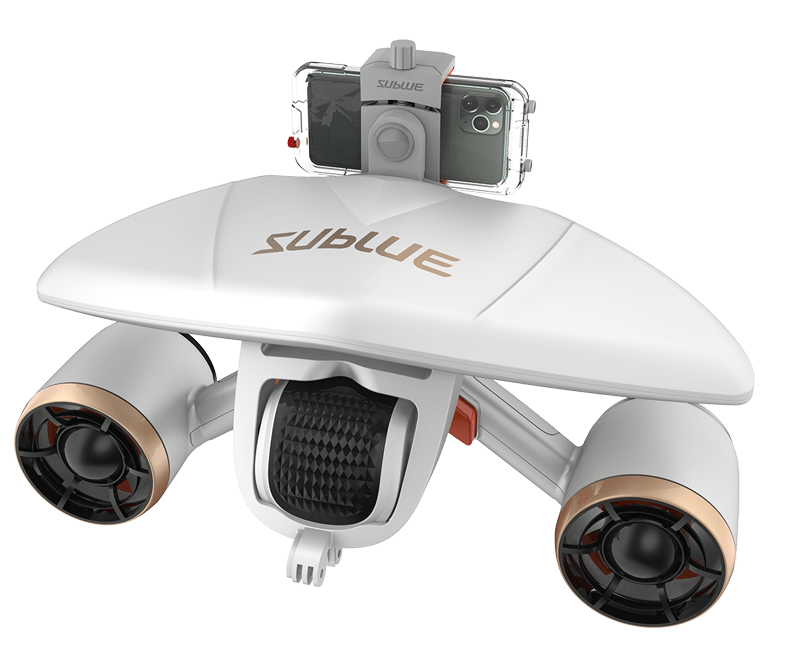
The Mix Pro occupies a useful position for families where the scooter will be used by both children and adults in the same session. The dual-motor thrust handles an adult’s body weight and drag without difficulty, while the trigger layout and handle geometry remain manageable for older children. The replaceable battery is the most practical feature in a shared-use context: when a parent and two teenagers are rotating through, swapping a fresh cell takes under ten seconds rather than waiting three hours. Loud at full speed, but no more so than the standard Mix.
Key Specifications |
|
|---|---|
| Motor | Dual brushless |
| Thrust | 17.6 lbf |
| Max Speed | 3.4 mph |
| Depth Rating | 131 ft / 40 m |
| Battery | Swappable Li-ion |
| Runtime | 30–60 min |
| Charge Time | 3.5 hr |
| Weight | 3.5 kg / 7.7 lbs |
| Special | Detachable floater, GoPro mount, wide spare battery availability |
Underwater Scooter Buying Guide for Kids
Propeller Safety
Propeller design is the first specification worth examining when buying a scooter for a child. Units with exposed or partially guarded propellers can cause minor cuts if a hand reaches the blade at speed — a meaningful concern when the user is young and less predictable in the water. Fully enclosed props, where the blade is housed within a sealed shroud with no accessible opening, eliminate this risk entirely. Partial guards reduce it but do not remove it. For children under 10 or any first-time user regardless of age, a fully enclosed design should be considered non-negotiable.
Weight and Grip Size
Weight affects not just portability but control in the water. A unit that a child can barely lift on land is also one they will struggle to manoeuvre when submerged. The range on this list runs from 1.4 kg to 3.7 kg — a difference that is felt immediately by a child trying to manage the unit independently. Grip circumference is a related consideration: adult-sized handles require a wider hand span to hold securely, and children who cannot get a full grip on the handles are more likely to lose control of the unit or release it accidentally. Narrower-profile units are worth prioritising for younger or smaller users.
Speed and Age Appropriateness
Speed selection for younger users should be based on the child’s water confidence and the environment they’ll be using the unit in, not on maximising performance. In a shared snorkel site with other swimmers, a high-speed unit presents a real collision risk. For children under ten, units in the 3 to 3.5 mph range are sufficient to make snorkeling genuinely easier without being difficult to control. Teenagers with regular swimming experience can handle the 4.3 mph units in open water, though the same units are inappropriate in crowded or shallow areas regardless of the user’s age. The age guidance in each review reflects observed performance across test users, not manufacturer recommendations.
Safety Features to Look For
Four features are worth specifically checking before buying. A physical safety lock — a dedicated switch that disables the trigger mechanically — prevents the unit from activating when not in use and can be engaged by a parent before handing the unit to a child. Auto shut-off when the unit surfaces prevents the motor from running unattended at the water surface. A wrist or arm attachment keeps the unit with the child if they release it in open water. High-visibility coloring makes the unit easy to track from a distance when supervising multiple swimmers. Not every unit includes all four — the reviews below note which features are present on each model.
Battery and Charging for Family Use
For a family using one scooter across multiple children over the course of a day, the combination of runtime and charge time determines how many sessions are actually possible. A unit with a 45-minute runtime and a three-hour charge cycle delivers one session before the next child has to wait. Families managing this rotation benefit from either a fast-charging unit — the Subnado charges in under 75 minutes — or a unit with a swappable battery, where a second cell carried in a dry bag allows an immediate swap on the boat rather than waiting for a charge. Both approaches work; which one suits a given family depends on whether carrying spare hardware or access to power during the day is more practical.
Final Verdict
For most families choosing a first underwater scooter for a child, the Sublue WhiteShark Mix addresses the key practical concerns well: enclosed propellers, handles that fit smaller hands, a detachable floater, and a battery that can be swapped rather than waiting for a charge. Children from around age seven tend to adapt to it quickly, and the design does not require close adult supervision of every use.
For parents whose primary concern is passive safety features rather than performance, the Asiwo Manta provides the most comprehensive hardware-level protection on this list. The fully enclosed propeller housing, physical safety lock, and auto surface shut-off all operate without requiring the child to remember anything — a meaningful consideration at busy snorkel sites or when younger children are involved.
Younger or smaller children who find full-size units difficult to hold and carry are better served by the Sublue WhiteShark Tini. The weight is low enough that children manage it independently, and the modular design allows the same unit to remain useful as the child grows older and wants more capability — adding a second unit increases speed significantly without requiring a full replacement.
Teenagers who have used entry-level equipment for long enough that it no longer keeps up with where they want to dive will find the Geneinno S1 a capable next step. The speed, depth rating, and buoyancy characteristics are adult-grade, but the operation is no more complicated than beginner units — a useful combination for a young diver developing independence in the water.
Families who regularly travel to dive locations and need equipment that fits airline carry-on restrictions without advance planning will find the Waydoo Subnado the most practical option on this list. Weight and size clear carry-on limits comfortably, charge time is short enough to allow two sessions on the same day, and snorkeling-depth performance is more than adequate.
Choosing the right unit for the right age and environment makes the difference between a child who takes to it immediately and one who spends the afternoon frustrated. The recommendations above are organized around that match rather than raw performance rankings.